
Baked Spatchcock Turkey
Making a baked spatchcock turkey delivers an easy way to roast your Thanksgiving bird in a fraction of the time. The resulting juicy, tender meat and exquisitely crispy skin will make you a believer.
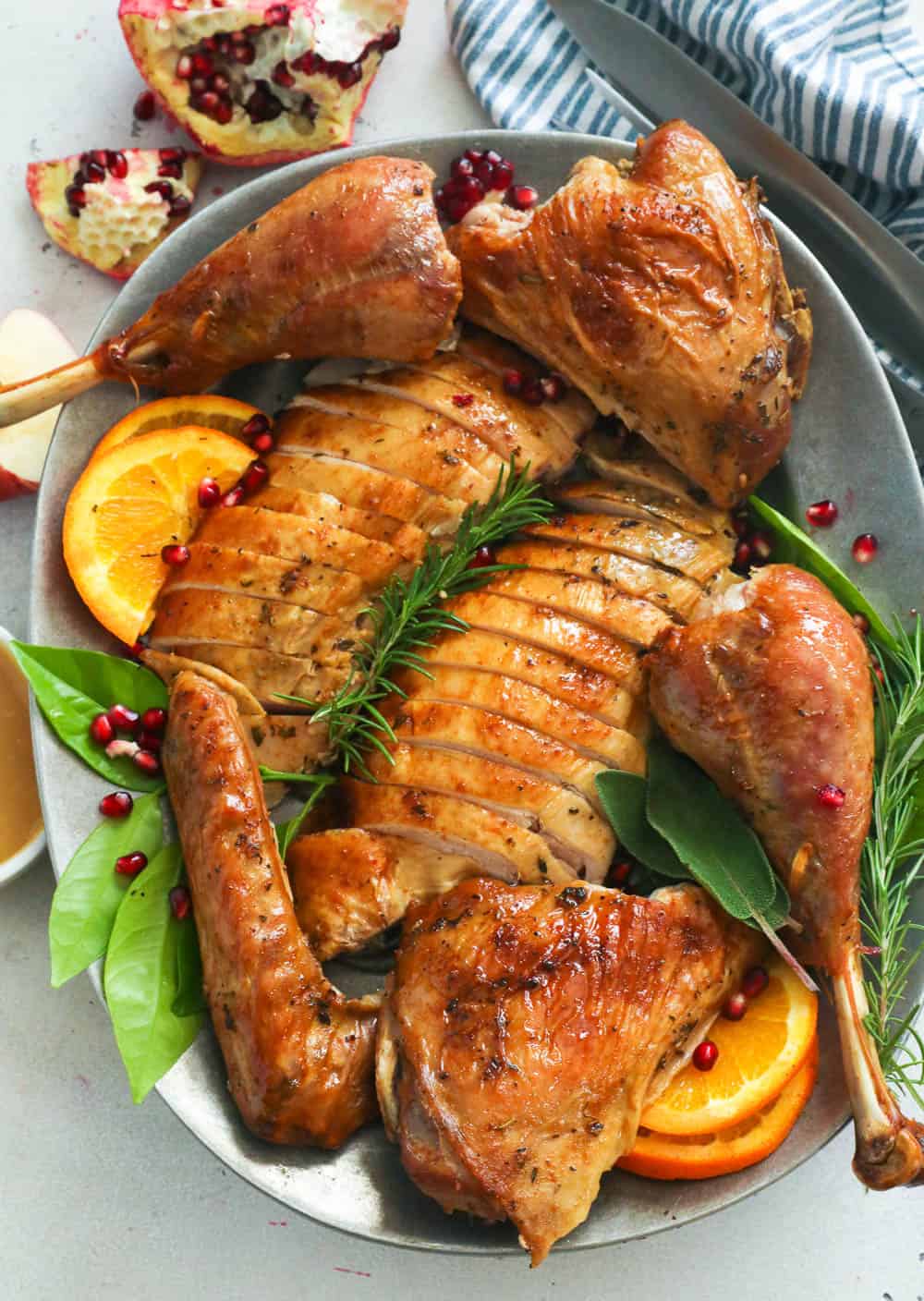
Besides being hard to say, what is spatchcocking? It’s a fancy term for butterflying poultry, and it allows the turkey to cook more evenly, creating a mouthwatering feast. The key is removing the backbone and flattening the bird out. Don’t let it scare you because it is super easy.
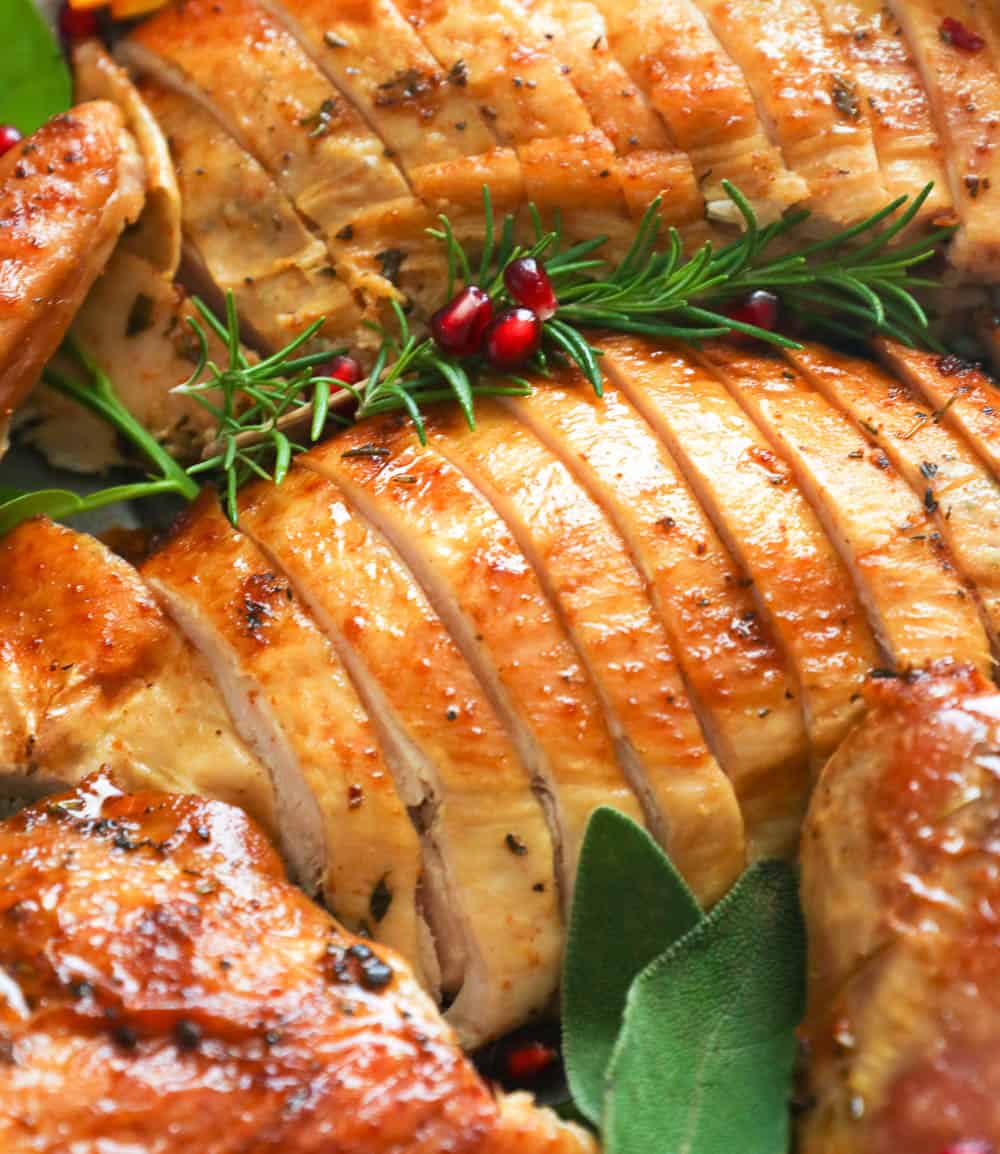
All of the skin is beautifully golden and crunchy because it’s evenly exposed to the heat. I don’t know about you, but the crunchy skin is my favorite part of the bird, and spatchcocking it gives me more of a good thing.
And because a spatchcocked turkey cooks evenly, it’s moister than poultry cooked the usual way. The white and dark meat reach perfect doneness simultaneously, and the drippings are heavenly in homemade gravy.
Why Spatchcock a Turkey
Thanks to Mark Bittman, who wrote about this innovative method back in 2002, you can reduce an average turkey’s cooking time by about 75%, and it comes out of the oven absolutely gorgeous. All you have to do is cut out the backbone (or even easier, ask your butcher to do it) and spread the turkey (or chicken, duck, Cornish hen) out flat before putting it in the oven.
People have been butterflying chicken, beef, pork chops, and shrimp for ages. I don’t know why it took us so long to figure out how great it works for turkey. I baked a 12-pound turkey at 400℉ (205℃) in a little over an hour. Honest!
How to Spatchcock a Turkey and Bake It
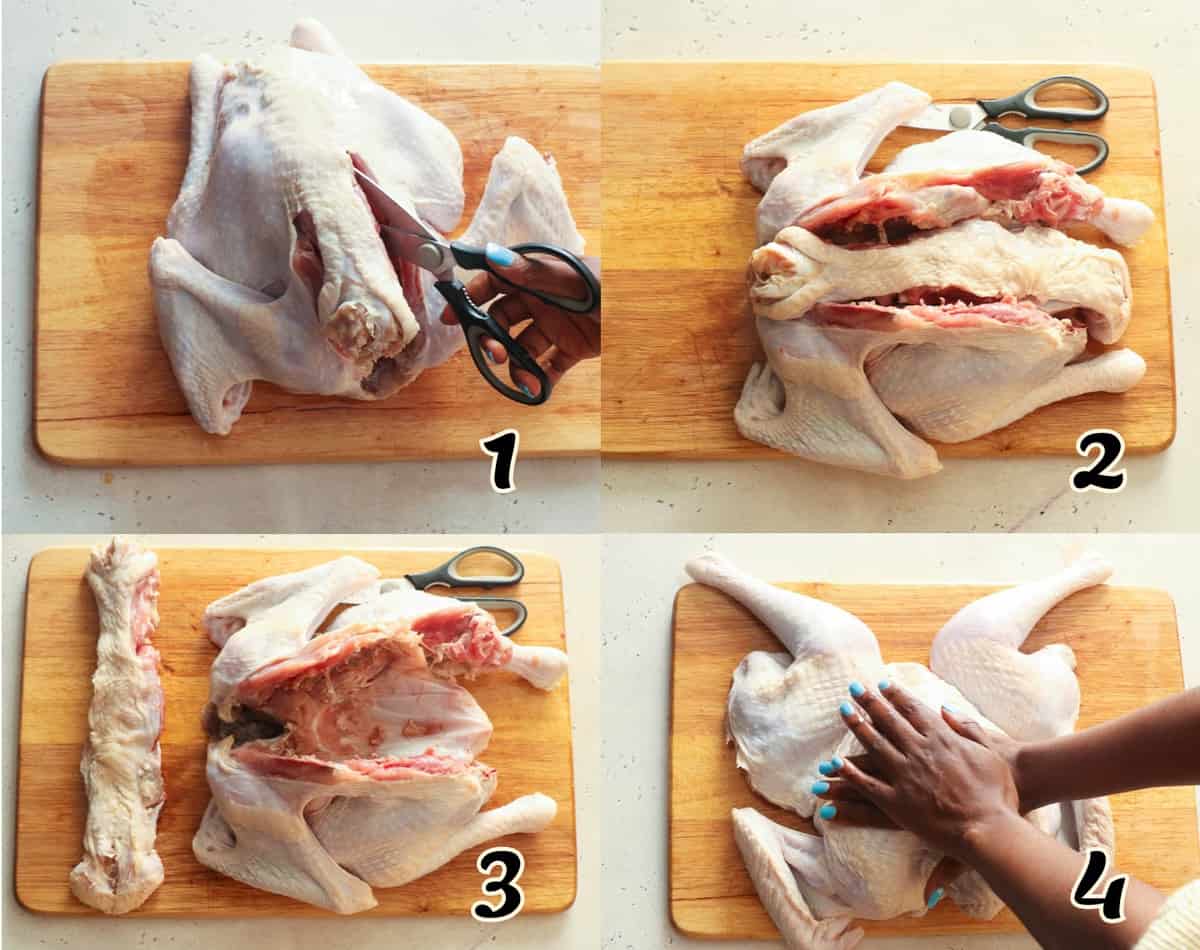
- Grab a good pair of kitchen shears (a large, sharp knife will work) and a large wooden board or flat work surface. Place the turkey breast side down.
- Cut both sides of the turkey’s backbone with kitchen shears, starting at the end with the thigh, working your way up to the neck. Remove the backbone, and save it for homemade stock or bone broth. (Photos 1-2)
- Butterfly it by grabbing hold of both sides of the turkey, open it like you would a book. Flip it breast side up. (Photo 3)
- Push down on each side of the breast with your hands until you hear it crack. Then flatten the turkey. (Photo 4)
- Remove the wishbone if desired for easier slicing. Rub inside and out of the turkey with salt. Set aside.
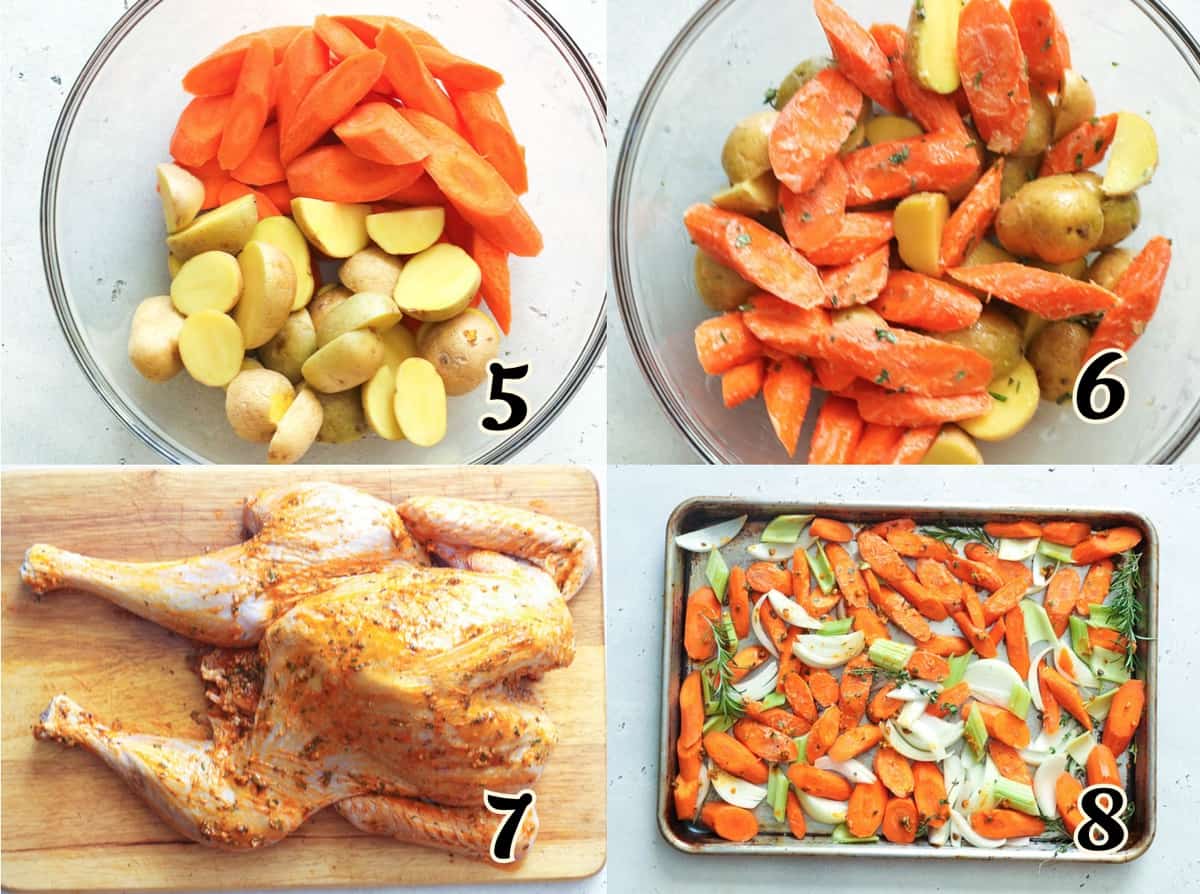
- Mix potatoes and carrots in a bowl with the oil or butter and seasonings. Set aside while finishing the turkey. (Photos 5-6)
- Season the turkey generously inside and out with a spice blend. (Photo 7)
- Arrange the potatoes, carrots, celery, and the rest of the seasoning at the bottom of a roasting pan. (Photo 8)
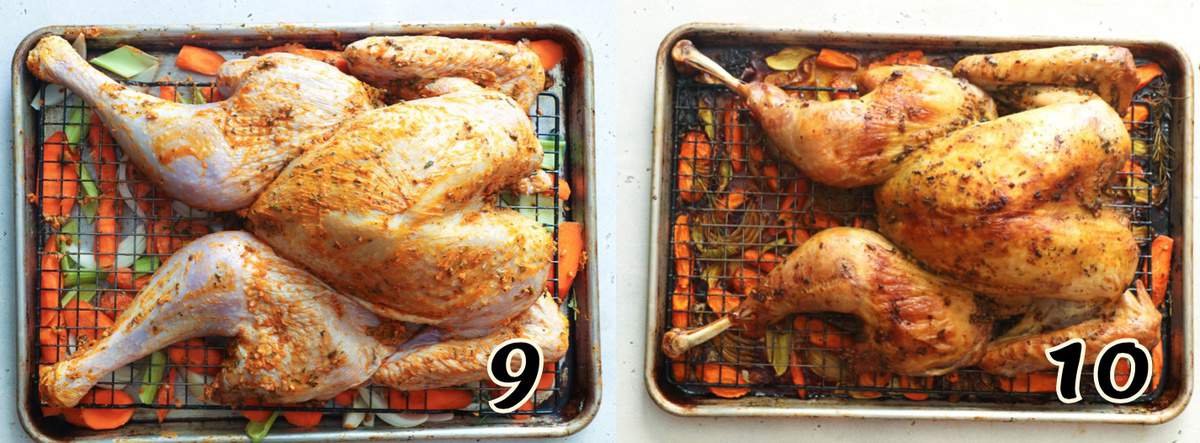
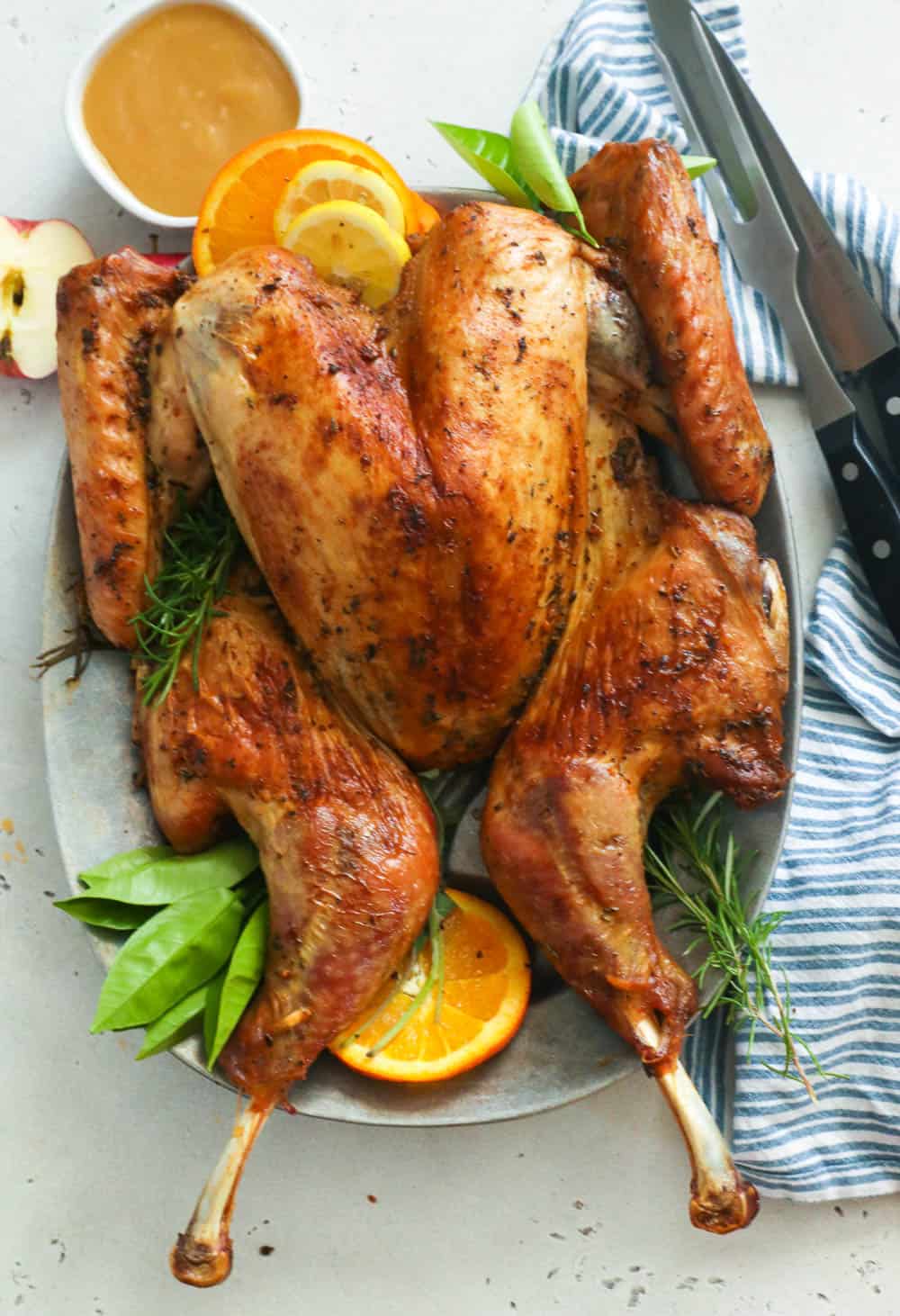
- Roast – Place the rack over the veggies and the turkey on top of the baking rack. Bake at 400℉ (205℃) until the skin is crisp, and an instant-read thermometer inserted into the thickest part of the breast reads 165℉ (75℃). It takes 60-90 minutes, depending on the bird’s size. Let it rest 5-10 minutes before slicing.
Tips & Tricks
- Brine your turkey before spatchcocking if that is in your plans.
- Since spatchcocked turkey cooks faster, I’d only baste it a couple of times. Once at about 20 minutes in, then again about 40 minutes in. You won’t want to baste within 20 minutes of when it will be done.
- Please don’t skip the resting time. Ten minutes lets the turkey finish cooking and the juices redistribute for juicier meat.
- You can roast a spatchcocked turkey at 400℉ (205℃) without worrying about the breast getting dry while the thighs barely cook. It takes about 6 minutes per pound, so a 12-pound turkey should take around 1 hour and 15 minutes. Not bad considering a medium turkey takes around 3 hours.
Make Ahead and Leftover Makeovers
You can do all the prep 1-2 days ahead, then take the turkey out of the fridge 30 minutes before baking.
Cooked turkey will last for 3-5 days in the fridge or 4-5 months in the freezer. Plus, you can use leftover turkey in any casserole, sandwich, or soup recipe that calls for cooked chicken.
Thanksgiving Menu Ideas
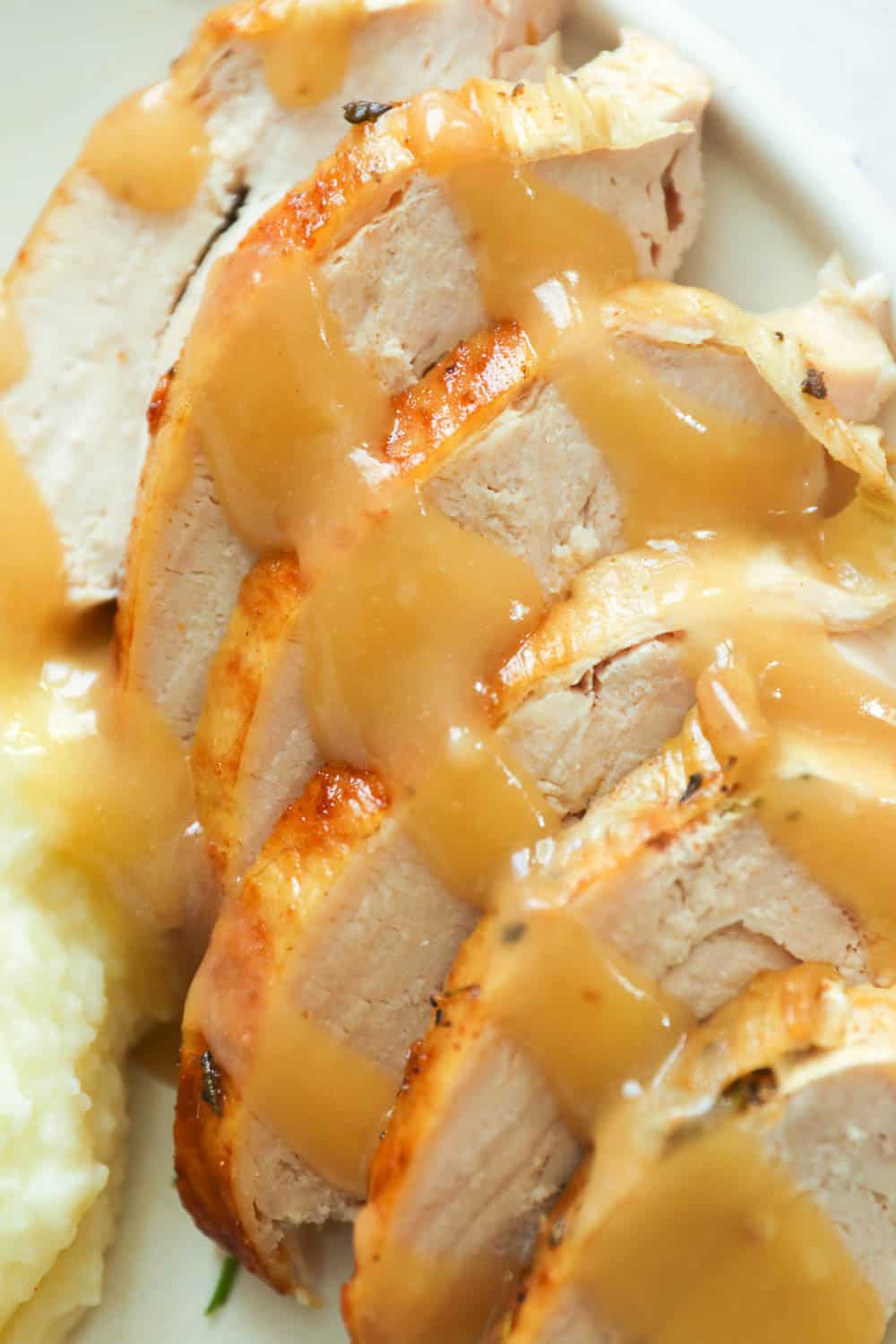
The traditional sides are homemade gravy, green bean casserole, mashed potatoes, cornbread dressing, and cranberry sauce. Of course, dessert is the best part with sweet potato, pumpkin, or pecan pie.
More Comforting Holiday Recipes
By Imma
Watch How to Make It
[adthrive-in-post-video-player video-id=”F3z6xwqA” upload-date=”2021-11-01T07:00:00.000Z” name=”Baked Spatchcock Turkey” description=”Baked Spatchcock Turkey is a quick and easy way to roast your Thanksgiving bird in a fraction of the time. The resulting juicy, tender, and exquisitely crispy Thanksgiving turkey will make you a believer. What is spatchcocking? It’s a fancy term for butterflying poultry, and it allows the turkey to cook more evenly, creating a mouthwatering feast.” player-type=”collapse” override-embed=”false”]
This blog post was originally published in November 2021 and has been updated with additional tips, new photos, and a video.
Baked Spatchcock Turkey
Ingredients
The Turkey
- 1 large turkey (15-16 pounds)
- 2 teaspoons (10-12g) salt
- 4 ounces (113g) unsalted butter, softened
- 2 teaspoons (10g) minced garlic minced
- 5 leaves fresh sage, minced
- 3 large sprigs rosemary, leaves removed from stems and minced (about 1 tablespoon)
- 2 sprigs thyme, minced (1 tablespoon)
- 2 tablespoons (3g) chopped parsley
- 1 teaspoon (3g) paprika
- 1½-2 teaspoons (9-12g) salt
- 1 teaspoon (3g) coarsely ground black pepper (to taste)
The Veggies
- 1 medium onion, peeled and quartered
- 2-3 pounds (900-1,300g) potatoes, carrots, and celery, coarsely chopped
Instructions
- Rinse the turkey with water, inside and out, then pat it dry with a paper towel. Place the bird breast-side down on a large board or flat work surface.
- Next, cut both sides of the turkey's backbone with kitchen shears, starting at the end with the thigh, working your way up to the neck. Remove the backbone, and save for homemade stock or bone broth.
- Grab both sides of the turkey, and open it like you would a book (butterfly). Turn the breast side up.
- Push down on each side of the breast with your hands until you hear it crack. Then flatten the turkey.
- If desired, remove the wishbone as it makes it easier to carve the whole breast in a single piece.
- Rub inside and out of the turkey with salt. Set aside.
- Combine the softened butter, garlic, sage, rosemary, thyme, parsley, paprika, salt, and pepper.
- Let this mixture sit for a little bit (about 5 minutes). Generously rub the turkey inside and out with a little over half of the spice blend, then refrigerate until ready to cook.
- Mix the onion, potatoes, carrots, and celery with the rest of the spice mix in a bowl. Set aside.
- When ready to bake, roast the turkey on a baking rack; the turkey goes on top and the veggies below.
- Roast at 400℉ (205℃) until the skin is crisp and an instant-read thermometer inserted into the thickest part of the breast reads 165℉ (74℃), 1-1½ hours.
- Let it stand 5-10 minutes before slicing the turkey to serve.
Tips & Notes:
- If you’re uncomfortable using a knife to remove the backbone, I suggest using a pair of sharp kitchen shears or scissors instead.
- Please always wash your hands after handling raw poultry and disinfect the working surfaces to avoid cross-contaminating cooking surfaces and food.
- If you don’t have an instant-read thermometer, poke in a skewer to test if the juices run clear to make sure it’s cooked through.
- You can kick it up a notch by sliding some plain or herbed butter under and on the skin after brining it for an extra-moist baked spatchcock turkey.
- Seasoning your turkey the night before helps the deliciousness penetrate deeper for a bad-to-the-bone spatchcocked turkey.
- Alternatively, you can grill this for about 45 minutes per side, depending on the size of the bird.
- To cook this in a LARGE slow cooker, make a base for the turkey to sit on. Place a small metal rack or balls of aluminum foil to elevate the turkey (about 3-4 balls, about 3 inches wide) in the slow cooker crock. Then place turkey and potatoes on top and cook for about 2 1/2–3 hours on high.
- Please keep in mind that the nutritional information is a rough estimate and can vary significantly based on the products used in the recipe.
I spatchcock mine and leave the veggies bigger, carrots whole, potatoes quarter about 1 1/4 ” cubes. lay the big boy right on the veggies, but add some water to the pan so the veggies don’t dry out, after a little bit of cooking turkey juices with take over. But keep the turkey right on the veggies, you can make two handles from Aluminum foil to pick him up when he’s done.
Cool! Thanks for sharing your tips.