
How to Poach an Egg
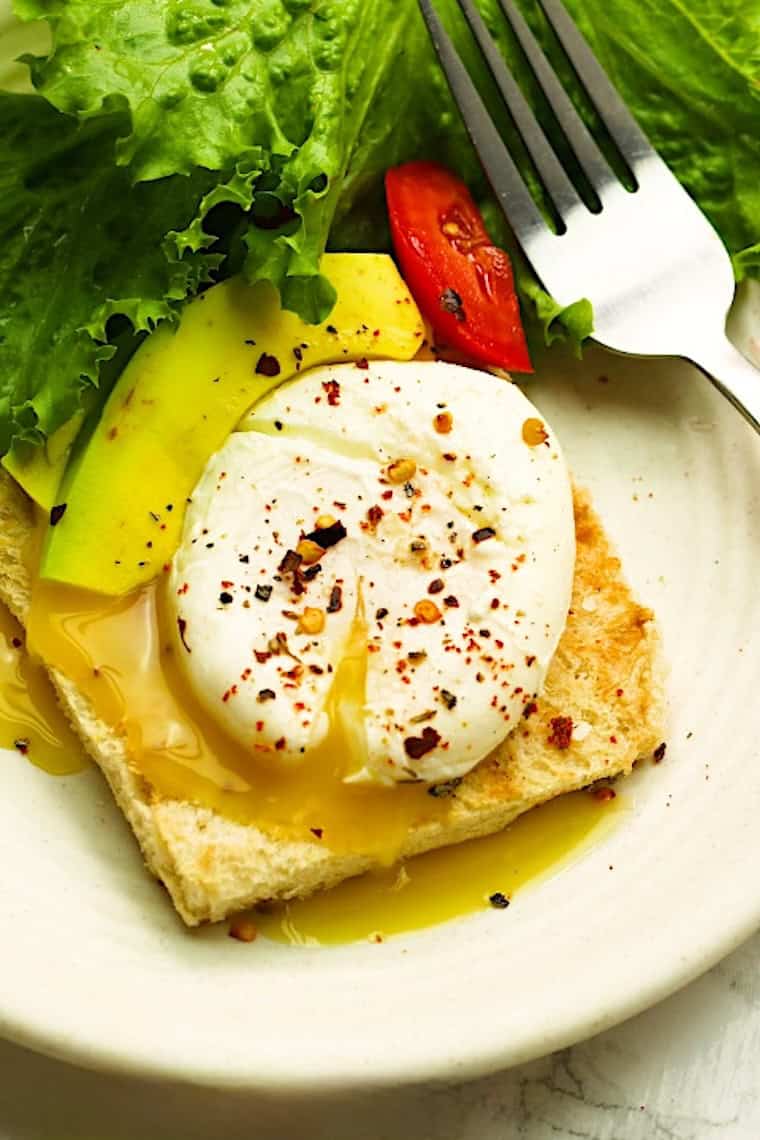
Uniquely creamy whites, perfectly runny yolks, and no added fat make learning how to poach eggs a valuable skill. Ramp up breakfast with the healthiest way to eat eggs on toast, or just to impress your guests.

I have to be honest, the first time I poached an egg, I was scared. We don’t usually eat them in Cameroon, but then I watched Julie & Julia. Have you seen that movie? I’ve seen it more than three times, and I love the scene where Julie is eating an egg for the first time in her life.
It definitely wasn’t the first time I had eaten an egg, but poaching always seemed complicated. However, other than a few easy tricks, it’s pretty straightforward.
Why Poaching Works
Soft, creamy, and melt-in-your-mouth are not exaggerations. Plus, there’s no extra fat, it’s higher in nutrition because of the lower cooking temperature, and it’s faster with easier cleanup. Sounds like a win-win to me.
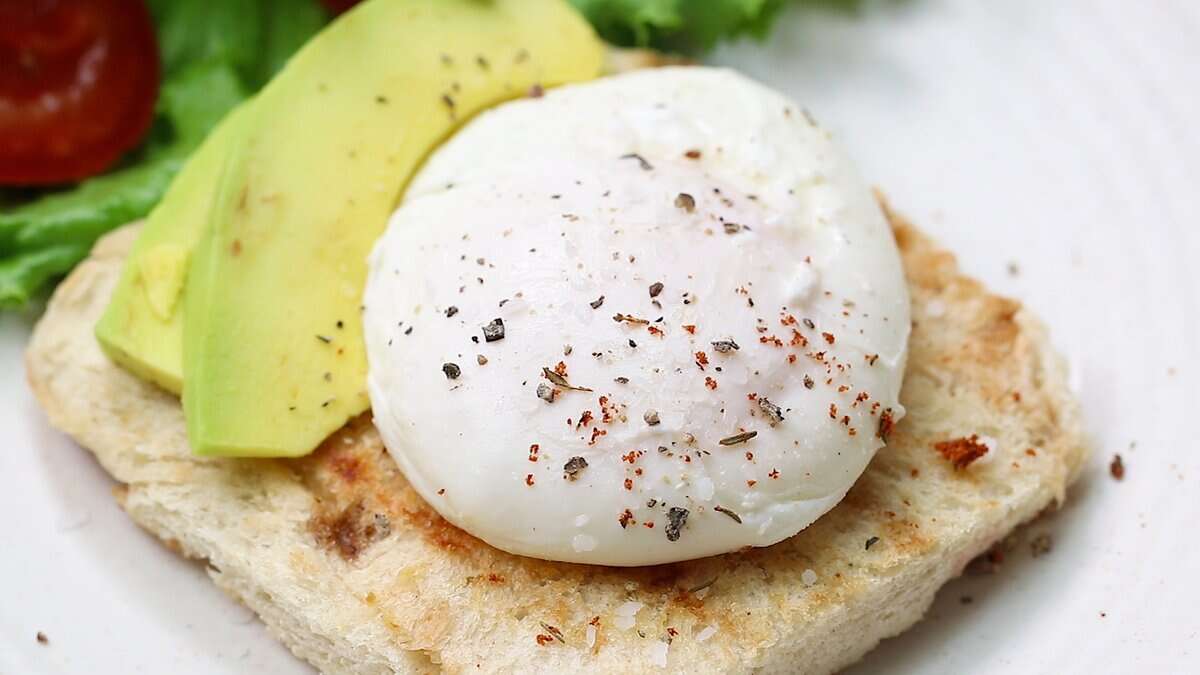
Then there’s the versatility. Up your meal’s protein content by topping avocado toast, a refreshing salad, or roasted vegetables. Eggs Florentine on an English muffin with spinach and hollandaise sauce delivers a fantastic brunch.
Three Easy Ways to Poach Eggs
There are more than ten ways to poach eggs. From the classic whirlpool in just under simmering water and straining the whites before adding them to the water, to using cling wrap (sous vide), the microwave, and specialty tools.
Photos are for the traditional method, and instructions for a poacher and an air fryer are below in the recipe card.
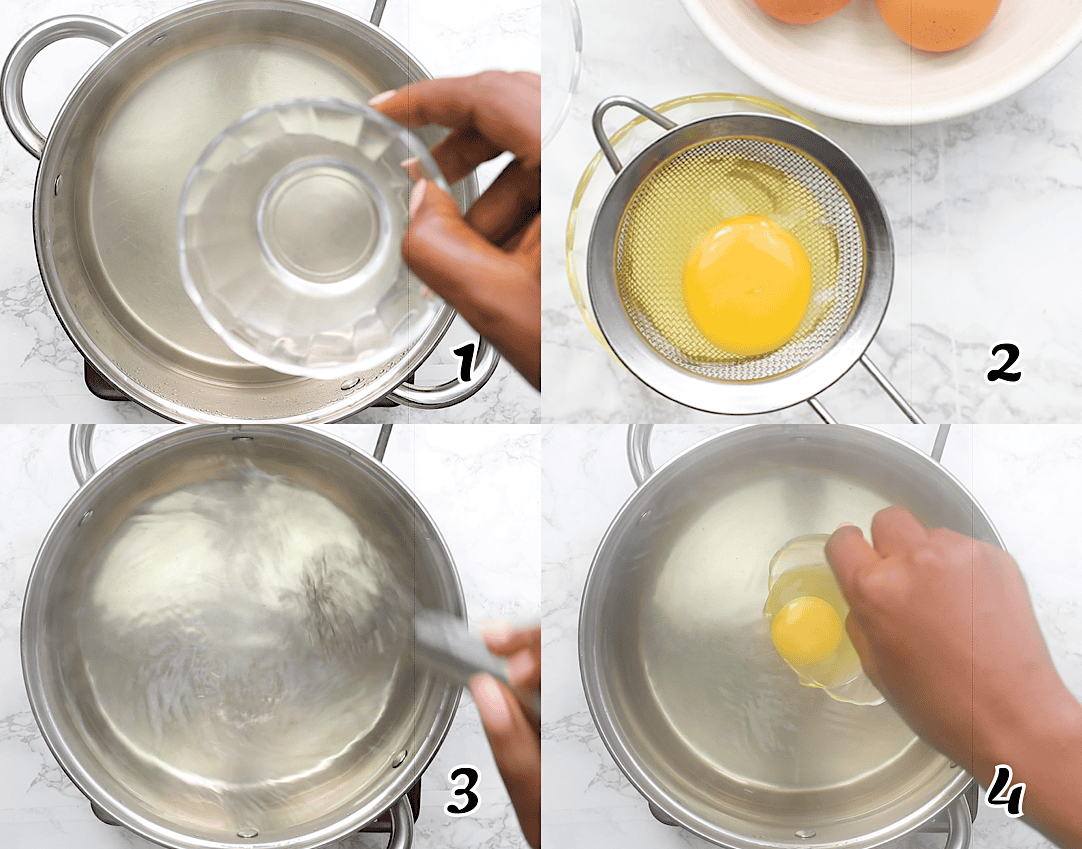
- Bring the water and vinegar to a simmer. (Photo 1)
- Crack the egg into a small strainer or small bowl, create a gentle vortex in the hot water, then slide the egg into the middle of the vortex. (Photos 2-4)
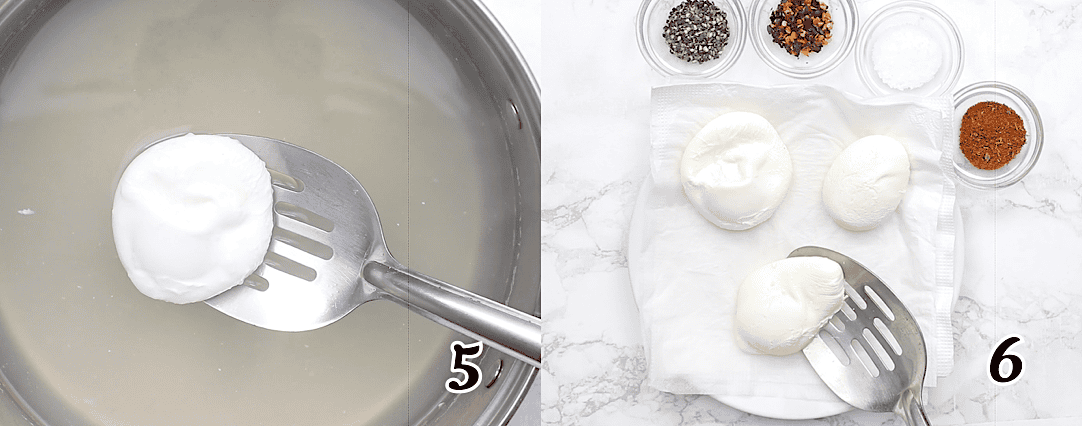
- Cook for 3-4 minutes for a soft, runny yolk, or 5-6 minutes for a firm yolk, then gently remove it with a slotted spoon. (Photos 5-6)
Chef Hacks
- If you’re doing a bunch of eggs for a group brunch, carefully crack the eggs into a 1:1 ratio water: vinegar (1 cup water to 1 cup vinegar) with a pinch of salt and let them soak until a film forms around the whites. It can take up to five minutes, but don’t leave them in the solution longer than that, or you might taste the vinegar. Then poach as usual. Thanks, Chef Mei Lin.
- The vinegar helps coagulate the egg whites, keeping them in a cute ball. And you can use a slotted spoon to move them.
Ways to Use Poached Eggs
The list is as long as your imagination. Personal favorites are topping grit cakes, ramping up biscuits and gravy, and turning a plain bowl of rice into a diversity bowl with a poached egg and roasted vegetables. Another idea is to leave the eggs out of my shakshuka and top it with poached eggs when it comes out of the oven.
More Incredibly Useful How-To’s
Watch How to Do It
[adthrive-in-post-video-player video-id=”ESxH2idp” upload-date=”2021-09-01T07:00:00.000Z” name=”How to Poach an Egg” description=”Let me show you how to poach an egg using simple and easy-to-follow steps. Now you won’t ever have to say that poached eggs are too tricky. With perfectly firm whites and runny yolks, you’ll be serving them on your toasts, grain bowls, or salads like a pro!” player-type=”collapse” override-embed=”false”]
This blog post was originally published in September 2021 and has been updated with additional tips, new photos, and a video.
How to Poach Eggs
Ingredients
- 4 cups (940ml) water
- 1 tablespoon (15ml) white vinegar
- 4 eggs (2 per person)
Instructions
Traditional Method
- Bring 2-3 inches of water to a simmer and add a tablespoon of vinegar. Stir gently to create a vortex.
- Crack a fresh egg (up to 4 eggs in a medium pan and 8 eggs in a large one) into a small bowl, then slide it into the middle of the vortex. As long as they have room to breathe, they’ll be fine. Optionally, you can crack the egg into a strainer so the watery part of the egg white runs off.
- Cook for 3-4 minutes for a soft, runny yolk, or 5-6 minutes for a firm yolk, then gently remove it with a slotted spoon.
Egg Poacher
- If you have a poacher, fill the bottom with a half inch of water. Heat over medium until it reaches a bare simmer.
- Lightly oil each poaching cup and set them in the poacher so they can warm up.
- Crack an egg into each cup, cover, and cook to the desired doneness (3-4 minutes for runny yolks and 5-6 minutes for set yolks).
- Season with salt and pepper, and enjoy.
Air Fryer
- Preheat the air fryer to 400℉ (205℃). Spray ramekins or silicon cups with a little oil, add a tablespoon or two of boiling water, and gently crack an egg into each one.
- Place the ramekins into the air fryer basket, and cook for 5-10 minutes. For a runny yolk, check for doneness at 5 minutes.
- Remove the eggs from the ramekins with a slotted spoon and drain on a paper towel. Season with salt and pepper if desired and serve immediately.
Tips & Notes:
- Start with 2-3 inches of water and heat it to a bare simmer. Slight bubbles will form on the bottom of the pan and slowly rise to the surface, but they won’t disturb the surface.
- White distilled vinegar or a mixture of distilled vinegar and white wine or apple cider vinegar will allow the egg whites to stay white. A tablespoon or two will work fine in 4 cups of water if using it in the poaching water.
- Please remember that the nutritional information is a rough estimate and can vary significantly based on the products used in the recipe.



Thank you for the simple explanation. I loved the air fryer version.