
Koki Beans
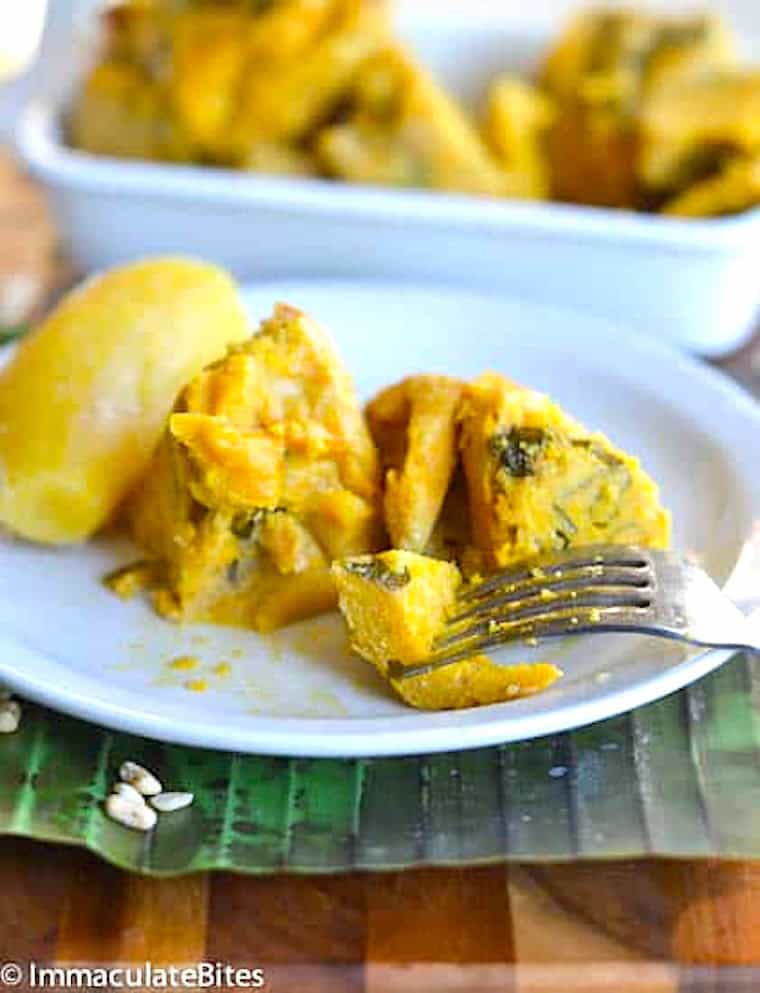
Koki beans are a moist, tasty, pudding-like, steamed treat made with coarsely ground black-eyed peas and some spinach. Great as a meal on its own or with boiled plantains!
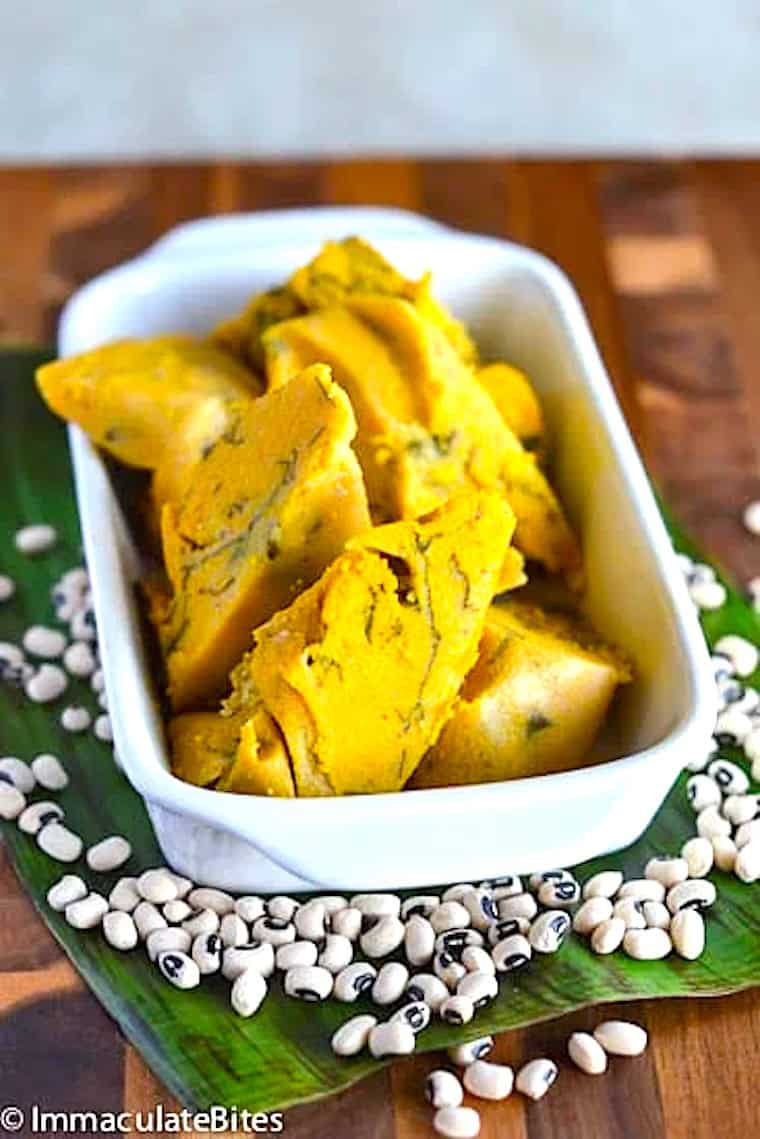
Did you know black-eyed peas are native to West Africa? People have enjoyed them for thousands of years throughout the continent. They’re believed to have reached the United States during the transatlantic slave trade. No wonder it’s so popular in the South, especially with African Americans.
While growing up in West Africa, specifically Cameroon, I never had these beans whole. They always masqueraded in pudding form and under interesting aliases: koki beans, ekoki, haricots koki, koki de niébé, gateau de haricots, or bean cakes. You can find these delectable bites everywhere in Cameroon, as they’re popular in restaurants and bars. They’re also a popular street food sold by women vendors to hungry pedestrians, myself included.
Honestly, some of the best koki beans I’ve had the pleasure of eating have been from these street vendors. They sure know how to get the consistency right, spot on, moist, and tasty. Besides, it’s a whole lot faster to buy them on the street.
Why They’re Worth the Effort
So why is this bean pudding not cooked frequently? Because it can be time-consuming: soaking, washing, peeling, grinding, pounding (whisking), and assembling the koki beans is no easy task.
However, there are ways to cut down on this process. Using peeled beans sold in African stores will cut your time in half. And since they freeze well, you can wash and peel a big batch of beans when you have time, and freeze them until the day of.
How to Make Koki Beans
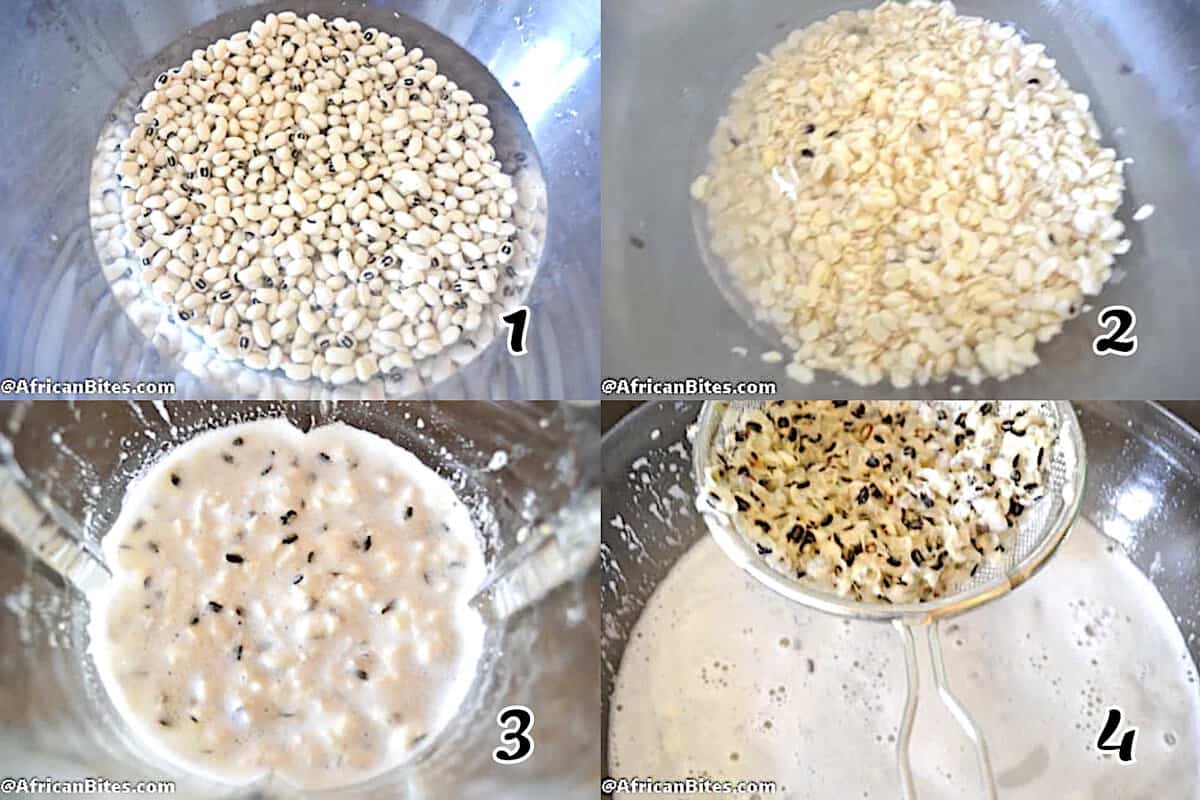
- Peel the black-eyed peas or buy pre-peeled beans. (Photos 1-4)
- Soak peeled beans in water for about an hour to overnight to completely hydrate them and facilitate blending.
- Cut the banana leaves into rectangles, remove any ugly edges, submerge them in water to clean, drain, and pat them dry. Parchment paper works if banana leaves aren’t available.
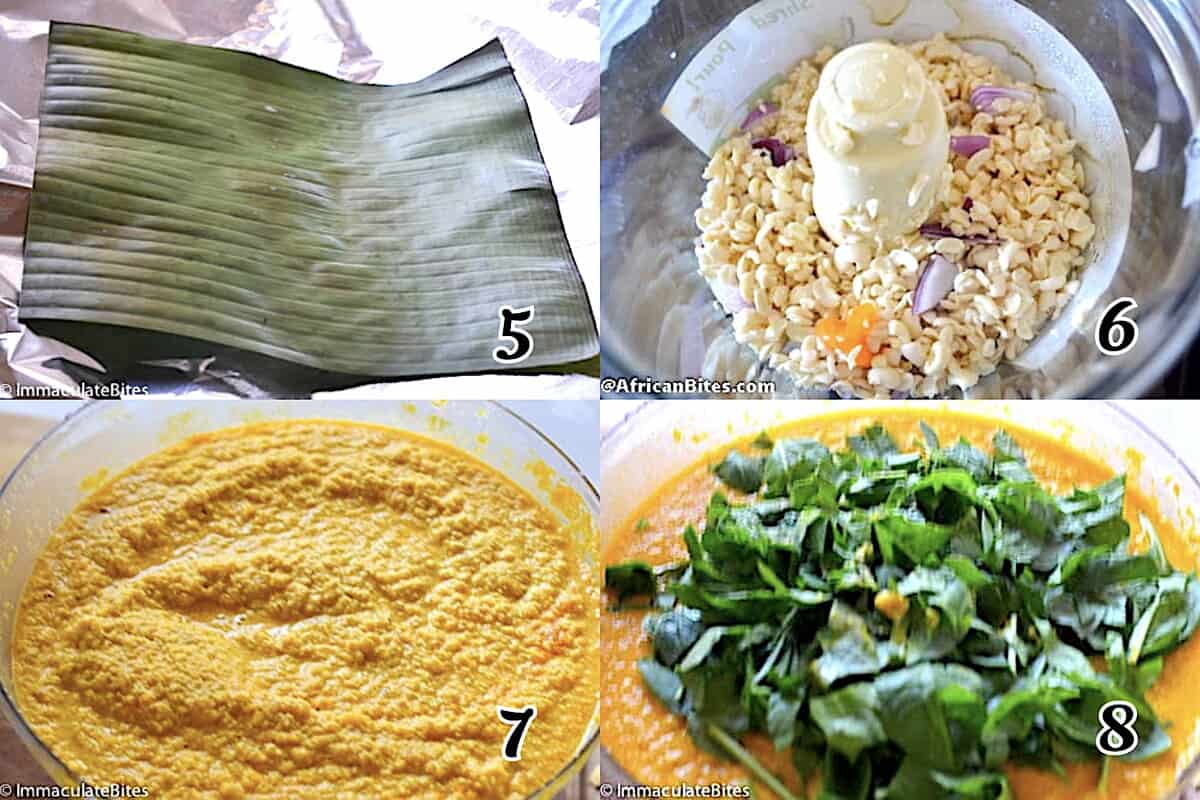
- Heat the leaves and wilt them over an open high flame to make them flexible. Then place them on 6 pieces of aluminum foil cut large enough to wrap the finished koki, and set aside. (Photo 5)
- Chop onions and habanero, and set aside.
- Oil – Lightly warm palm oil in a small skillet or saucepan for about a minute or two until completely melted.
- Puree the beans, onions, and habanero pepper in a food processor or blender, with a cup of water or more, until it reaches the desired consistency. (Photo 6)
- Pour the mixture into a large bowl, and add the palm oil and spinach. Mix everything, then season to taste with Maggie or bouillon and salt. Make sure to use up all the water. (Photos 7-8)
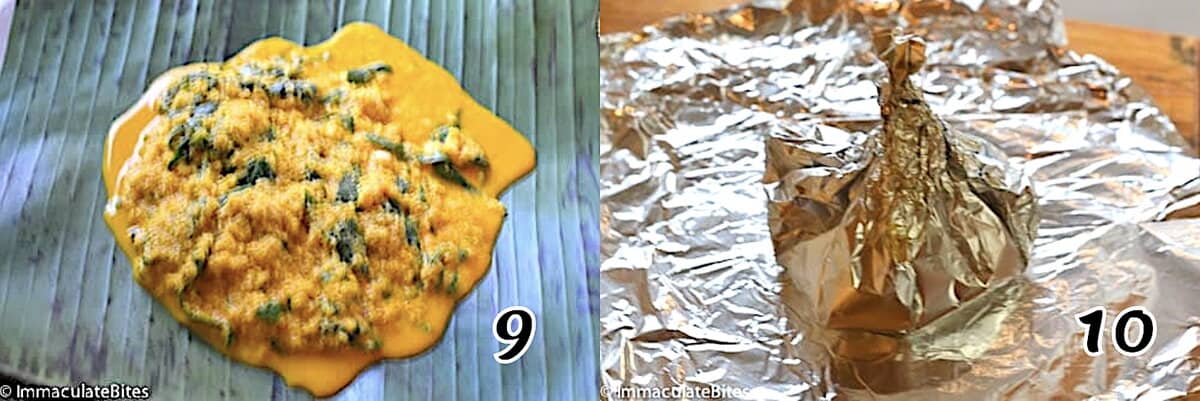
- Assemble – Place a scoop of koki bean mixture on a leaf (about 2 cups). Fold the banana leaves to form a little purse, then fold the aluminum foil around it, and set aside while you repeat the process until all the kokis are assembled. (Photos 9-10)
- Prep – Line the bottom of a large stockpot with aluminum foil or the remaining leaves or stalks to create a steamer (or use a real steamer). Add enough water to steam.
- Steam koki for about an hour and 30 minutes, adding water as necessary to prevent burning.
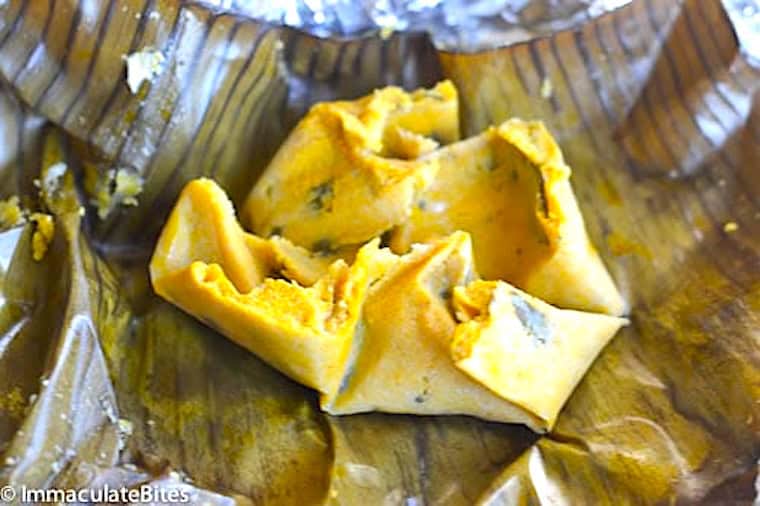
- Serve – Remove and let them cool for about 10 minutes. Enjoy.
Tips and Tricks
- Don’t grind your beans into a fine paste. They must be coarsely ground, a little bit gritty (this makes a huge difference).
- Include onions for flavor.
- Red oil (NOT the controversial palm oil) makes a moist koki. However, I use half the oil asked for because, you guessed right, calories. I would rather eat more than less, and it doesn’t make them less appetizing.
- You can use plantain or banana leaves if you have them, but they’re not necessary. You can wrap them in parchment paper or aluminum foil.
What to Serve With Koki Beans
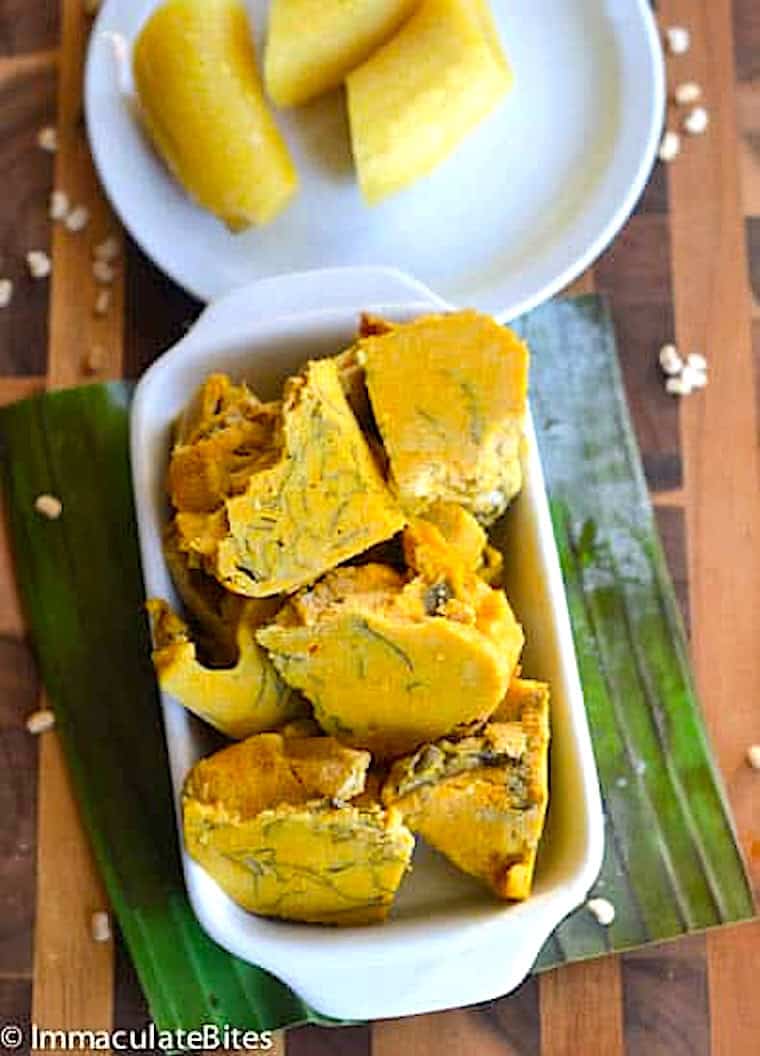
Serve this with any starchy side. My favorite is boiled ripe plantains. Baked plantains, potatoes, pounded yams, and yuca are also great.
More Satisfying Street Food Recipes to Try
By Imma
This blog post was originally published in November 2013 and has been updated with additional tips and beautiful photos.
Koki Beans
Ingredients
- 2 cups (280-300g) skinless black-eyed peas
- ½ medium onion
- ½ scotch bonnet or habanero pepper (optional)
- 1 cup (236ml) palm oil (see notes)
- 3½ cups (826ml) water
- 3 cups (90-100g) chopped fresh spinach
- 2 Maggie cubes or 2 teaspoons (7g) bouillon powder
- 3 teaspoons (15-20g) salt or more to taste
Instructions
How to Peel Blacked-Eyed Beans
- Of course, you can buy them already peeled. But if you want to peel your own, here's how to do it. Soak the beans for about 15 minutes, then pulse them in the blender or food processor to break them up (5-10 times or 10-15 seconds). Doing this in small batches works best.
- In a large bowl, soak the beans with warm water for about 2 hours or up to 24 hours, covered with water, until fully hydrated.
- Rub the black-eyed peas between your hands to take the skin off. The skins will float to the top. Pour the skins off into a colander. You may have to do this process several times to get most of the skins.
- Most of the skin will come off. Sort through the remaining peas to remove all the skins. You can do this ahead of time and freeze them to save time.
Making the Koki Beans
- Soak peeled beans in water for about an hour to overnight to completely hydrate them and facilitate blending.
- Cut 6 pieces of aluminum foil large enough to wrap the finished koki, and set aside.
- Cut the banana leaves into rectangles, remove any ugly edges, submerge them in water to clean, drain, and pat them dry. Use parchment paper if banana leaves are not available.
- Heat the leaves and wilt them over an open high flame to make them flexible.
- Chop the onions and habanero, and set aside.
- Lightly warm palm oil in a small skillet or saucepan for about a minute or two until completely melted.
- In a food processor or blender, puree the beans, onions, and habanero pepper with a cup of water or more until it reaches the desired consistency. (Do a test with your fingers; it should feel just a little gritty.) You may have to do this in two batches.
- Pour the mixture into a large bowl; add palm oil, spinach. Mix everything together, then, season to taste with Maggie and salt. Make sure you have used up all the water.
- Place a scoop of koki bean mixture on a leaf (about 2 cups). Then quickly fold them together to form a little purse, and set aside while you repeat the process until all the kokis are assembled.
- Line the bottom of a large stockpot with aluminum foil or the remaining leaves or stalks to create a steamer. Add enough water to steam.
- Steam cook koki for about an hour and 30 minutes, adding water as necessary to prevent burning.
- Remove and let them cool for about 10 minutes, then serve.
Tips & Notes:
- The red palm oil we use in African cooking is NOT the controversial palm oil used in commercial products. It adds a unique flavor and beautiful color, but feel free to replace it with a different vegetable oil if you can’t get it. You can also reduce it by half for a less calorie-dense snack.
- Feel free to use vegetable bouillon for a vegan version.
- Try them with corn husks for a Latin America twist if you can’t find banana leaves.
- The time it takes doesn’t include peeling the peas.
- Please remember that the nutritional information is a rough estimate and can vary greatly based on the ingredients used in the recipe.
Nutrition Information:






Thanks for a great recipe – they are delicious!
Awesome! Thanks for trying out my recipes.
I love the reciepe
I love the explanation
Can this be done in a moin moin tin pan instead of leave and foil paper
Yes it can.
Is it possible to use canned black eyed peas, instead of soaking, to cut the corners
Hello Lucy. Sorry, it is better to stay away from the canned black-eyed peas for this recipe.
Please what causes the koki to be too hard when one prepares it?
First off the koki needs to be mixed thoroughly just like you would cream butter and sugar – to make it airy and not hard . Some use mortar and pestle or the modern way is using a mixer. Also more water might help.
Can a pregnant woman eat koki beans because I have heard from people that it will affect the unborn bany with fungi (Jeti Jeti) I really want to eat it but am scared, please is it true
Hello. Sorry, I can’t give you a medical answer on that. Please consult your doctor. Thank you.
This recipe worked really well. Thank you so much for sharing it. I followed all the directions as written using pre-peeled beans, except I skipped the banana leaf because I had none. The result was still very good.
This can also be cooked in a pressure cooker. I put the “packets” on top of a steamer with 1.5 cups of water on the bottom and pressure steamed for 45 minutes with very good results. The next time I will check at 30 minutes as perhaps it didn’t need to cook that long.
I thoroughly enjoy your recipes. Thank you again!
Thanks so much for trying this out, Sarah! And thanks for sharing your tips.
The best koki recipe so far.
Thank you Emma,this site is so helpful.keep it up !
Do you have recipe for cauliflower rice?
Thanks, Renna! Sorry No I don’t.
Hi Emma,
I was wondering how can i blend the beans without putting in too much water?
If you have a food processor you can. Or you can do it in small batches till it’s all done, it works all the time for me.
Please at which step do I blend the beans? I could not find it in the recipe. Is it blended together with the onion and pepper in step 13? I admit I know nothing about this dish, but I need to do it well to surprise my cameroonian boyfriend
Yes, you do. I have updated recipe. Do let me know how it works out for you.
Rosa, you are Amazing! Girl . Thanks for the tip . Always heard about it but have never given it a try . Will do now.
Thanks for the tip on coarsely grinding the beans. Tried it and it made a HUGE difference in the texture.
Now for a tip of my own.. You know how the koki made by pounding in a mortar comes out looking really spongy. To get mine close to that, I use a hand mixer to incorporate air for 5-10 mins before adding the oil. Trust me this extra step is worth the time.
Thank you! I’m making this on sunday. Infact since i discovered your blog from a friend 2months ago, my way of cooking and especially making pastries has changed. Thank you
Awww thanks Mariette – let me know how you like this one too!
Absolutely amazx….ive used this recipe twice and both times have been perfect….I can’t believe I left cameroon and came and learnt to prepare koki abroad….this was luvly dear….thx thx thx so much
Oh thanks Cyndy. I know what you mean…I also learned how to make Cameroonian recipes abroad. Thanks for the feedback!
Wow just about cooking koki, thanks for the tips
Wow thanks am making this now thats why i visited your site. Hope it turns out good 🙂
No you do not need to submerge them in water. I think they will do just fine in a steam basket.
The MoiMoi was wonderful! Thank you!
I am trying this tonight. Should the parcels be submerged in water? I have them on top of a steam basket.
I made the Koki today and it came out really good. I usually make koki but estimation of salt and maggi was always a problem for me; but with the precision, it makes it much easier. Because I like it more tasty, I will use three tsp of salt and two maggie cubes next time. Thanks a lot for keeping us busy in the kitchen and for bringing only the best. There is not a day that will past without me visiting your site. Thank you!!!
Wow! This is a very new type of dish I’ve never encountered before. I’m from Korea so these type of exotic foods excite me! Thank you for sharing your recipe 😀
Stephanie, I am excited that you are excited over these bean pudding. Give them a try and let me know what you think. Thanks for the comment.