
Turkey Gravy Without Drippings
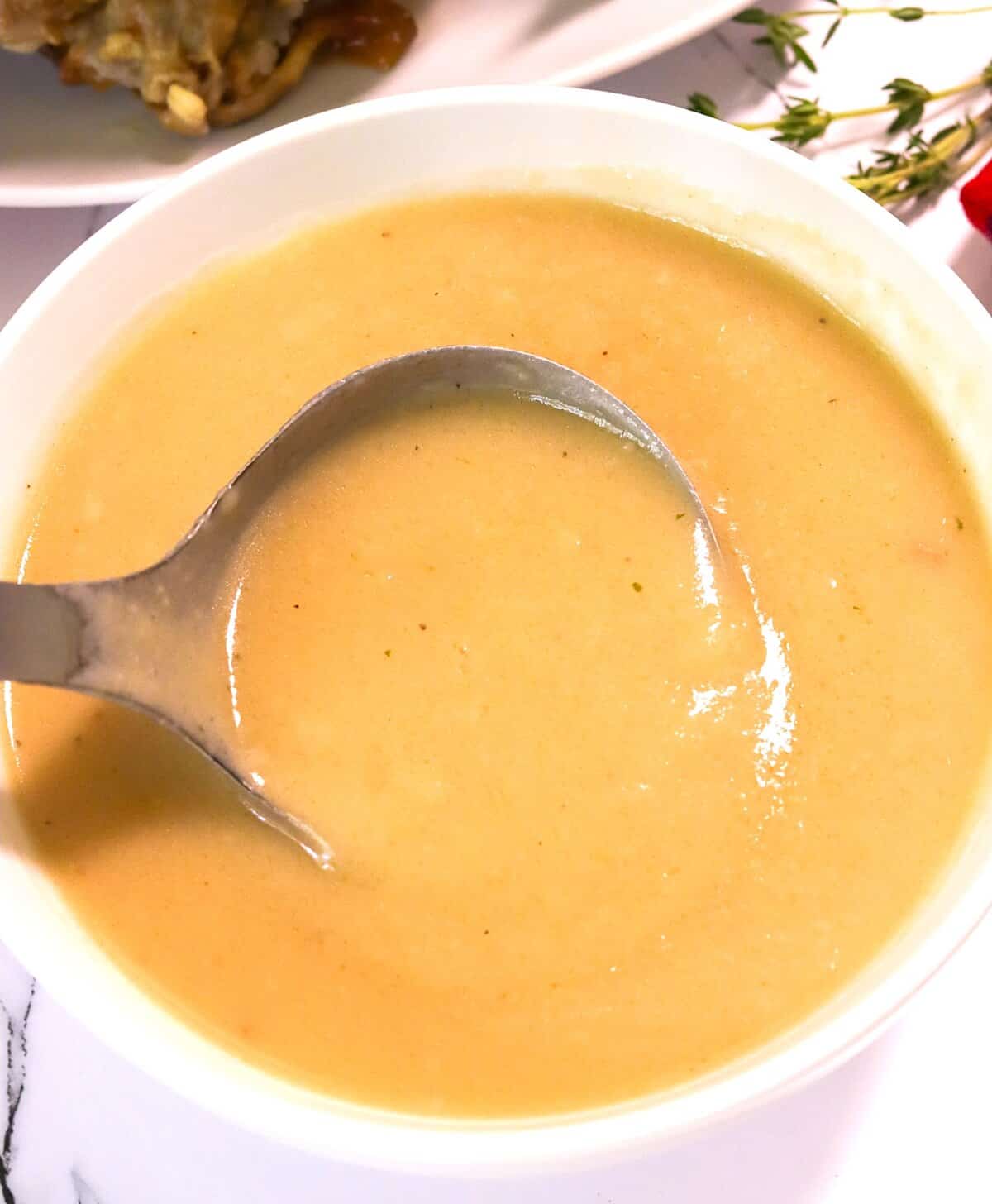
This turkey gravy recipe without drippings delivers homemade velvety smooth gravy in less than 30 minutes! The bold flavors of chicken broth infused with a dynamic mix of herbs and spices instantly elevate any meal. The rich taste and silky texture make everything from biscuits to mashed potatoes to meatloaf extra appetizing!
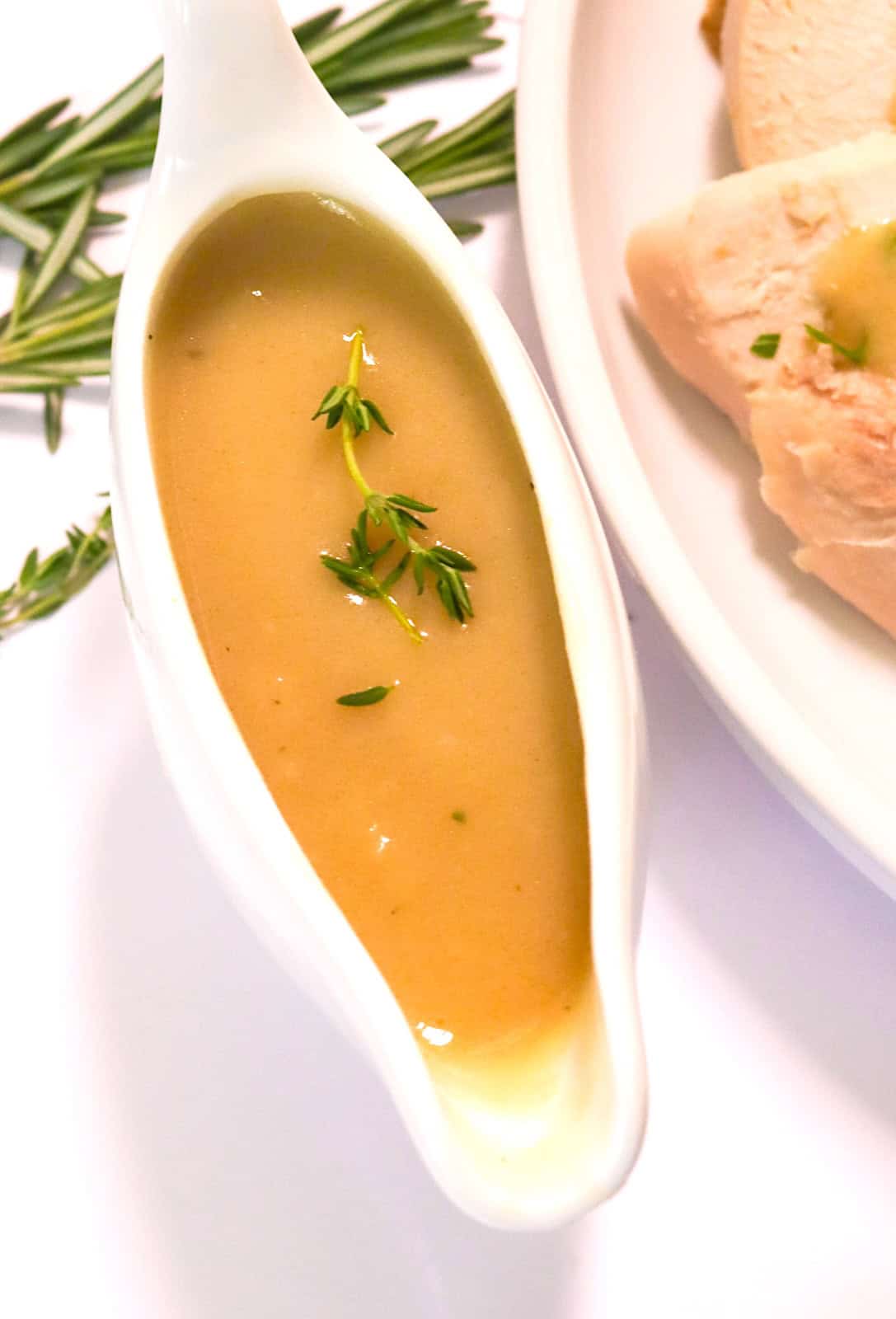
Some things were just meant to go together. Peanut butter and jelly, apple and cinnamon, turkey and gravy. The latter is a personal favorite. My holiday table isn’t complete without a golden-brown, juicy roast turkey smothered in silky-smooth gravy.
But you don’t have to wait for the holidays to treat yourself to this saucy delight! You can make this quick, convenient turkey gravy recipe without drippings, so you can enjoy it any day of the week. It’s impressive enough for a holiday dinner party with friends, but easy enough for a Tuesday night.
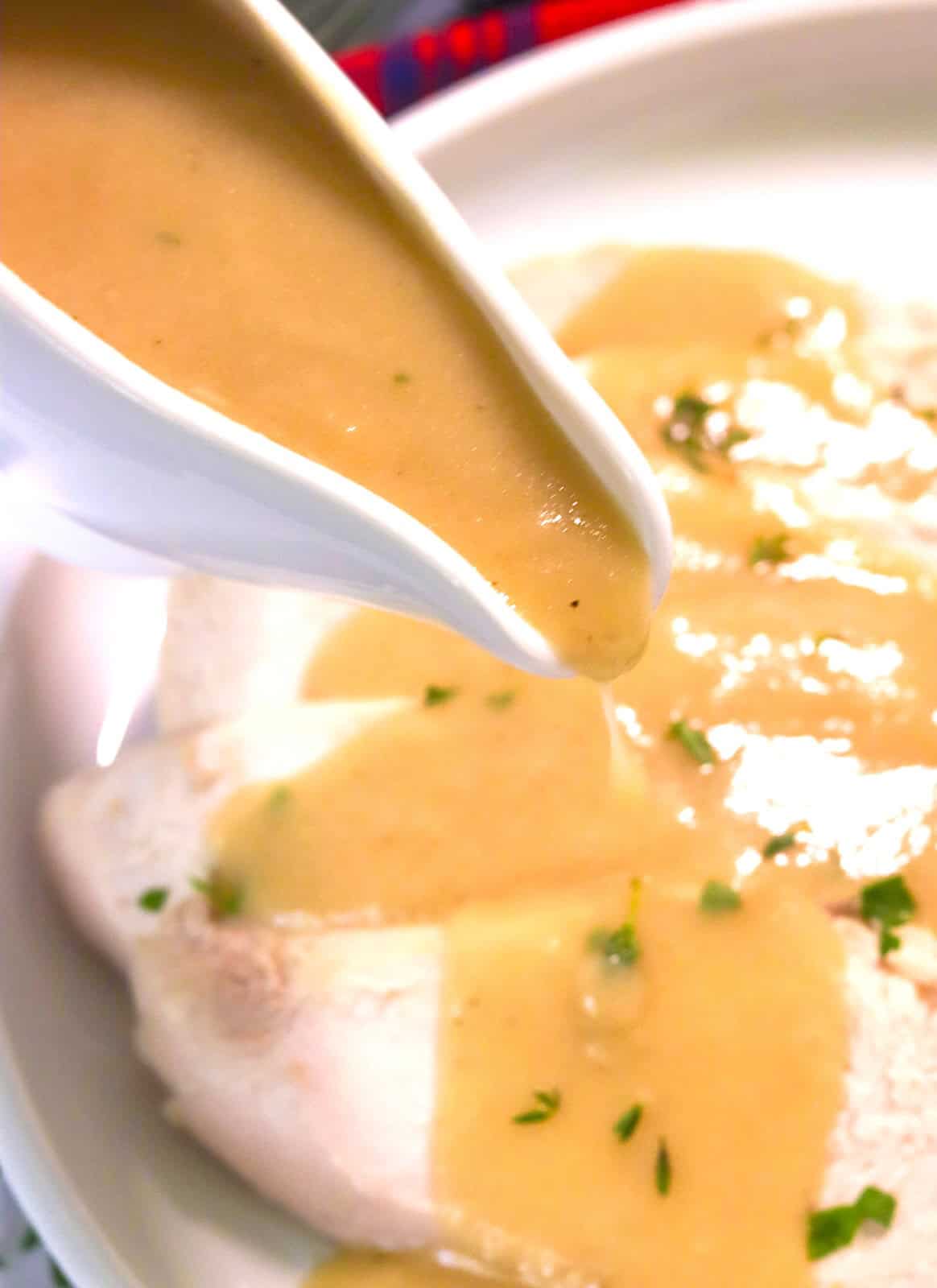
How to Get Tasty Turkey Gravy Without Drippings
Traditional brown gravy uses drippings for that mouthwatering turkey flavor. But you can get all the taste without roasting a turkey. All you need is fat, flour, and broth to make an outstanding gravy.
First, the roux (butter and flour) is the thickener. Then chicken broth and your favorite aromatics, and voila! A mouthwatering, silky gravy without drippings!
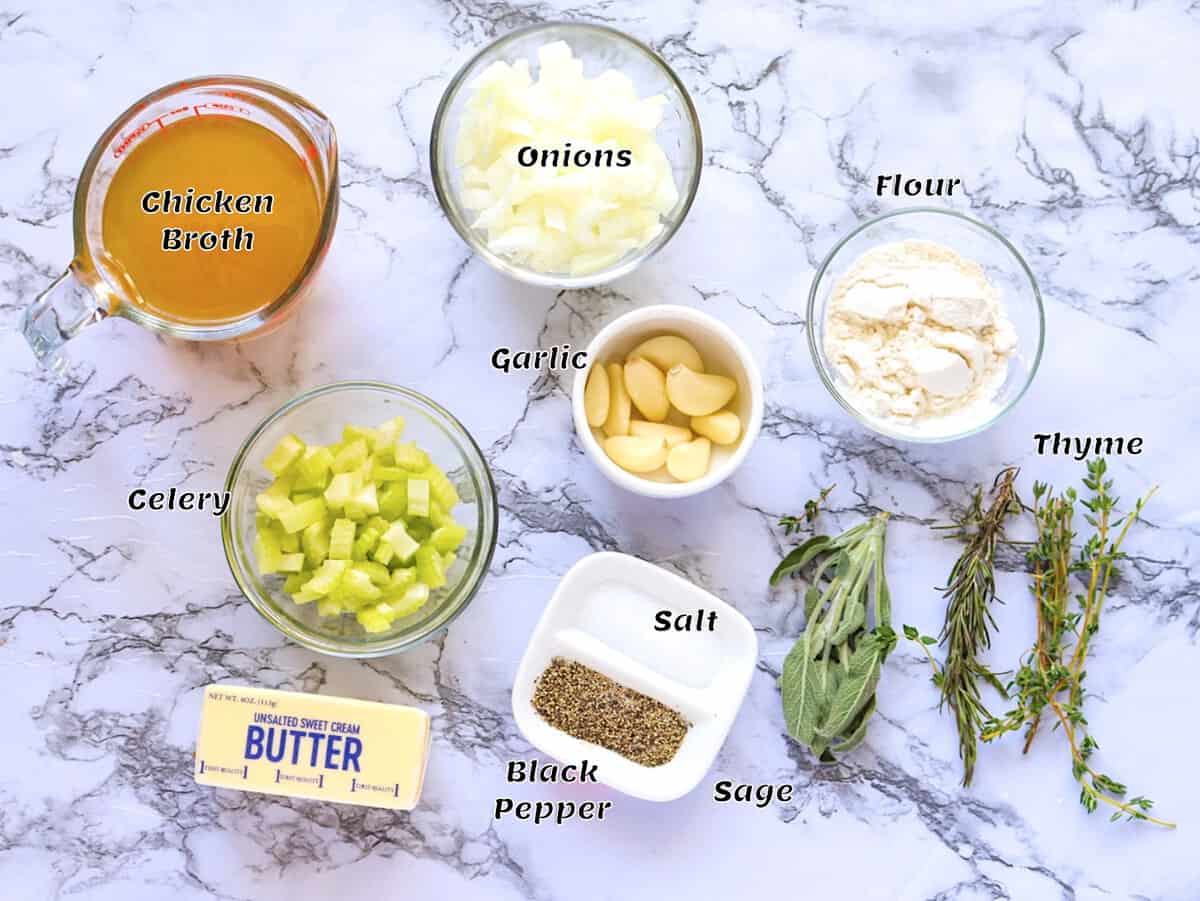
How to Make Turkey Gravy Without Drippings
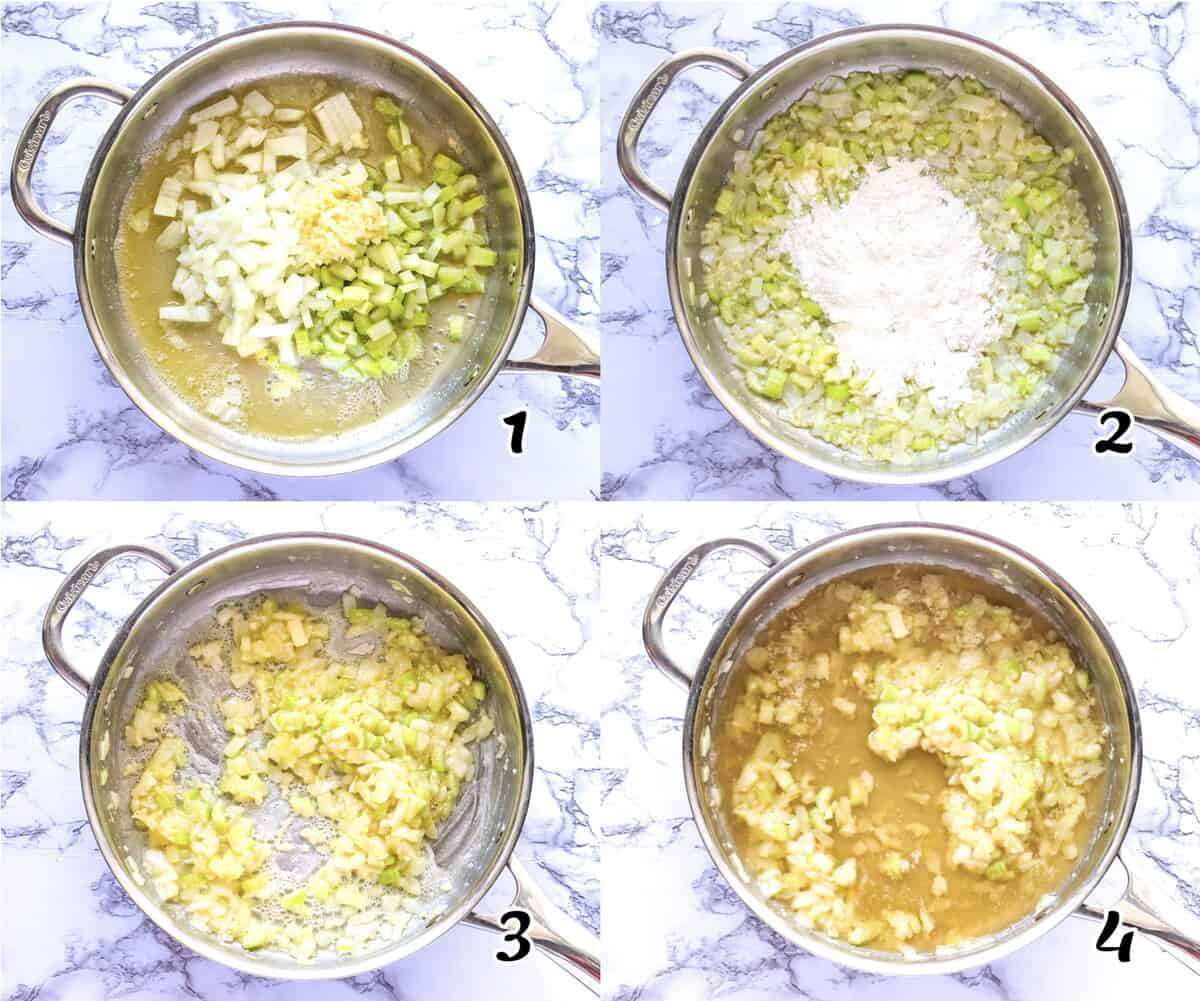
- Cook Aromatics – Melt butter in a 10-inch skillet over medium-high heat. Add onion, celery, and garlic. Cook, stirring occasionally, for 6-8 minutes to allow the vegetables to soften. (Photo 1)
- Roux – Sprinkle the flour over your aromatics and continue stirring for 4-5 more minutes. The veggies should soften, brown slightly, and form a paste. (Photos 2-3)
- Base – Pour in the chicken broth and stir until smooth. Scrape stuck bits from the bottom of the skillet as you stir. Add thyme, rosemary, and sage, whisking constantly until fully combined and the gravy thickens. (Photo 4)
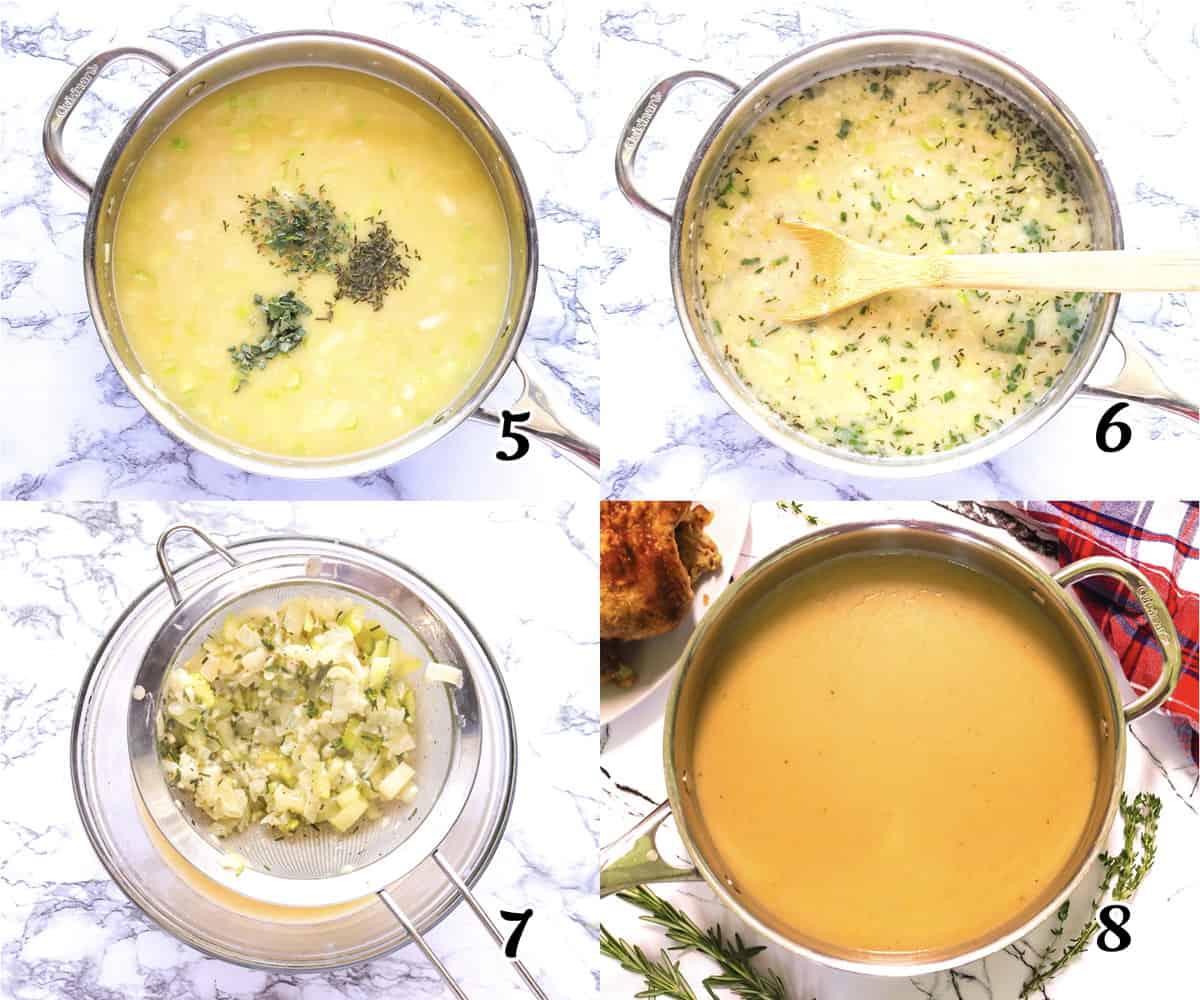
- Simmer – Reduce the heat to low and simmer the gravy for 15-20 minutes, stirring occasionally. Your gravy should be thick enough to coat the back of a spoon. Remove any foam around the skillet’s side with a wooden spoon. Season with salt and pepper to taste. (Photos 5-6)
- Strain – Separate the gravy and veggies with a strainer. Discard the vegetables (or puree them into your gravy with an immersion blender). (Photo 7)
- Serve – Pour your gravy into a gravy bowl, and enjoy! (Photo 8)
Recipe Tips and Notes
- Add sautéed mushrooms to the gravy after finishing.
- Add a splash of Worcestershire sauce or soy sauce for a boost of umami. They also give the gravy a lovely golden-brown color. Or pour in a glug of red wine for a robust flavor boost. Seasoning mixes like Creole or poultry seasonings also kick things up.
- Is the gravy too thick? Slowly pour more broth into the gravy, whisking as you pour until it reaches the desired consistency.
- Is it too thin? Make a slurry by dissolving 1 teaspoon of flour with about 3 teaspoons of cool broth and stir it in, whisking carefully.
- Need to keep your gravy hot? A thermal gravy boat will keep it hot for hours. But to be honest, not everyone has one on hand. A regular coffee thermos will also keep the gravy piping hot, so you can make it an hour or two ahead.
Make-Ahead Instructions
This is a great make-ahead recipe! You can make it a couple of days in advance and keep it in the refrigerator in an airtight container. When ready to serve, reheat slowly in a saucepan until warmed through. And yes, you can freeze it for 3-4 months.
Serving and Storage Instructions
Gravy is best hot off the stove! Leftover gravy will last in the fridge for four days or in the freezer for 3 months. If you opt to freeze it, remember to leave about an inch of space at the top of the container. That will allow it room to expand as it freezes.
Reheating on the stovetop is the best way to control the consistency. If frozen, thaw in the fridge overnight. To reheat, pour your gravy into a saucepan and reheat over medium heat, whisking constantly. If the leftover gravy thickens too much in the fridge, stir in broth or water a little at a time until it reaches the desired consistency.
FAQs
Definitely! Simply use vegetable broth instead of chicken for a vegetarian brown gravy with the same robust flavor. You could even use olive or refined coconut oil for a vegan version.
It happens. A drizzle or two of heavy cream is a delicious addition and goes a long way in cutting the saltiness. Or you can try a squeeze of lemon or a drizzle of vinegar to nudge it from salty to savory.
Giblets make excellent gravy. Simmer your giblets (except the liver) in broth or water for at least 30 minutes or until tender. Add more broth or water so they don’t dry out. Use the broth as part of the broth the recipe asks for, dice the cooked giblets, and add everything to the gravy after straining.
What to Pour Turkey Gravy Over
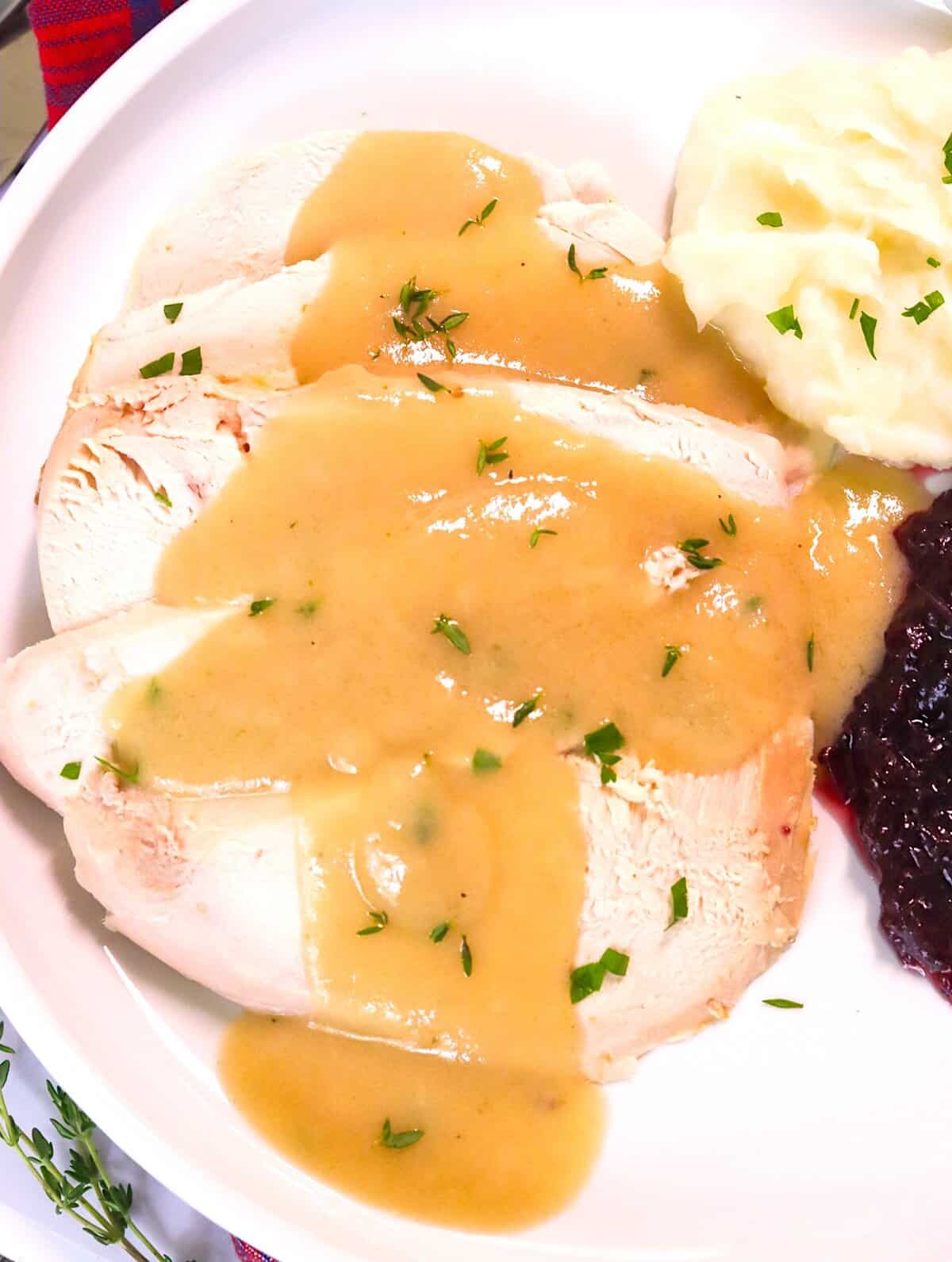
For an iconic holiday spread, this homemade gravy goes great over spiced roast turkey, mashed potatoes, and classic cornbread dressing. But it’s also a superb complement to Southern meatloaf with a side of butter biscuits.
More Flavor-Packed Sauces to Try
Turkey Gravy Without Drippings
Ingredients
- ¼ cup (60-62g) unsalted butter
- ½ large onion, chopped
- 1 stalk celery, chopped
- 2-3 cloves garlic, minced
- ¼ cup (30g) all-purpose flour
- 2½–3 cups (590-710ml) low-sodium chicken broth
- 1 teaspoon (1g) fresh thyme, minced
- 1 teaspoon (.5-1g) fresh rosemary, minced
- ½ teaspoon (1g) fresh sage, minced
- salt and black pepper to taste
Instructions
- Melt butter in a 10-inch skillet over medium-high heat. Add onion, celery, and garlic. Cook, stirring occasionally, for 6-8 minutes so the vegetables soften.
- Sprinkle flour over vegetables and continue to cook, stirring, for 4-5 more minutes until your vegetables slightly brown and form a paste.
- Pour in chicken broth and stir until smooth, removing any stuck bits from the bottom of the skillet. Add thyme, rosemary, and sage. Stir to combine and cook until the gravy starts to thicken thoroughly.
- Reduce the heat to low and simmer for 15-20 minutes, stirring occasionally. Your gravy should be thick enough to coat the back of a spoon. Remove any foam around the skillet's side with a wooden spoon—season with salt and pepper to taste.
- Use a strainer to drain the gravy and separate the veggies from the gravy. Discard the vegetables.
- Serve gravy and enjoy.
Tips & Notes:
- Is the gravy too thick? Slowly pour more broth into the gravy, whisking as you pour until it reaches the desired consistency.
- Is it too thin? Make a slurry by dissolving 1 teaspoon of flour with about 3 teaspoons of cool broth, stir it in, whisking carefully.
- Need to keep your gravy hot? A thermal gravy boat will keep it hot for hours. But to be honest, not everyone has one on hand. A regular coffee thermos will also keep the gravy piping hot, so you can make it an hour or two ahead.
- Please remember that the nutritional information is a rough estimate and can vary significantly based on the products used in the recipe.




Thanks for this tasty recipe. I love making broth from the bones, but you have to serve the bird first. So making gravy with already-made broth is a lifesaver.