
Southern Black Eyed Peas Recipe
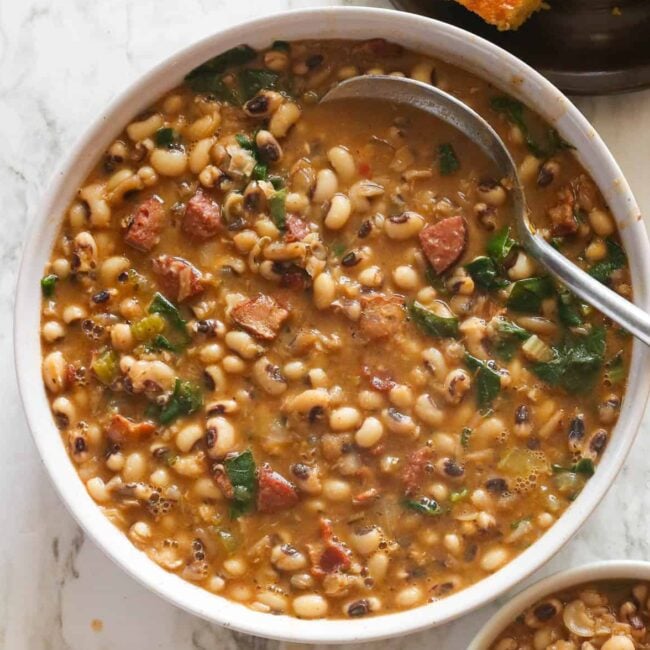
Southern Black-Eyed Peas, or Hoppin’ John, is a hearty, soul-warming delicacy. This black-eyed peas recipe is smokey, spicy, and pure satisfaction with a deep yet not overwhelming bacon flavor. And it’s a traditional Southern dish served on New Year’s Day to bring good luck!
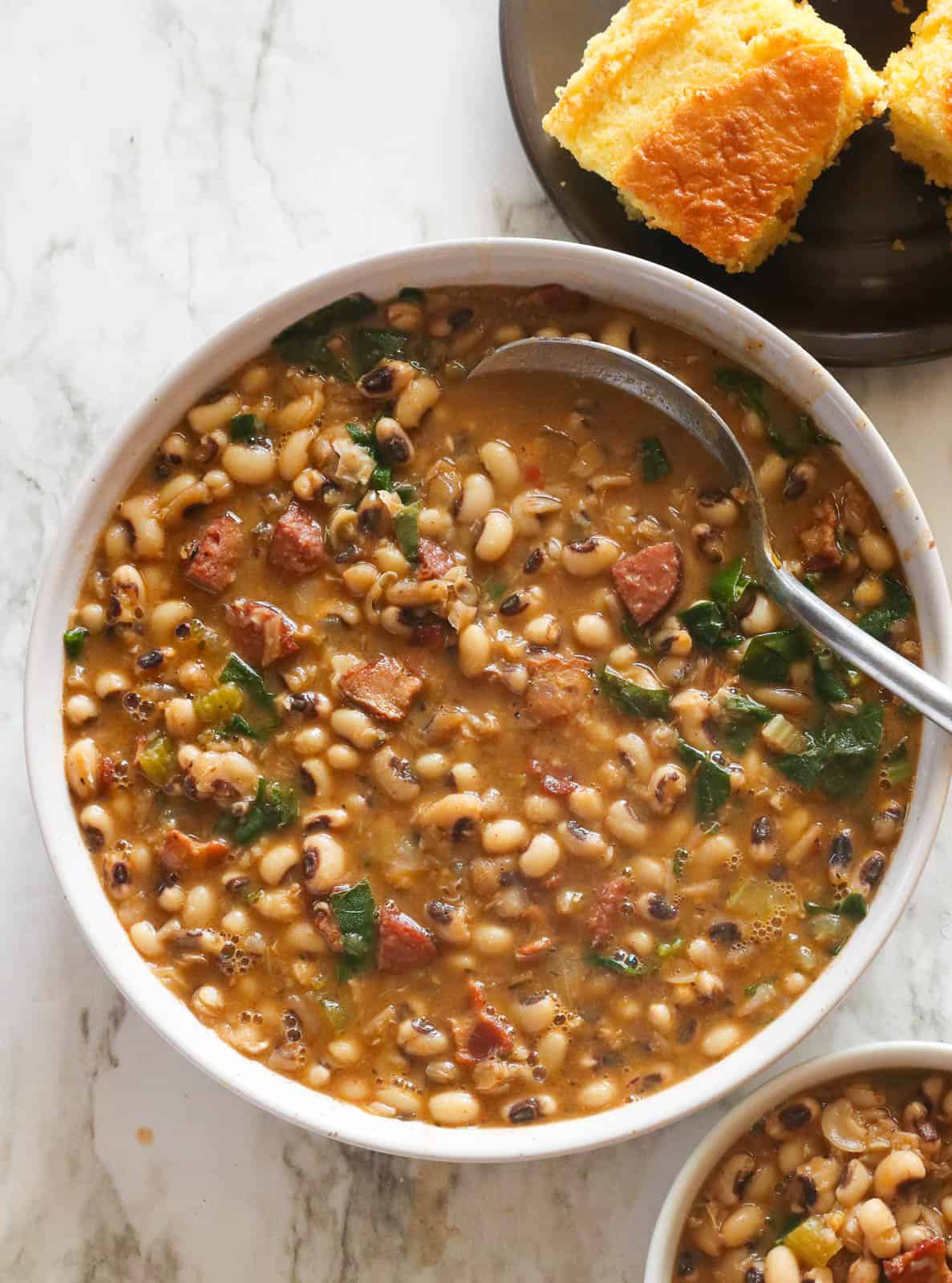
I love anything with beans! Perhaps it started back in grade school when my Auntie cooked beans for dinner in its modest rusticity – onions, salt, and oil, nothing fancy. That simple recipe made all my troubles go away like magic.
And now, this Southern black-eyed peas recipe is the perfect comfort food with soul-satisfying goodness any time of year. It warms us up even in the coldest weather and graces the best cookouts in the heat of summer. This dish will remind you of home and nostalgic, happy memories. ❤️
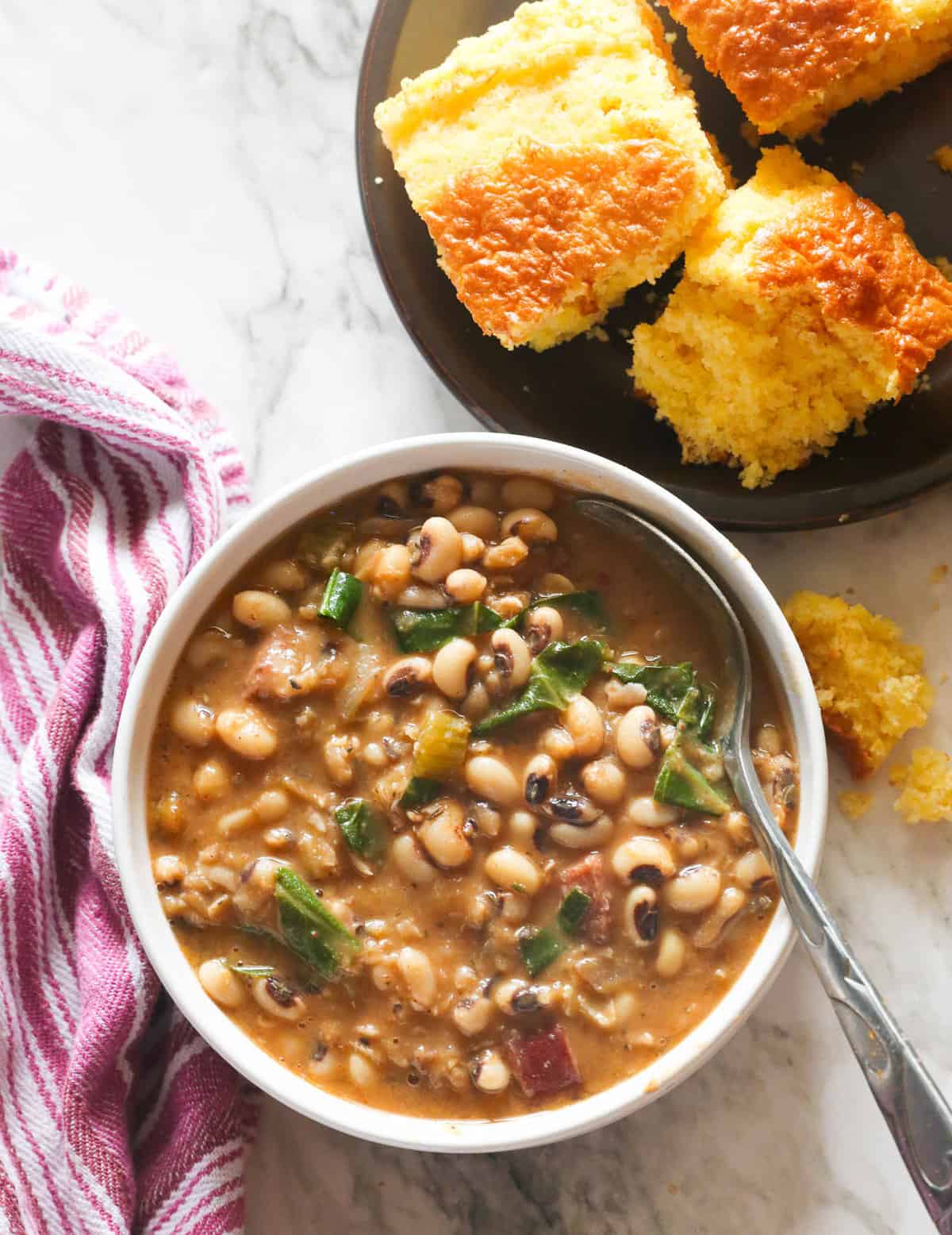
Black-Eyed Peas for More Than New Year’s Good Luck
Black-eyed peas are from my native Africa, and they’re so delicious they became popular worldwide. After arriving in the southern U.S. in the 17th century, they became a symbol of prosperity because they resemble pennies and coins. They grow exceptionally well in the heat and so gave birth to a delicious Southern tradition.
People believe eating black-eyed peas on New Year’s Day brings good luck and a slew of other beautiful things. But that doesn’t mean you can’t enjoy this heartwarming dish all year round.
Recipe Ingredients
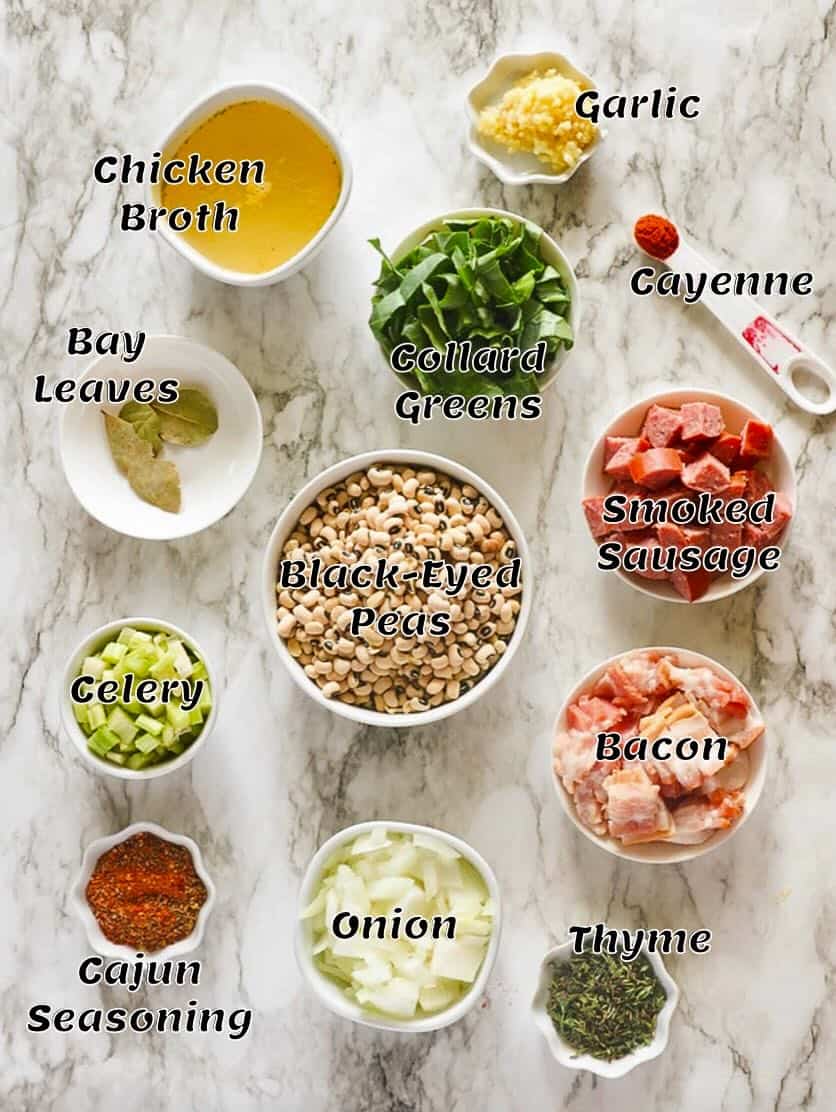
- Black-Eyed Peas offer a slightly smoky flavor and high protein and fiber content, making them nutritious and delicious.
- Meat – Bacon and smoked sausage add flavor and more meaty goodness. Ham hock or leftover smoked turkey are also excellent additions.
- Seasonings – Caramelized onion, garlic, thyme, celery, bay leaf, jalapenos, Creole seasoning, salt, and pepper deliver fantastic smells and flavors. You can kick up the heat more with a dash of cayenne pepper.
- Chicken Broth is the essential liquid bursting with chicken essence and rich umami flavors to simmer the black-eyed peas.
- Collard Greens – Black-eyed beans symbolize pennies. Collard greens, on the other hand, represent bills in this lucky dish. Plus, adding greens makes it more nourishing.
How to Make Southern Black-Eyed Peas

Prep
- Soak – Rinse dry black-eyed pea beans and pick through and discard any foreign object. Add beans to a large pot, covering them with 3-4 inches of cold water. Let sit for 2-3 hours or overnight.
- Cook the Meat – In a large, heavy sauté pan, fry the chopped bacon until brown and crispy (4-5 minutes). Add sausage and saute for another 2-3 minutes. Remove the bacon and sausage mixture and set aside. (Photo 1)
- Saute – Add the onions, celery, garlic, jalapenos, thyme, and bay leaf, and saute for 5 minutes or so until the onions become translucent and the seasonings release their fragrance. (Photos 2-3)
Cook
- Add Liquid – Then pour in the chicken broth or water. (Photo 4)
- Season – Drain the soaked beans, rinse, and place the beans in the pot—season with Creole seasoning and salt to taste. Mix and bring to a boil.
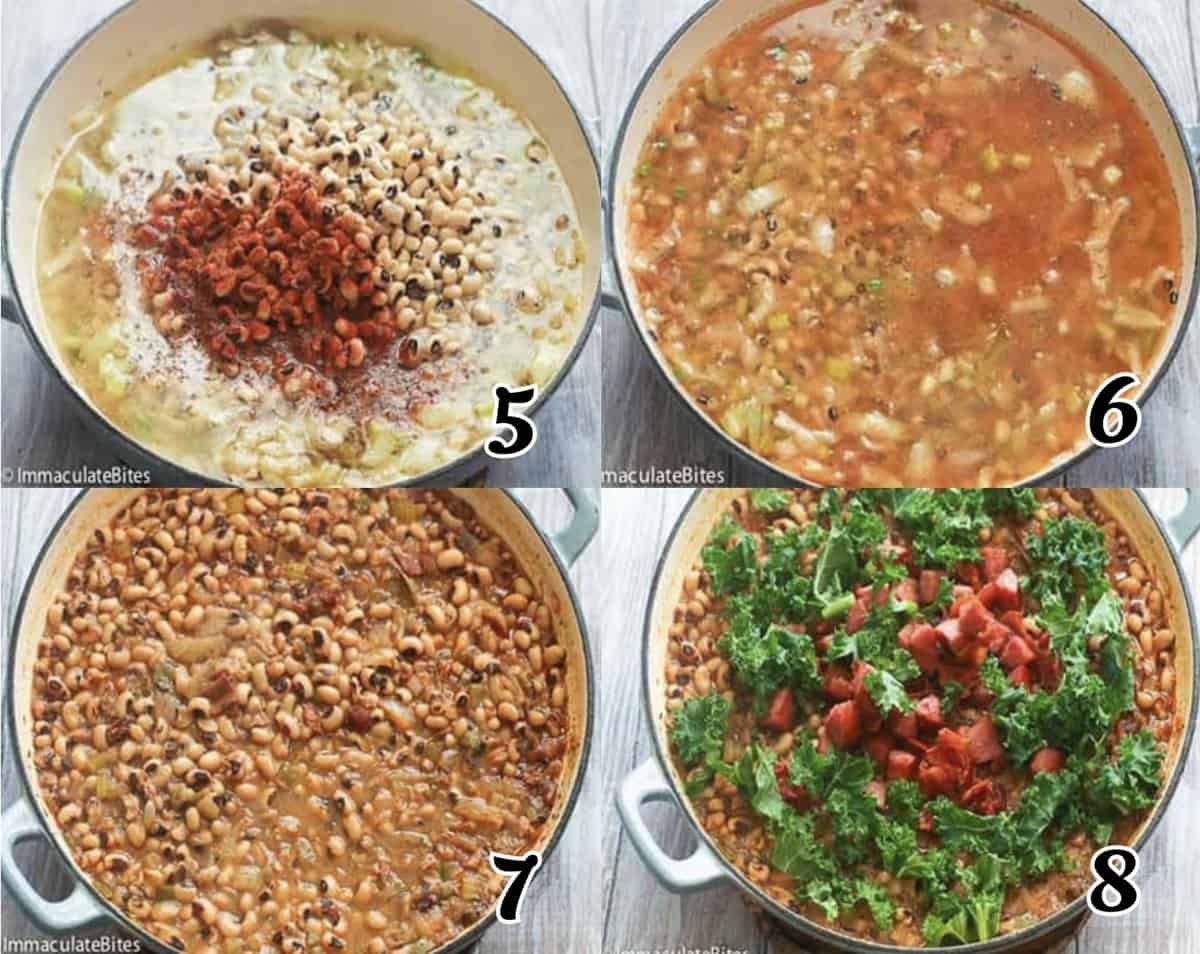
- Simmer – Reduce heat to a simmer and cook, uncovered, for about 20 minutes. (Photos 5-7)
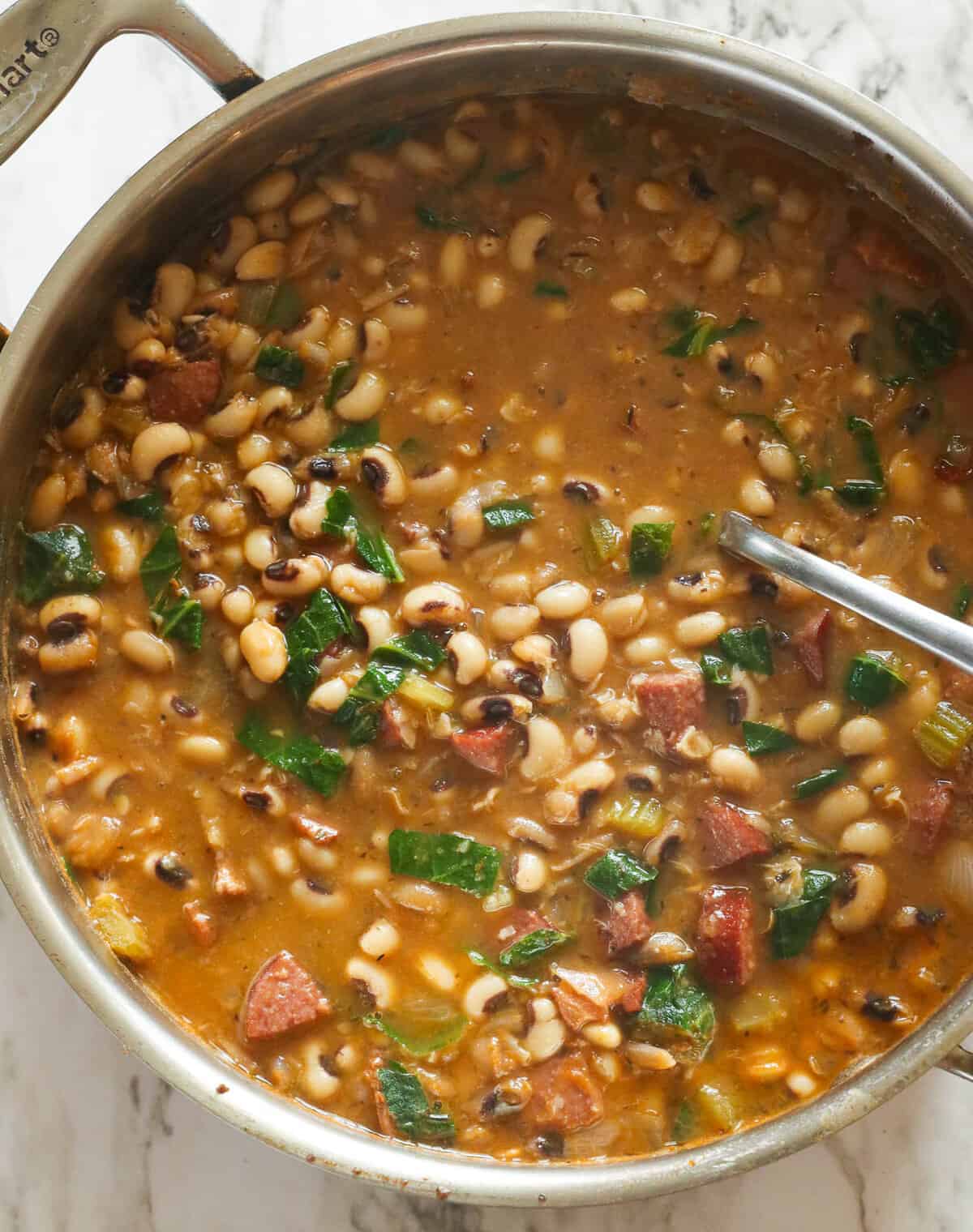
- Assemble– Toss in the collard greens, bacon, and sausage into the pot, and continue cooking for another 10 minutes or more, stirring occasionally, or until beans are tender and slightly thickened to your desire. (Photo 8)
- Final Touch – Add more stock or water if the mixture becomes dry and thick. The texture of the beans should be thick and somewhat creamy but not watery. Remove the bay leaves.
- Serve – Taste and adjust for seasonings with pepper, Creole seasoning, and salt if needed. Serve over cooked rice and garnish with green onion.
Flavor Variations
- Vegan – Omit the meat and replace the rendered fat with olive oil; then vegetable broth can replace the chicken broth for a vegan version. And to make this dish more nutritious, you can add collard greens, carrots, and bell peppers.
- Crockpot Southern Black-Eyed Peas – This one is more effortless but equally delicious. Put everything in the crockpot, and you’ll have your dinner ready in 5-6 hours on high and about 9-10 hours on low. Imagine the things you can accomplish in those waiting hours. 😉
- Tropical Twist – Make these black-eyed peas with bacon and pork creamy and interestingly yummy with coconut milk. And I bet you’ll love this dish even more.
- Tomato – Fresh tomatoes or tomato sauce will also add a nice variation to this Hoppin John recipe. The kick of tangy goodness will surely make your tastebuds happy.
Recipe Notes
- You can substitute the dried black-eyed peas with canned ones. However, add them 10 minutes before the dish finishes cooking so they have time to heat through because they’re already cooked.
- For a thicker consistency, I suggest mashing a few softened beans against the side of the pot with the back of your spoon. The mashed beans will make a creamier and thicker broth. Or remove about a cup, puree them in a blender or food processor, and then pour the puree back into the pot and give it a good stir.

Making-Ahead and Storage
Surprisingly, this bean stew freezes well. So go for it and make a large batch. It’ll come in handy when a soul-food craving hits.❤️ Transfer the black-eyed peas stew into a clean, airtight container or heavy-duty freezer-safe ziplock bags once cooled.
Refrigerate for 3-5 days or freeze for 6 months. Pack them in a freezer bag, either the whole thing or in single-serving sizes, for easy thawing and reheating. Thaw overnight in the fridge when ready to serve. Reheat in a pan on medium-low heat or in a microwave. You may add more chicken broth or water as needed.
FAQs
Technically, you don’t need to soak black-eyed peas. However, soaking them for a few hours or overnight shortens the cooking time. It’s totally up to you.
Adding bacon, sausage, and seasonings intensifies this dish’s flavor. But to take this dish to another level, add tomato sauce or coconut milk.
As a tradition, Southerners put clean pennies and dimes into their pot of black-eyed peas, believing they’ll bring luck and prosperity. They believe the one who gets the most coins in their bowl is the luckiest.
What to Serve With Black-Eyed Peas on New Year’s Day
Double your luck by serving this black-eyed peas recipe with collard greens (representing money) and cornbread (for gold). Pork (because it roots forward) will complete a traditional New Year’s dinner. No lobster or chicken if you’re going for good luck. Oven-baked pork chops, smoked bacon-wrapped pork tenderloin, or fried pork chops are all good.
More Traditional Southern Dishes to Try
- Southern Mac and Cheese
- Butter Biscuits
- Southern Fried Cabbage
- New Orleans BBQ Shrimp
- Southern Deviled Eggs
Watch How to Make It
[adthrive-in-post-video-player video-id=”8AgprXDl” upload-date=”2019-04-01T07:08:53.000Z” name=”Black Eyed Peas Recipe” description=”Southern Black Eyed Peas Recipe or Hoppin’ John is a hearty, warm and soulful food. This black eyed peas recipe is smokey, spicy with a deep yet not too overwhelming bacon flavor. A Southern traditional dish served on New Year’s Day to bring good luck charm!”]
This blog post was originally published in December 2017 and has been updated with additional tips, new photos, and a video
Southern Black-Eyed Peas Recipe
Ingredients
- 1 pound (453g) black-eyed peas
- 4-5 thick slices bacon, chopped
- 5 ounces smoked sausage or turkey, diced (about 1 cup)
- 1 large onion, diced
- 1 stalk celery, diced
- 2-3 teaspoons garlic, minced
- 1 optional jalapeno, minced (can replace with ¼ teaspoon cayenne)
- 2 teaspoons fresh thyme, minced
- 1 bay leaf
- 1-2 teaspoons Creole seasoning
- 7-8 cups chicken broth
- 2 cups (or more) collard greens (or you can use kale)
- Salt and pepper to taste
Instructions
- Rinse dry black-eyed pea beans, pick through, and discard any foreign objects. Add beans to a large pot and cover with 3-4 inches of cold water. Let sit for 2-3 hours (or overnight).
- In a large, heavy sauté pan, saute chopped bacon until brown and crispy (4-5 minutes), then add sausage and saute for 2-3 more minutes. Remove bacon and sausage mixture, and set aside.
- Throw in the onions, celery, garlic, jalapenos, thyme, and bay leaf, and saute for 3-5 minutes until the onions are wilted and aromatic.
- Then pour in the chicken broth or water.
- Drain the soaked beans, rinse, and place them in the pot. Season with Creole seasoning and salt to taste. Stir and bring to a boil.
- Reduce heat to a simmer and cook uncovered for about 20 minutes.
- Toss the collard greens, bacon, and sausage into the pot, and continue cooking for another 10 minutes or more, stirring occasionally, until the beans are tender and the broth thickens to your desired texture.
- Add more stock or water if the mixture becomes dry and thick. The texture of the beans should be thick and somewhat creamy but not watery.
- Remove the bay leaf.
- Taste and adjust seasonings with salt, pepper, and Creole seasoning if needed. Serve over rice and garnish with chopped green onion.
Tips & Notes:
- Many readers have commented that it takes 1½ hours to cook tender. So please keep that in mind. A pressure cooker will speed things up.
- Please remember that the nutritional information is a rough estimate and can vary significantly based on the products used in the recipe.





Hi! My questions is, can I use McCormick thyme leaves instead of fresh thyme? I have made this recipe for the last three years, my family loves it. Sometimes it’s hard to find the fresh ingredients, which brings me to this question.
Hi Melinda ,
Yes you sure can .
I am wondering can I do this in a pressure cooker? I normally do pork and sauerkraut on New Year’s Day as my family’s tradition. But my wife’s best friend is from the south and I also like to make black eyed peas for her to have her tradition. I only have one slow cooker. I’m pressed for time since I always do the polar bear plunge on New Year’s Day and I also am working in the evening.
Hi Joshua! Yes! You can do the black-eyed peas in a pressure cooker
Unsoaked peas cook in 20–25 minutes (High pressure), soaked in 8–10 minutes. Enjoy
This is so good!! I made the seasoning from scratch to omit the salt as there is enough in the broth, ham, bacon and sausage!!
Hi Anita! Thanks so much for the feedback. Happy New Year !!!
Can you tell me how long to simmer them in a Dutch oven on the stove all day instead of soaking them or using the crock pot?
If Amanda, If you’re doing them on the stovetop in a Dutch oven without soaking, bring them to a boil, then lower to a gentle simmer and cook 1½–2 hours, stirring occasionally and adding a little liquid as needed, until tender and creamy.
I’ve followed the recipe but after 2 hours on simmer my black eyed peas are not getting soft. Any tips?
Hi Charlotte. I’m not sure what’s going on without being there. You might want to add more water and a pinch of baking soda, then simmer for another hour or two. A friend that lives at high altitude says it takes 5-6 hours to get soft. And if you have a pressure cooker, you may want to try that to speed things up.
Thanks for the suggestion, I got out my insta pot and put them in. Hopefully that will do the trick. I usually don’t have any problems with a Dutch oven and I checked the date on the bag of black eyed peas and it was ok. Fingers crossed:-)
Neither myself nor my son like black-eyed peas, but being a southerner, I always have them on New Year’s Day. This recipe makes the difference. We really like them. The only change I made was to use spinach instead of kale or collard greens. Thank you for the recipe.
Awesome!!! Thank you so much for sharing your tweaks. Spinach works great, too.
Hi there, really looking forward to making this recipe – I just have a quick question that may seem a little dumb but from others comments, I’d like to clarify – do you add cooked or uncooked collard greens to your original recipe?
Hi Chloe. No dumb questions here! I usually use fresh, but frozen will work just fine.
Thank you for getting back to me! I’m sorry if my question was unclear.. I didn’t mean fresh or frozen.. I am using fresh – my question is should I cook the collard greens prior to adding them into the peas mix? Or just add in fresh, uncooked greens is fine?
Hi Chloe, Add it fresh uncooked, about 10-15 minutes towards the end. Happy New Year
Hi there! With the crock pot variation, i am going to cook the bacon and sausage, but should I saute the other ingredients like the onion, garlic, etc before putting them in the crock pot?
Looking forward to using this recipe.
Hi Diana. Yes, saute the seasonings in the same pan you cooked the bacon and sausage, using the drippings. I also have a slow cooker recipe for black eyed peas
Looking forward to hearing how it turns out for you.
This is my third year in a row bringing in the new year with this recipe. I cant wait. It is the best.
Delicious. I already had some cooked collards from the night before and added those. It came out really nice. I’m looking forward to dinner tonight with these blackeyed peas and chow chow.
All right!!! Thanks so much for sharing.
I think I’m going to try this for Sunday dinner. I have some frozen fresh turnips. Can I use them instead of the collards?
Hi Ferlissa. Do you mean turnip greens? Or is it the root? Turnip greens are a great substitute for collards.
This recipe is fantastic!!! I do it as written but I add a few tablespoons of red wine vinegar, diced tomatoes and green bell pepper. last but not least a smoked ham half and oh girl, I’m dreaming of New Orleans! Thank you for this recipe!!!
Awesome!!! Thanks so much for sharing your tweaks.
Hi! I’m about to try this recipe. It sounds absolutely delicious! Your tweaks ard the bomb, as well! I’m from the south, and it’s been awhile since I made a pot of yummy black eyed peas. So, here we go! I can’t wait!
Awesome!!! Please let me know how it goes.
Should I chop the collards before throwing them in?
Hi Kim. Yes, I chop the collards before adding them. Please let me know how it goes.
If adding coconut milk to the recipe, what would you suggest for the new measurement of the chicken broth and coconut milk?
Hi Michelle. You’ll want about 7 cups total liquid. I’d measure the amount of coconut milk you want to use, then add enough chicken broth to complete the liquid. Please let me know how it goes.
I love this recipe but I don’t add any seasoning containing salt or salt until the beans are softened. I also put the meat back in once the beans have absorbed a good deal of the liquid, so the peas get more of their flavor. I add my collards in at this same time. I use Serrano instead of jalapeño but only because we like some extra spice.
I truly believe that with any bean time is the secret, so if I want it creamier I just cook it longer. The beans will break down on their own. I stop cooking when I’ve achieved the desired creaminess.
Also if you don’t add salt until the very end they’ll definitely continue getting softer. Acid can inhibit that process. That’s why I wait.
Thanks you Maelee for your feedback. I agree that longer cooking time makes them creamier. Whether salt affects how soft the beans get is a matter of debate. I’ve tried it both ways, and the results were delicious.
Best blackeye peas ever!
YESS! Me doing the happy dance.
This is my favorite black eyed peas recipe. I add diced carrots to it, but otherwise make as written. Serve w/green chili cornbread. So good
Am honored! Thanks so much , Nancy.
Great base recipe. I add a can of organic chopped tomatoes to my greens and cook them separately in my one pot pressure cooker. I also add rice or red wine vinegar for that acidic balance the chefs talk about. I use about 1/3 cup into the pea mixture. Then I combine as much of the greens and tomatoes as desired. There are quality greens left over for a future side.
Love your take on this! Adding chopped tomatoes and vinegar for acidity is a great touch, and cooking the greens separately gives you flexibility. Plus, extra greens for another meal is always a win! Thanks for sharing your delicious tweaks!
When using the crock pot method, do you need to pre-soak the black-eyed peas?
Hi Sue,
If you’re using the crock pot method, you have two options for preparing black-eyed peas. You can skip the soaking step and cook them for about 6-8 hours on low or 3-4 hours on high. Alternatively, if you soak the peas for 6-8 hours beforehand, they’ll cook faster—around 4-5 hours on low or 2-3 hours on high. Soaking also helps ensure a more even texture. Either way, the peas will turn out delicious!
I’m going to try this for New Year’s Day.
I’m a bartender and will be serving this in a crockpot. I’ll have to double/triple the recipe as yours states 6 servings.
I’m going to make it in a stock pot then transfer as much as I can to crockpot. I have spiced homemade collards I made from Christmas, they are frozen,but can I thaw them out and use them or would it be better to just buy 1 bunch of collards to chop and add instead of mine?
my collards aren’t spicy but the do have a lot of spices in it?
Hi Scarlett. Yes, you can use frozen collard greens. You could even add them still frozen because they’re already cooked and will thaw in the pot.
First time I could get my husband to eat and enjoy black eyed peas. This recipe is a WINNER!
So happy to hear that—what a win! Glad your husband enjoyed it too. Thanks for sharing!
I love black eyed peas and this recipe. I always read the recipe thoroughly AND watch the video (when available). Your written instructions say to simmer initially for 20 minutes, uncovered, yet your video shows you covering the pot each time. I followed the recipe and after adding the collards and the bacon I covered for the final cooking. Which do you prefer? These were excellent. Thanks for the recipe.
Thank you so much for trying the recipe! I prefer keeping it uncovered for the initial simmer to help the flavors concentrate, but covering it after adding the collards and bacon is great for locking in moisture. Either way works, and I’m glad you enjoyed it!