Buss Up Shut Paratha Roti
This Trinidad and Tobago buss up shut paratha roti is super soft, delightfully messy, and exceptionally tasty. Pair it with your favorite curry, and you’re one bite away from cloud nine.
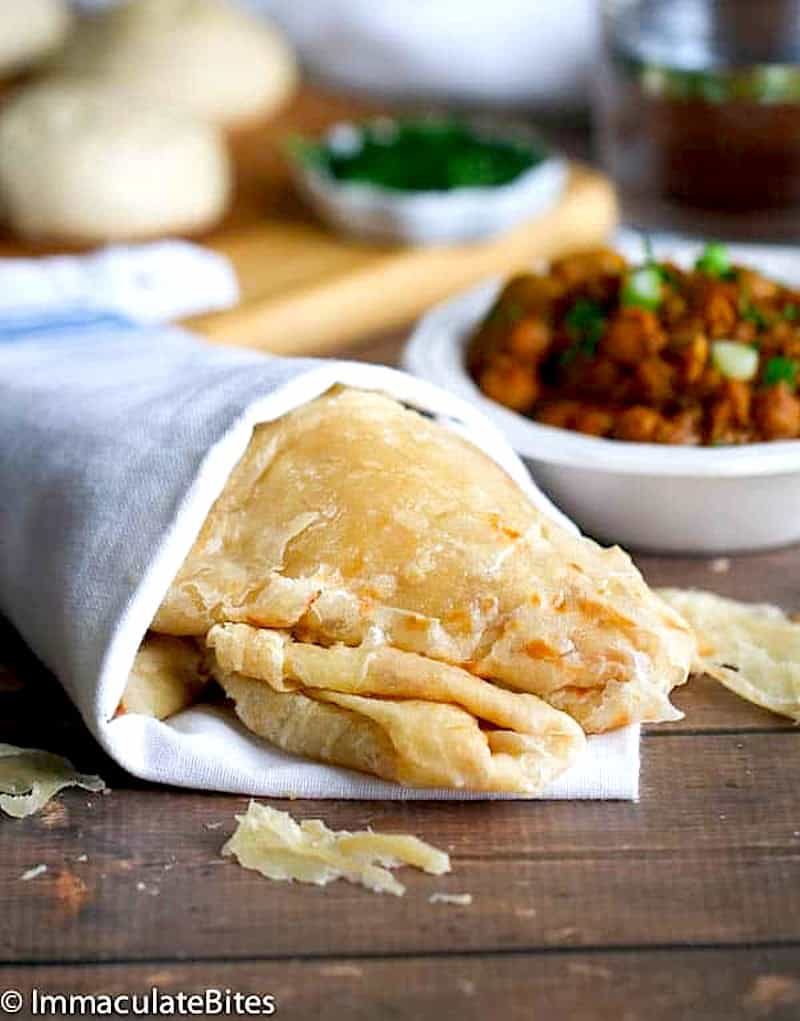
First, a little linguistics lesson: buss up shut refers to a tattered, busted-up shirt. You’ll hear it if you think about it. The name is appropriate, considering it’s a layered, tender, buttery flatbread, shattered or beaten to pieces while still on the griddle or immediately after it’s cooked.
Despite having Indian roots, this dish differs from traditional Indian roti, making up an integral part of Trinidad’s culinary heritage. This bread is tender, buttery, and oh-so-flaky. Plus, I simplified this recipe to make it home-cook-friendly. You can master this delicious bread even if you’re a beginner.
How to Buss Up Shut
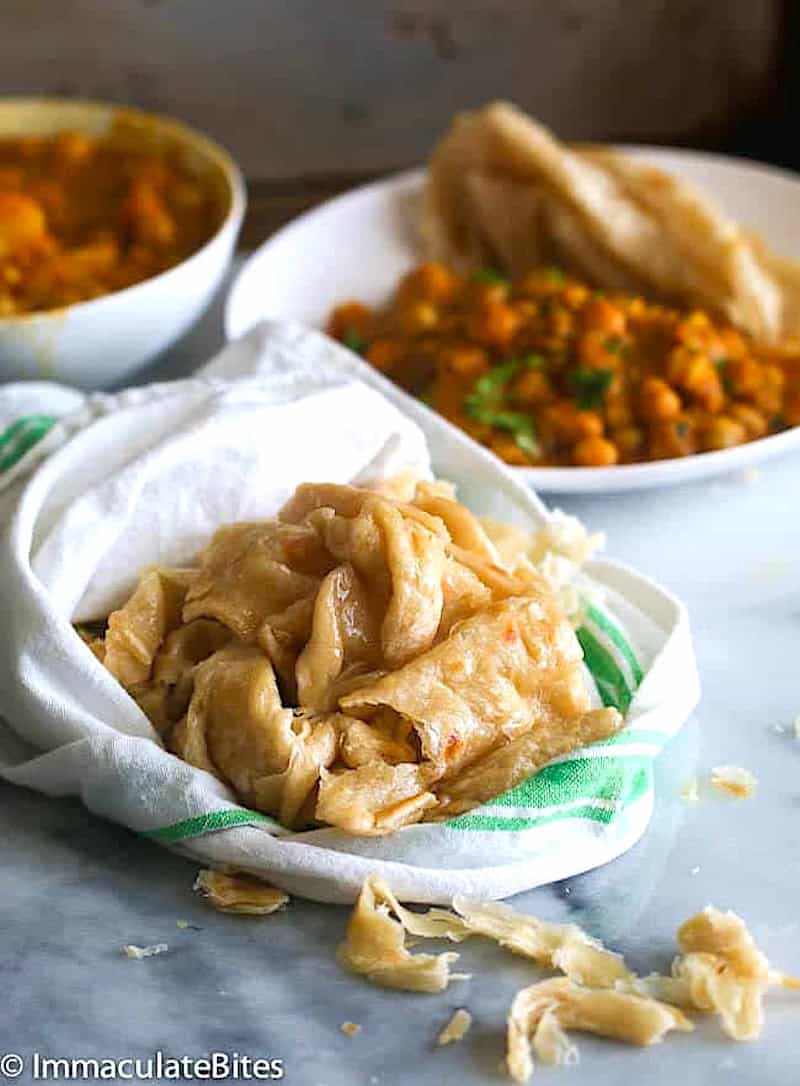
So, how do we buss up that shut? There are a few methods. The Guyanese use their hands (clap roti) or an enclosed container to beat the heck out of it. In Trinidad, it’s done with two spatulas while it is still hot and just about to be taken off the tawa (a round flat griddle used in Indian cooking). However you do it, the goal is to achieve a slightly crisp exterior with small patches of light browning.
How to Make Paratha Roti
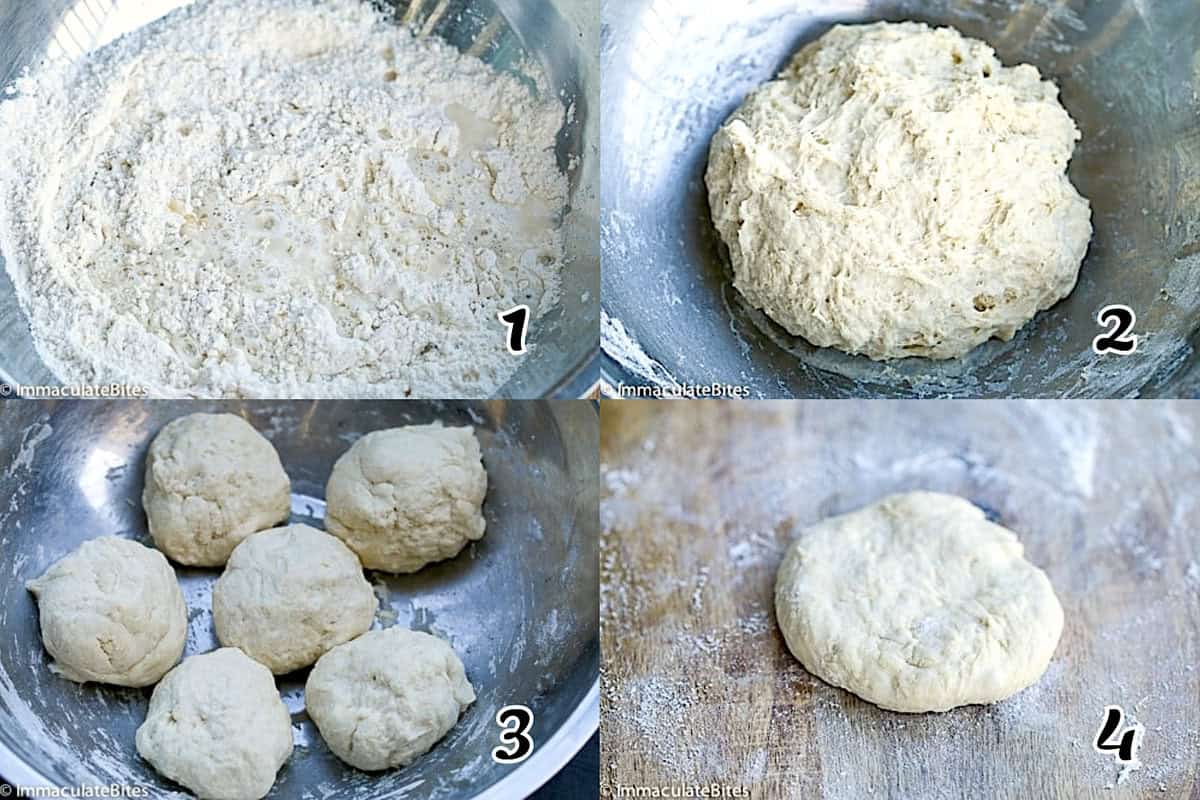
- Mix the dry ingredients in a large bowl, then add the liquids and knead.
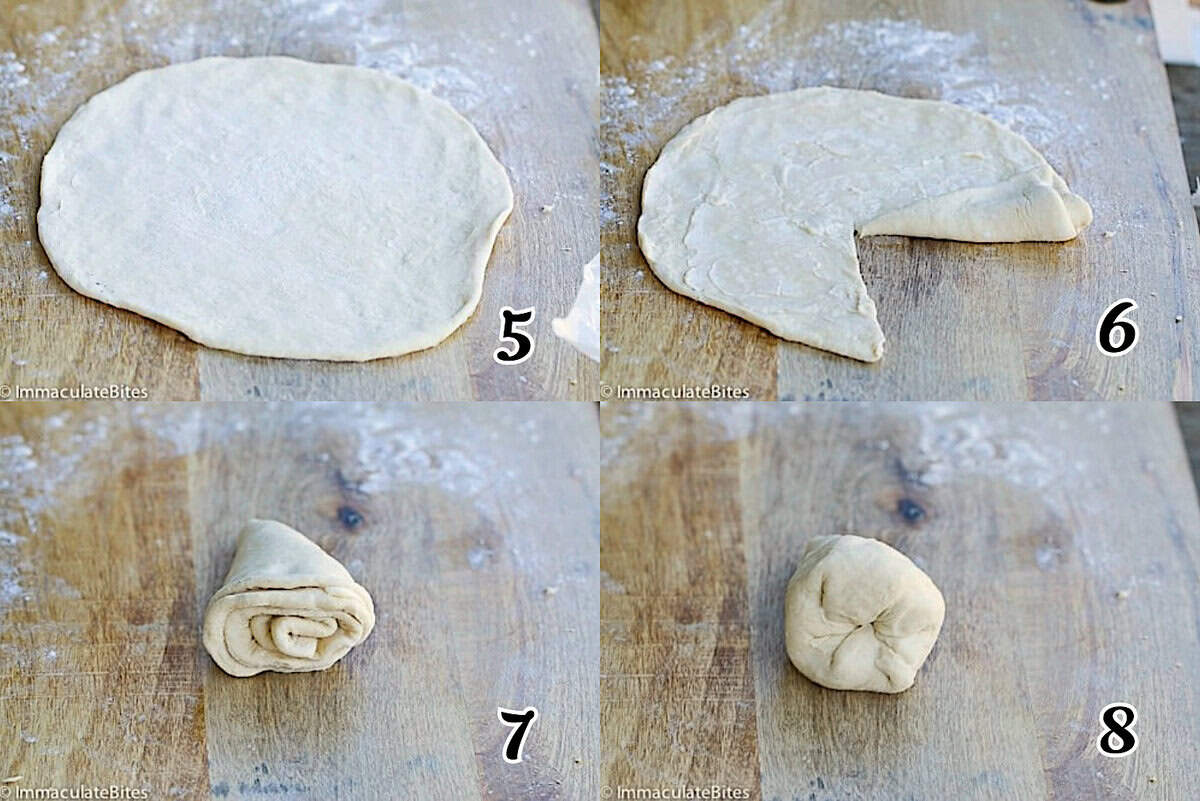
- Divide the dough into 6 balls, roll out each ball, then cut a slit, and roll it up clockwise.
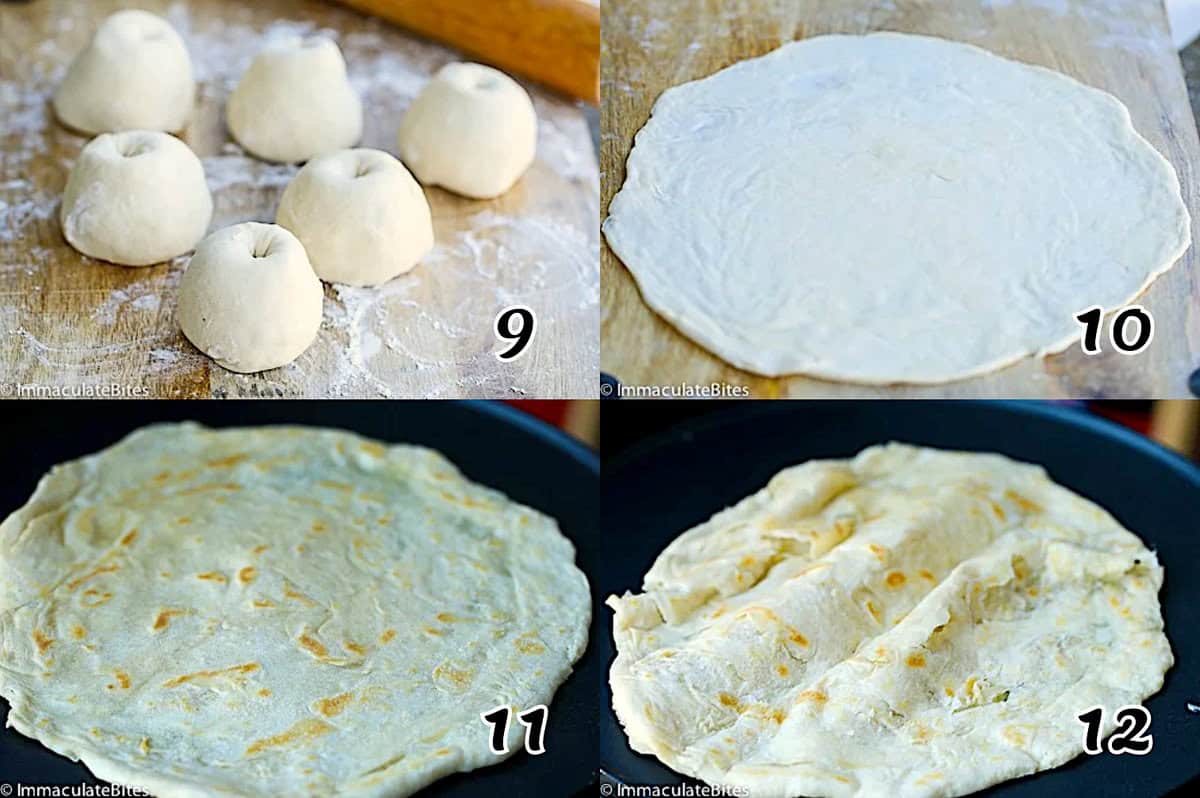
- Let them rest, then roll them out into flatbreads and cook them on a griddle. Enjoy!
Beautiful Reader Comments
- I have been using this recipe for years, and I absolutely LOVE it!! Everyone who tries the rotis I make also loves it. I’ve done it with coconut oil instead of ghee, and it is still amazing.-Rowena
- These are awesome. I’ve made this recipe over a dozen times the last few years; it works perfectly every time and it’s not at all complicated. I often use ⅓ Indian atta flour for a more nutty taste.-Kat
- I grew up in Trinidad (Port of Spain and San Fernando); this is just brilliant!! We have a few good Trini places where we are now in Texas, but this is amazing that I found such an authentic recipe to what we grew up with and can make it at home now. Now, to be able to eat a good callaloo soup would just be epic.-Michelle
Thank you so much for your love and comments. Happy cooking!-Imma
Make-Ahead and Storage Instructions
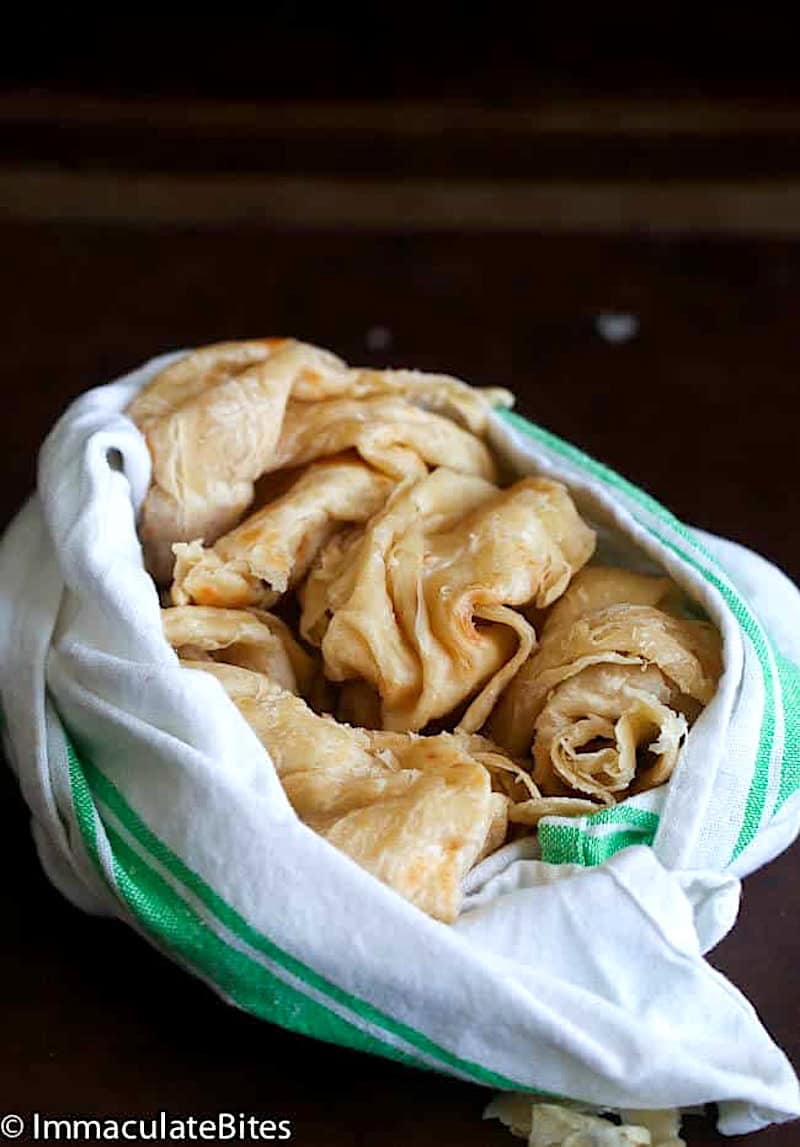
Cooked roti is best eaten fresh, but you can make it a day ahead. Store it in the fridge and reheat it by steaming it gently for a few minutes.
To freeze a big batch for later, make them up to step 9. Then, layer each uncooked roti between parchment paper. That way, you can pop out as many or as few as you want that day and cook them up fresh.
If you have leftovers, refrigerate them in an airtight container for 3-5 days. You can reheat them by steaming them gently for a few minutes.
What Goes With Buss Up Shut Paratha Roti
This version of flatbread can be enjoyed with almost any meal; however, it’s mostly eaten with curries and stews. Try it with curry channa and aloo or an African stew for starters. It also tastes amazing with lamb curry or chickpea curry.
More Delicacies from Trinidad to Try
- Trinidad Corn Pie
- Chicken Roti
- Doubles (Curry Chickpeas and Spicy Flatbread)
- Chicken Pelau
- Trinidad Macaroni Pie
This blog post was originally published in July 2015 and has been updated with additional tips and beautiful photos.
Buss Up Shut Paratha Roti
Ingredients
- 3 cups (360g) all-purpose flour
- 1 teaspoon (4g) sugar
- 2 teaspoons (9g) baking powder
- 1½ teaspoons (8-9g) salt
- 1 tablespoon (14g) ghee, butter, or oil
- 1¼ cups (300ml) warm water or slightly more
- ⅓ cup (63g) shortening or butter
- ¼ cup (60ml) oil, ghee, or melted butter for oiling the paratha
Instructions
- Mix the all-purpose flour, sugar, baking powder, and salt in a large bowl. Then, make a well and add the softened ghee or oil, followed by warm water.
- Knead it for 30-60 seconds to form a soft, sticky dough ball.
- Divide the dough into 6 equal pieces. Set aside and let it rest, covered with a clean kitchen towel, for anywhere from 15 to 30 minutes.
- Next, place each dough ball on a heavily floured board and roll it into a circle (no need to be perfect).
- Using your fingers or a knife, smear about a tablespoon of butter (or shortening) on the surface of the dough and lightly sprinkle it with flour.
- Then, use a knife to make a single slit from the center of the dough out to the edge.
- Next, roll the dough clockwise, forming a cone. Pleat the ends into the bottom of the cone and push the cone tip inwards. Place it in an oiled pan and cover with a damp cloth.
- Repeat this process for the other 5 balls of dough. Oil each piece to prevent them from drying out.
- Cover with plastic wrap and let it rest for 2 hours or more.
- Heat the griddle, crepe pan, or tawa on medium heat when ready to cook.
- Flatten each cone gently, rolling it from the center outwards.
- Rotate the cone each time you roll it to make a 10-inch circle. Make sure the edges are thin.
- Gently place the dough on the griddle and heavily oil the other side, oiling the edges too. Cook until tiny bubbles form on the top of the roti, then flip it.
- You have several options for making torn-up shirts: 1. Smash the paratha with two spatulas while still on the griddle. 2. Put the paratha in a large bowl with a lid and shake the heck out of it. 3. Cover with a clean cloth and shake it up.
- Serve warm and enjoy.
Tips & Notes:
- You can add warm spices like garam masala and cinnamon or dried herbs for more flavor.
- Please don’t skip the resting times because it relaxes the gluten for tender flatbread.
- You don’t need special equipment; a crepe pan or cast iron skillet will also work.
- Please remember that the nutritional information is a rough estimate and can vary significantly based on the products used in the recipe.