
Chicken Stock Recipe
Boxed broth, who? Once you’ve had a ladle of this homemade chicken stock, your taste buds will stage a rebellion against anything from a carton. This stuff tastes like you put hours of love into your cooking, even though the rest of the dinner came from the freezer.
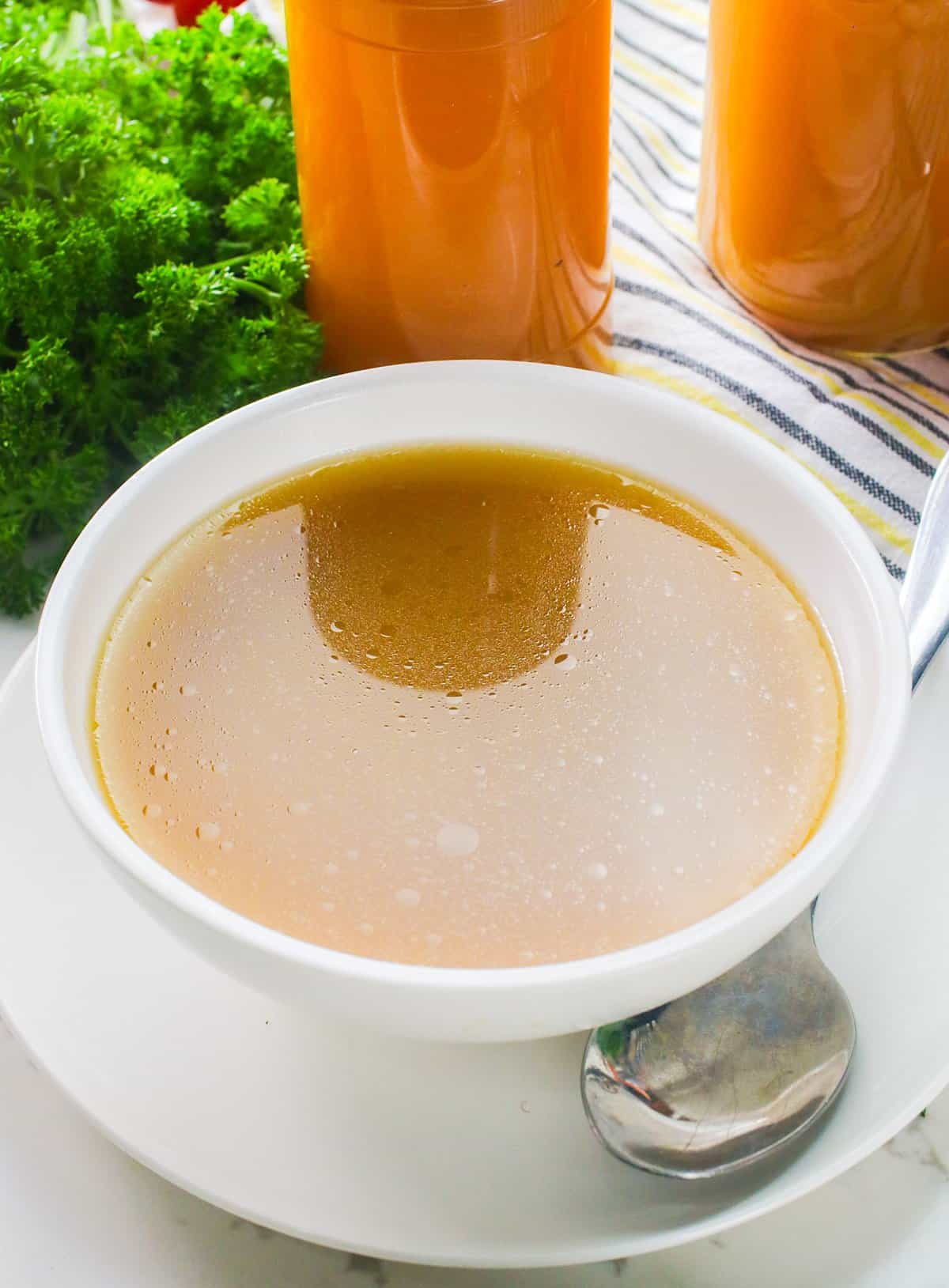
The first time I made chicken stock from scratch, I thought it was going to be some long, fussy ordeal. Spoiler alert: It wasn’t. It was the easiest, most satisfying thing I’ve ever done with a leftover chicken carcass. Plus, it made my Tuesday soup taste like a five-star meal.
What makes this recipe so dang good? It builds flavor from the ground up. Herbs and aromatics? Non-negotiable. Simmering low and slow? That’s where the magic happens.
And the best part? You can make it once and freeze it for weeks of flavor-packed meals.
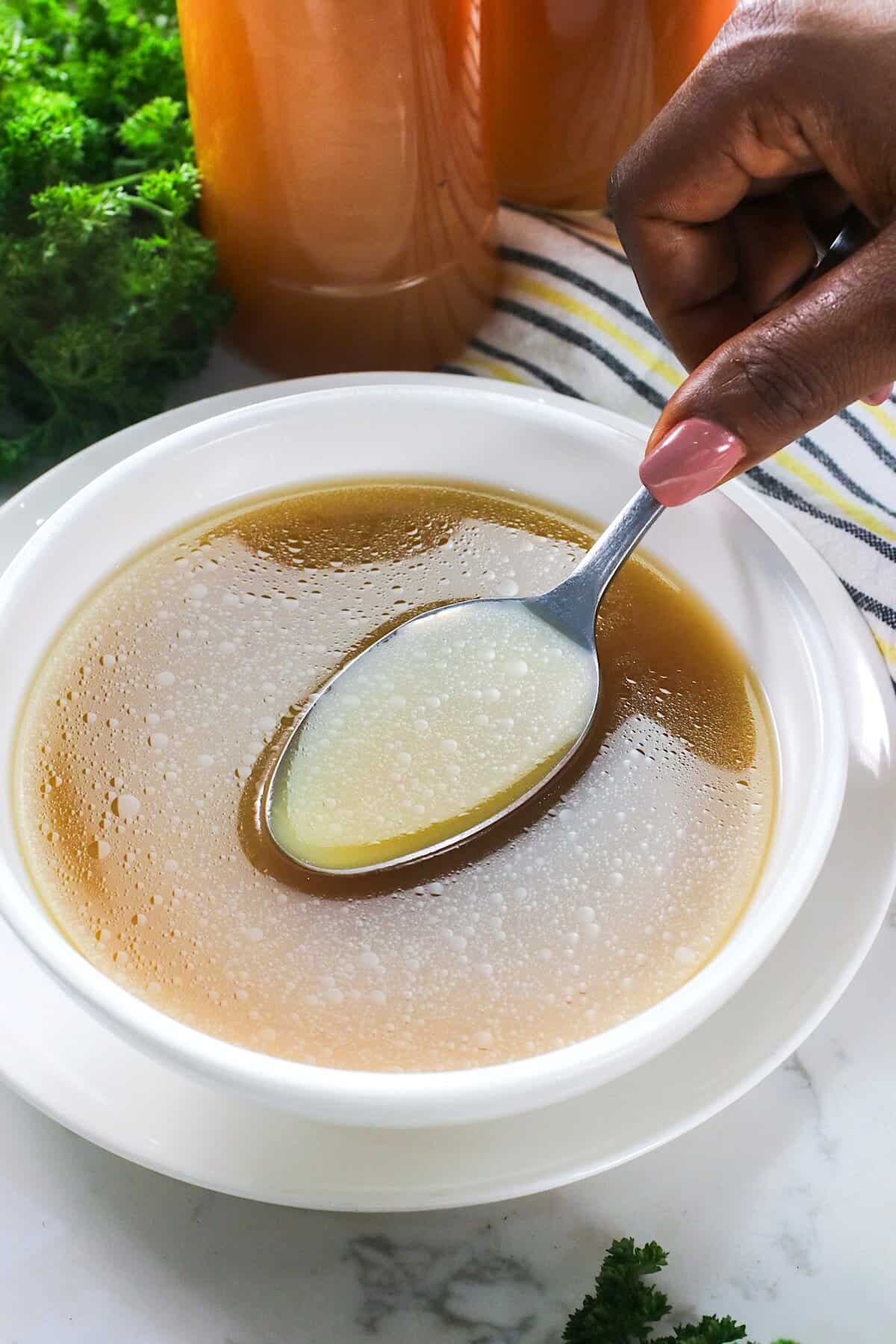
Chicken Stock: The Ultimate Kitchen Power Move
Chicken stock might sound basic, but it’s the backbone of some of the best dishes you’ll ever make. Whether it’s soup season, risotto night, or you just want your rice to taste like it’s been kissed by angels, this is your not-so-secret weapon. Budget- and environmentally-friendly, it’s perfect for using up scraps and makes your kitchen smell like you’ve got a cooking show deal in the works.
Stock vs. Broth
The easy definition is that stock is from bones, while broth is from the meat. According to that definition, this recipe is a twofer. I use both and love this wonderful-tasting stock.
Bone broth is stock that’s been simmered for a day or two instead of a few hours. And you can totally make this recipe with just the bones you’ve saved in the freezer. They have a lot more collagen, which creates a pleasant mouthfeel and a heartier flavor.
Broth is lighter, both in texture and flavor, so it’s a better choice for rice and brothy soups. Stock or bone broth may be a better choice for sauces, stews, and heartier soups.
How to Make Chicken Stock
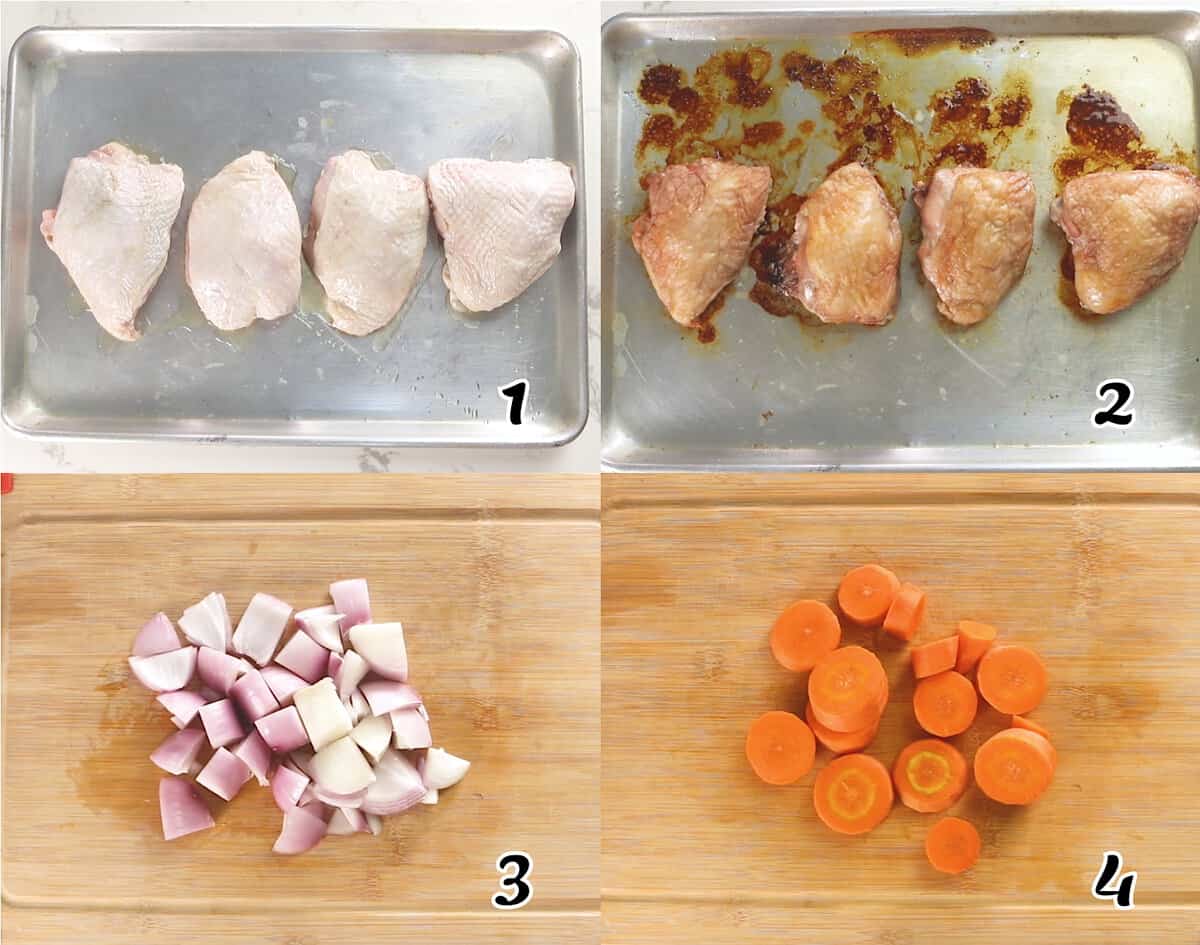
- Roast the chicken and bones for more flavor for 30-40 minutes on a greased or parchment-paper-lined baking sheet. To do it on the stovetop, heat a tablespoon of oil in a large stockpot and sear the chicken until browned. (Photos 1-2)
- Flavor – Add the onions, garlic, carrots, celery, parsley, thyme, and bay leaves, and then saute for about 2 minutes. If they start burning, add a little water and scrape up all the bits (affectionately called fond). (Photos 3-6)
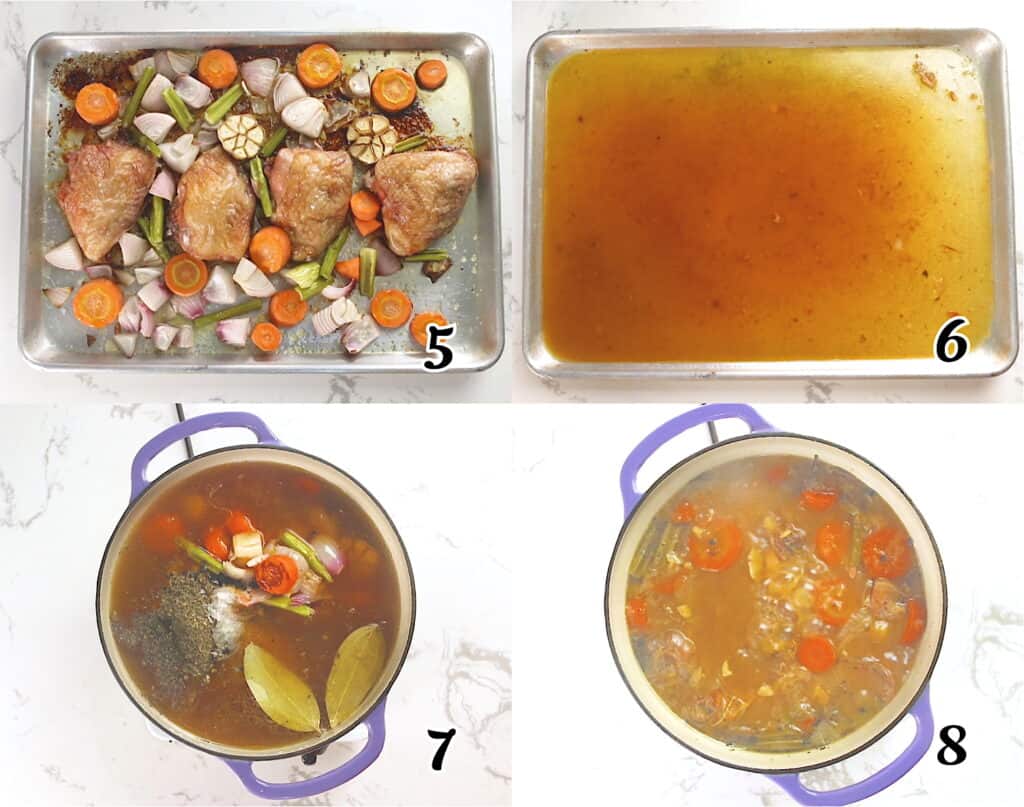
- Water – Add about 20 cups of cold water or whatever your pot will hold. A tablespoon of vinegar helps get more nutrition from the bones, and you won’t taste it in the final product. (Photo 7)
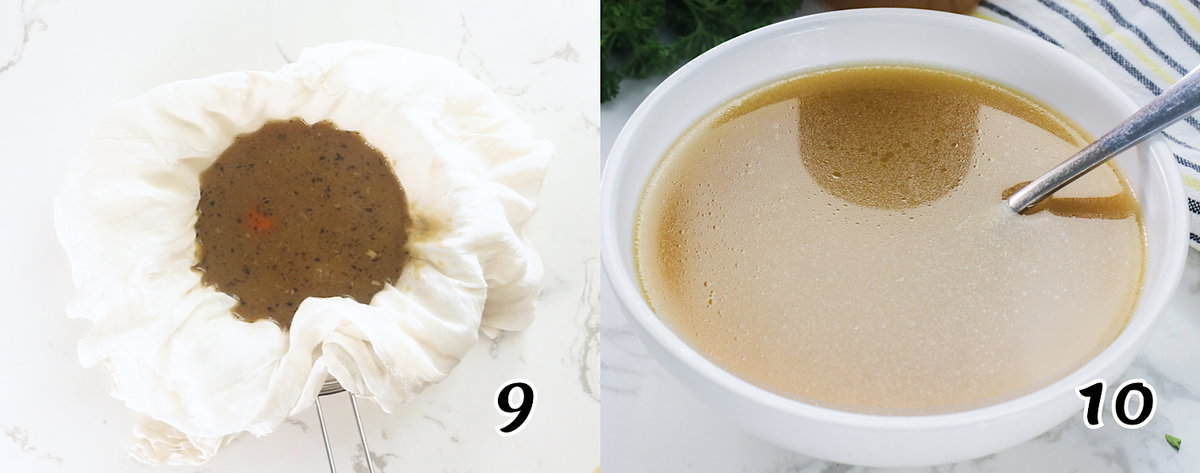
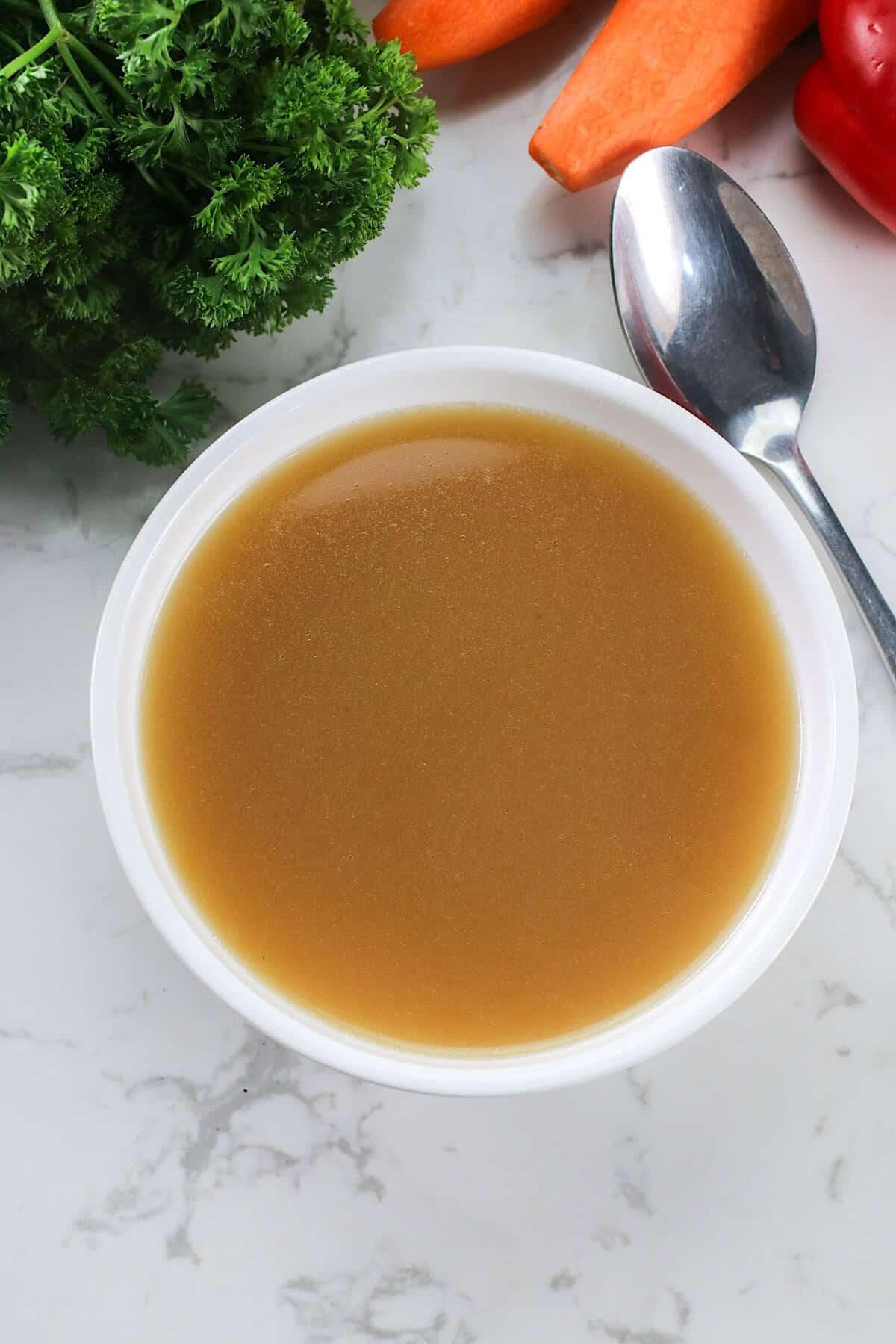
- Simmer – Bring to a boil, reduce the heat to low, and simmer uncovered for 3-4 hours. Add water as needed. Then strain and use in your favorite recipe. (Photos 8-10)
Recipe Variations
- Give it a roast boost. Roast the vegetables (and maybe some leeks, too!) with the bones and meat before adding them to the stock pot for deeper flavor.
- Spice things up. Add freshly ground peppercorns, oregano, savory, etc., for more flavor. Or toss in some cayenne or hot pepper flakes to the mix for a subtle kick.
- Make a veggie version. Skip the chicken meat and bones and double up on the veg for an intensely flavorful vegetarian broth. Leeks, butternut squash, tomatoes, parsnips, and mushrooms (for umami) make an incredible vegetable broth. I recommend avoiding kale, cabbage, broccoli, and cauliflower (most brassicas) because they can be bitter and have a stronger flavor than what you’re looking for.
- Do your own thing. Chicken stock is easy to customize. Add more herbs or vegetables, and skip any you don’t love.
Tips and Tricks
- Don’t salt it! Wait until you use the stock in a recipe to salt it. That keeps it flexible for whatever dish you’re whipping up.
- Save your scraps. Onion skins, parsley stems, garlic ends—all great stock starters. Freeze them and pull them out when you’re ready to simmer.
- Skim the foam. During the first 30 minutes of simmering, skim off any foam that rises to the top. It keeps the stock clean and pretty.
Make-Ahead Instructions and Storage Instructions
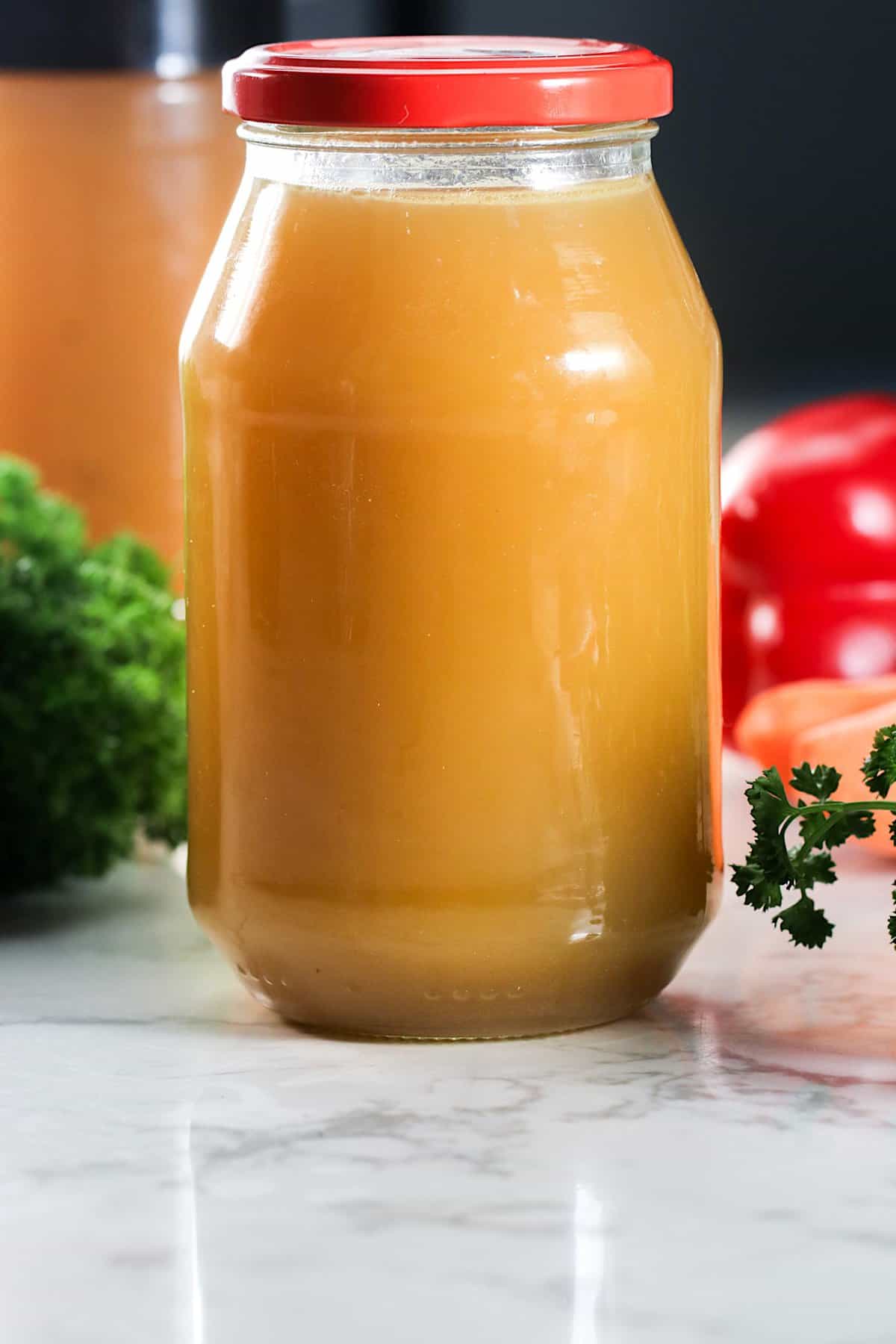
How long does homemade chicken stock last in the fridge? Enough to make it perfect for making ahead of time. Simply store cooled stock in jars or containers in the refrigerator for up to 4 days and use it whenever needed.
How do you store homemade chicken stock for longer? Glad you asked. You can freeze soup stock in ice cube trays for small uses and quart freezer containers for soups. This stuff keeps beautifully for 2-3 months, though I’ve forgotten it, and it was still good 6 months later.
Another hack I absolutely love is simmering the stock until it reduces to less than ¼ of the original amount. Then, let it cool and freeze it in ice cube trays until solid, then pop those bouillon strength cubes into a ziplock bag. Put two of them in a cup and cover with hot water for a cup of stock.
Pro tip: Label everything! Trust me, frozen stock looks a lot like applesauce at 6 a.m.

What You Can Make With Chicken Stock
You can use homemade chicken stock for so. many. things. It makes an excellent base for soups, obviously, like the chicken and rice soup my family loves.
You can also use it for saucy pasta dishes like Cajun chicken Alfredo or chicken tortellini Alfredo.
More Sensational Soups & Stocks
- Shrimp Stock
- Cream of Mushroom Soup
- Chicken Pot Pie Soup
- Broccoli Cheese Soup
- Homemade Cream of Chicken Soup
This blog post was originally published in November 2014 and has been updated with more useful tips and beautiful photos
Chicken Stock Recipe
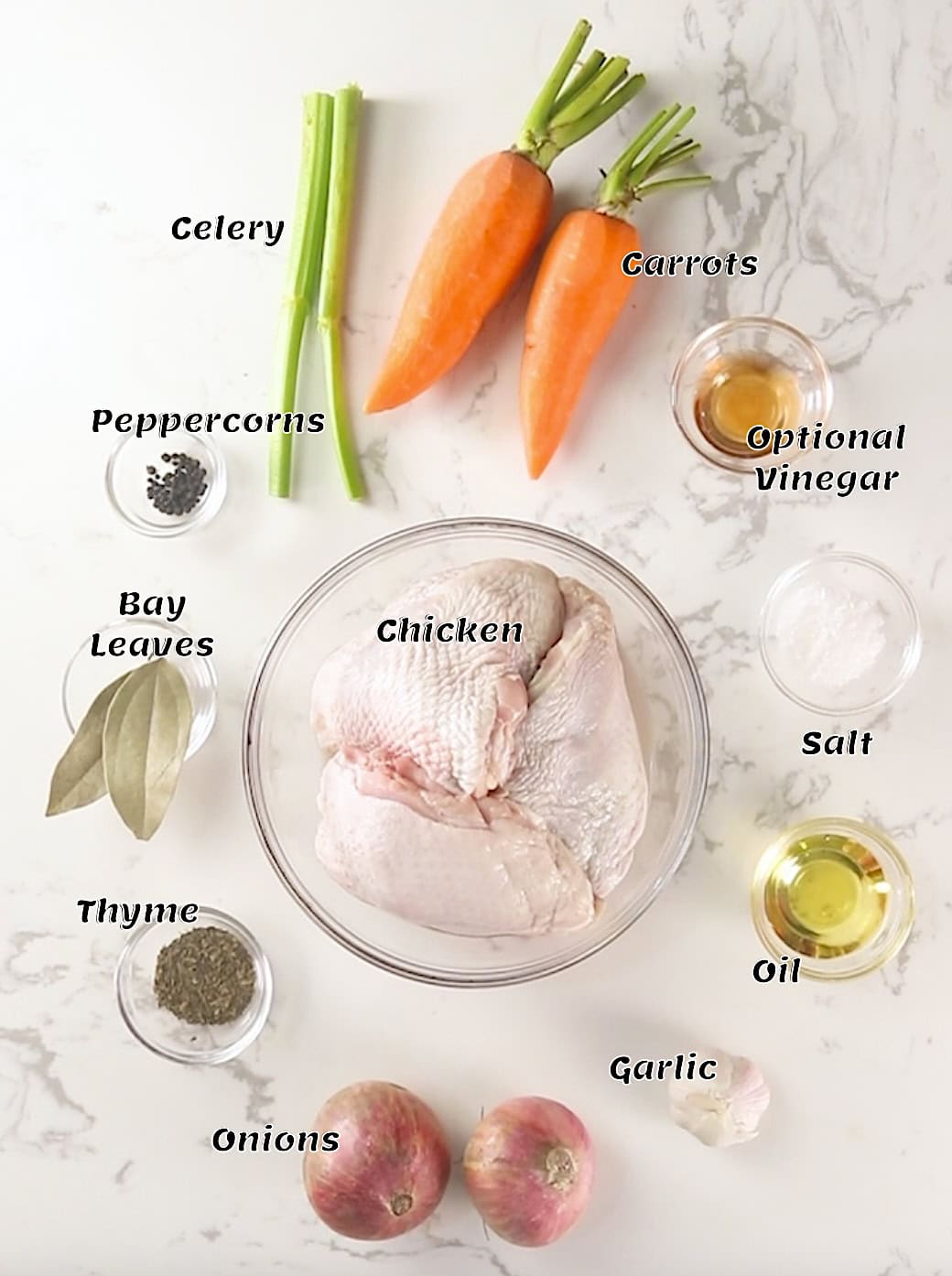
Ingredients
- 2 pounds (900g) chicken parts such as wings, backs, bones, legs, and thighs
- 1 tablespoon (15ml) cooking oil
- 1 large yellow onion, chopped
- 4 medium cloves garlic, crushed
- 2 large carrots, chopped
- 2 large stalks celery, chopped
- 1 bunch parsley
- 3 sprigs thyme
- 2 bay leaves
- 20 cups (4-5L) water (more or less, depending on the size of your pot)
- 1 tablespoon (15ml) apple cider vinegar (optional)
Instructions
- If your chicken hasn't been cooked already, browning it will deliver more flavor. Roast it in the oven for 30-40 minutes on a greased or parchment-paper-lined baking sheet. To do it on the stovetop, heat a tablespoon of oil in a large stockpot and sear the chicken until browned.
- Add the onions, garlic, carrots, celery, parsley, thyme, and bay leaves, and saute for about 2 minutes. If they start burning, add a little water and scrape up all the bits (affectionately called fond).
- Add about 20 cups of water or whatever your pot will hold. Optionally, add a tablespoon of vinegar to extract collagen from the chicken bones better.
- Bring to a boil, reduce the heat to low, and simmer uncovered for 3-4 hours. Add water as needed.
- Allow it to cool, then strain the stock through a fine mesh strainer into a large bowl or pot. Discard the chicken bones and meat (you could use the chicken, but it will be tasteless by now).
Tips & Notes:
- You can also save bones and vegetable scraps in the freezer until you have enough to fill a stockpot.
- Leeks aren’t always easy to find, but they add a silkiness to broth that is divine.
- Please remember that the nutritional information is a rough estimate and can vary significantly based on the products used in the recipe.






Hi Imma is it okay to use dried herbs and how much ?
Yes, you can. The ratio is 1 teaspoon of dried herb for 1 tablespoon of fresh. You can replace the 3 sprigs of time with a scant teaspoon of dried, and a ½ teaspoon of dried parsley to replace the sprig. Hope that helps.
Can you use the stock to make rice?
Absolutely.
I haven’t got round to adding more stock recipes to my website, so thanks for sharing your version – I like this one.