
Injera
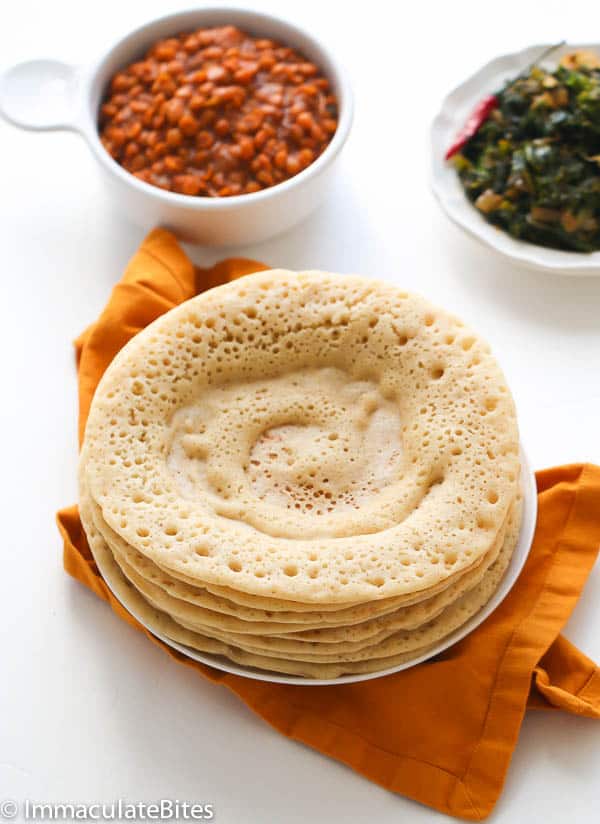
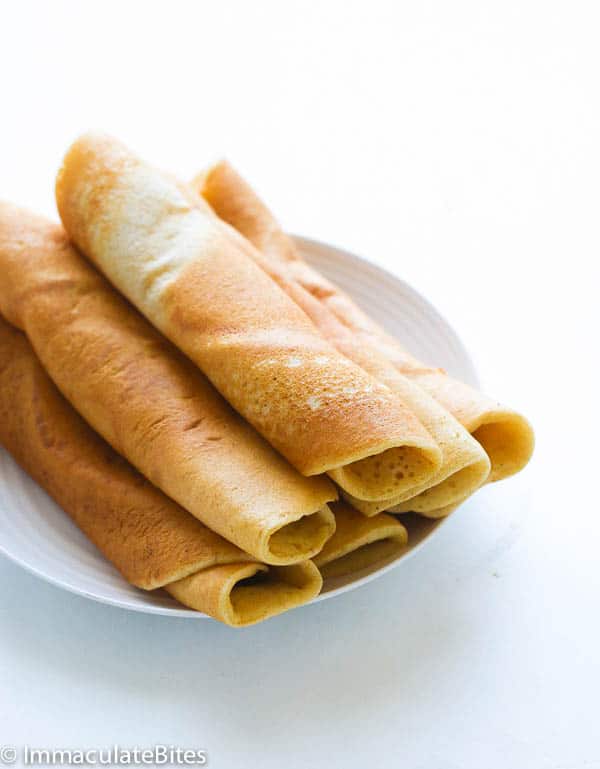
Quick, easy, tender, crepe-like injera is pleasantly sour, slightly sweet, and utterly addictive. Wrap it, dip it, or enjoy it as is for African comfort food.
I remember a time (my broke and ignorant college days) when I begrudgingly ate injera at least once a week. You see, my roommate was from Ethiopia and couldn’t have a meal without it. Why would anyone pick sour, spongy bread over a fresh baguette? Sadly, at that time, I didn’t get it.
And to rub salt in the wound, 9 times out of 10, she would pick an Ethiopian restaurant when it was her turn to pick out a place to eat. I just couldn’t bring myself to say no because she was really sweet. It kept her going because she was really homesick.
But then something amazing happened. After eating it so many times, it started growing on me. To this day, I take time out to go to my favorite Ethiopian restaurant to pick up a plate of food with injera. Unfortunately, my family doesn’t get it, so I’ve never attempted to make it at home until now.
What Is It?
Injera is a crepe-like flatbread with a unique, slightly spongy texture thanks to natural fermentation (also known as sourdough). It’s never missing at mealtime in Ethiopia, Eritrea, Somalia, Yemen, Djibouti, and Sudan, with each country having its own variation. The Ethiopian version is usually made with teff flour, but barley, sorghum, and wheat flour also work.
I’m not going to lie, making authentic injera with teff flour is not for the faint of heart. I tried several variations and compared them to restaurant-quality injera. However, it was just too tedious and involved, even for a seasoned cook. So I’m presenting the Somalian version, which is usually called canjeero or lahooh, and using regular yeast. Sometimes, good enough is better than authentic, and it even got a thumbs up from hubby.
How to Make Injera
- Make the starter and let it ferment.
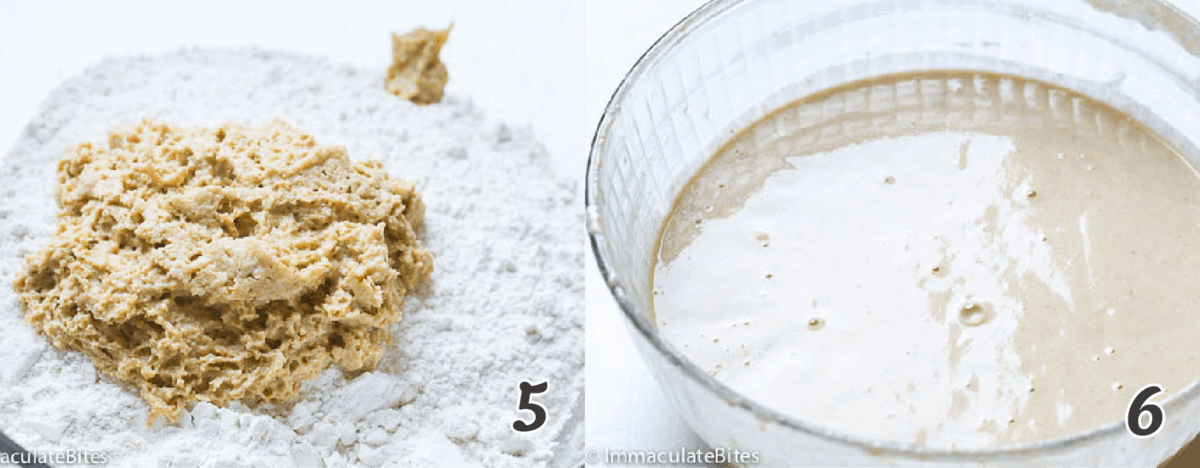
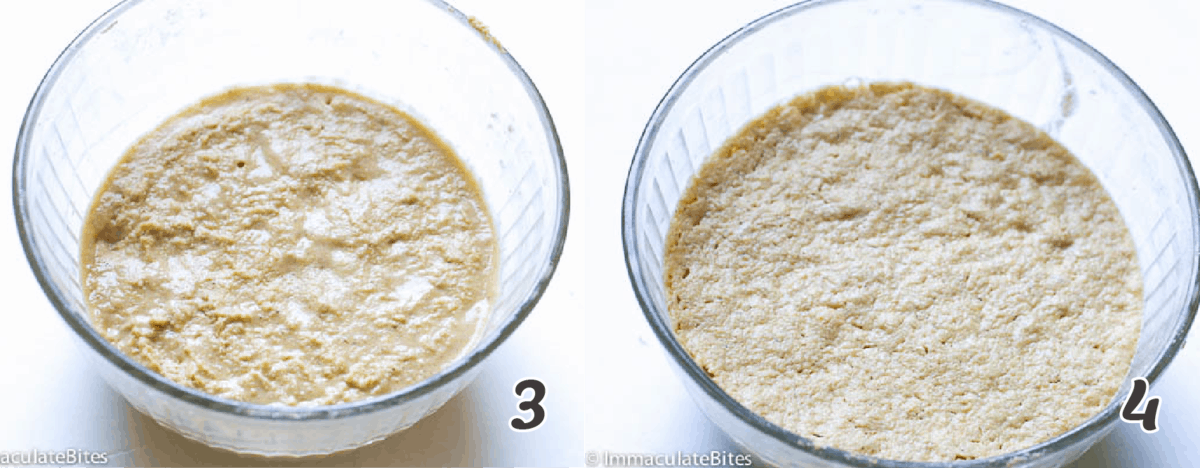
- Mix the dry ingredients, add the starter mixture, then add water a cup at a time, stirring constantly, until you have a thick crepe-like batter or thin pancake batter.
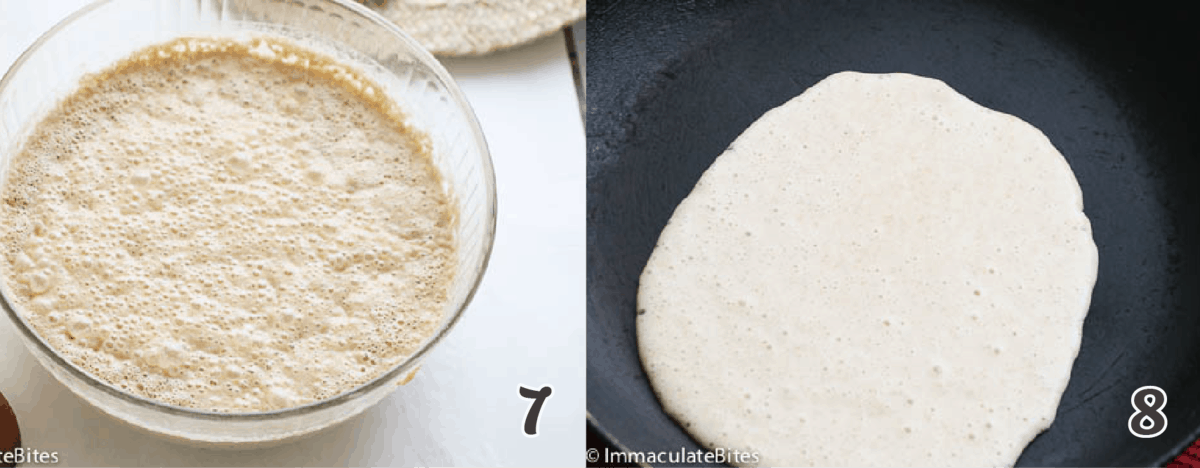
- Let it rise for about 2 hours, heat a crepe pan, and pour in a portion of batter.
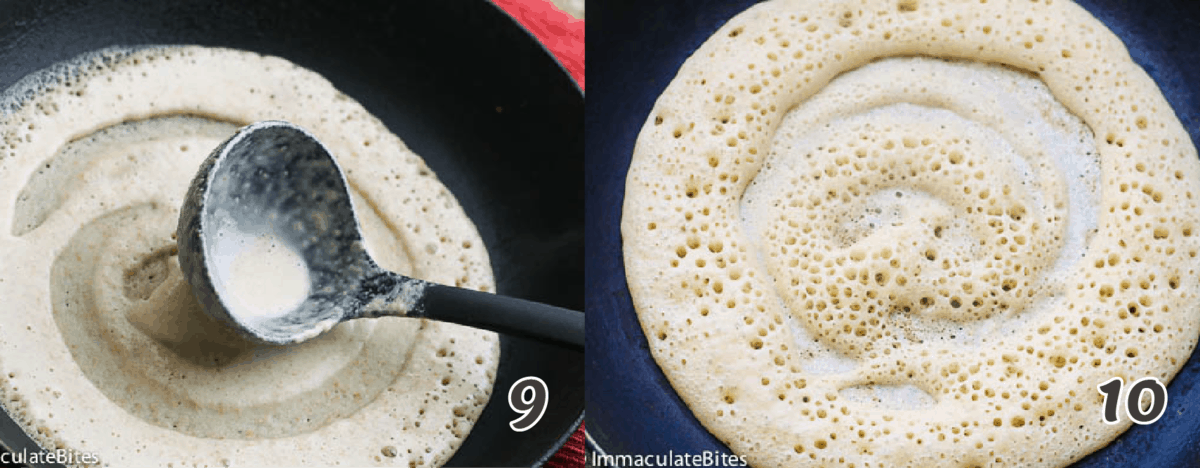
- Spread the batter, cover with the lid, and let it cook until all the batter forms little brown spots coming through.
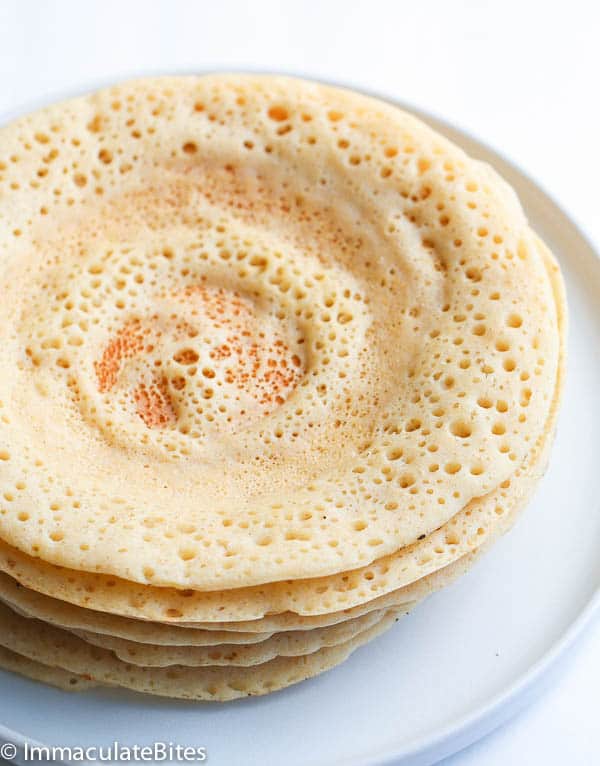
I adapted my recipe from the one that the lovely couple at Vegan Magic shared. Do check them out if you want to learn how to make more delicious Somali recipes.
Gluten-Free Injera
For authentic Ethiopian injera, mix 2 cups of teff flour (or 1 cup each of teff and barley flour) with 3 cups of water, cover it with a kitchen towel, and let it ferment for 3-5 days. The batter should be bubbly and smell slightly sour, but no mold. Mix it well, then boil ½ cup of batter with a cup of water until it thickens. Then mix that back into the batter and cook it the usual way.
Recipe Notes
- This is a great introduction into the world of sourdough, and anyone can make it-scout’s honor. And you don’t need a special pan, just make sure it’s non-stick.
- For those who enjoy the sour taste, you can let it ferment longer, then keep it in the fridge until the next day.
- A friend of mine prefers getting whole grain teff, mixing all the ingredients in the blender, letting it ferment for a day or two, then cooking as usual. You can also add a sourdough starter and let it ferment until the next day.
Make Ahead Instructions
Injera can be kept at room temperature for up to 5 days or in the fridge for up to 2 weeks. I keep mine in a ziplock bag to keep it from drying out.
How to Eat Injera
An added bonus is that you can sweeten things up with cinnamon sugar, honey, and spiced butter. Then enjoy it for breakfast, a snack, or dessert. Believe me, you are not going to want to stop.
A great flatbread to have on hand when making doro wat. BOY! The two together are DIVINE! Injera is also fantastic for sopping up the juices in lentil stew, collard greens, and cabbage.
More Fabulous East African Recipes
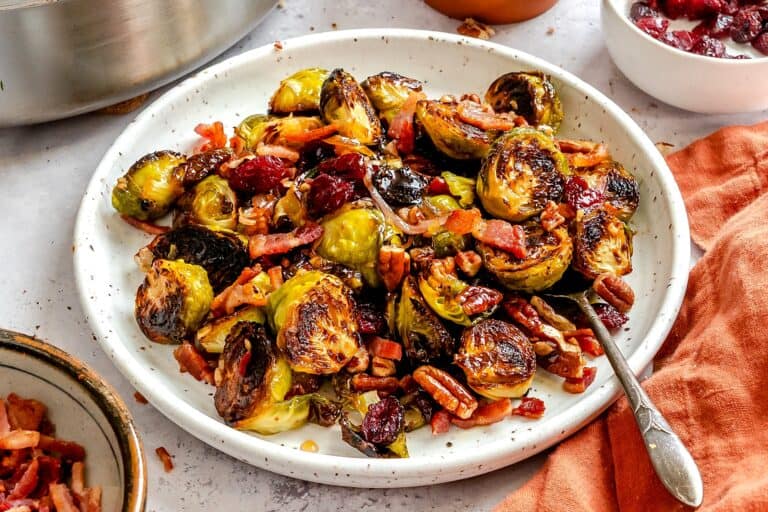
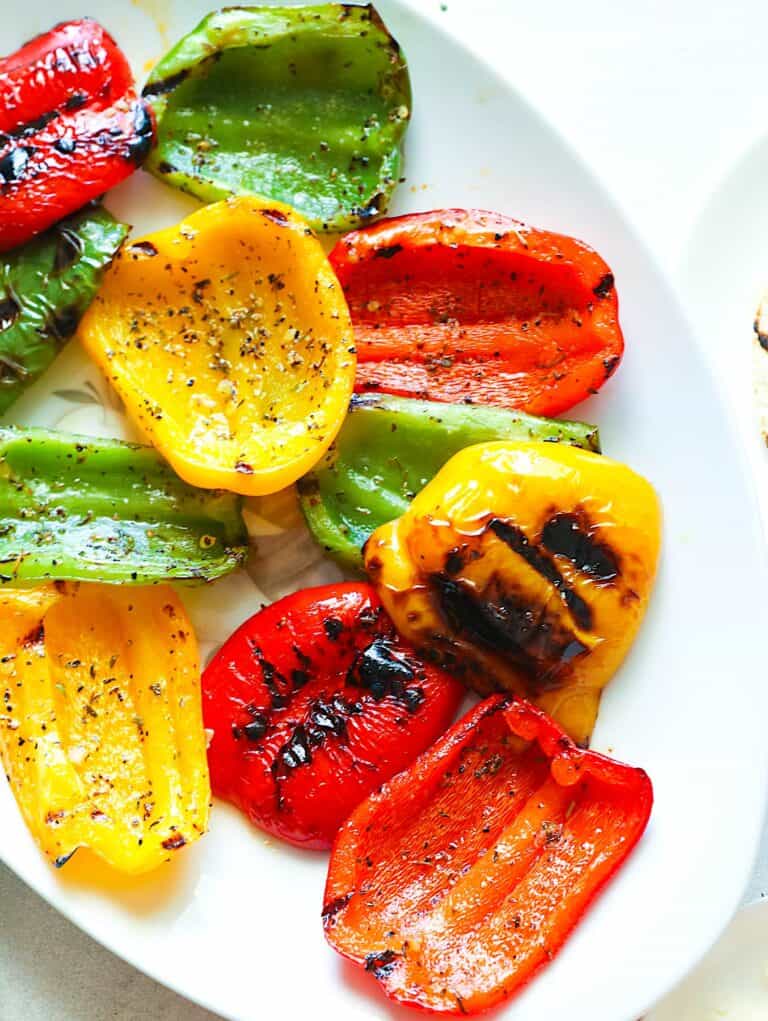
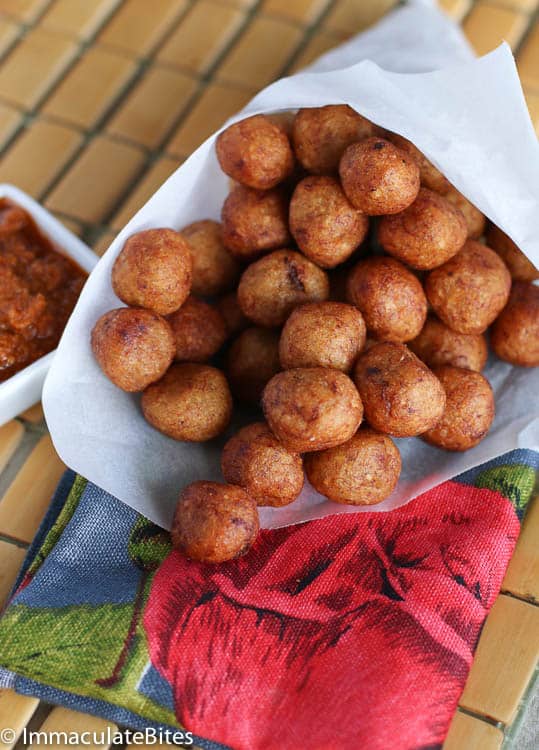
Enjoy these recipes for a traditional East African dinner.
By Imma
This blog post was originally published in October 2015 and has been updated with additional tips and tempting photos.
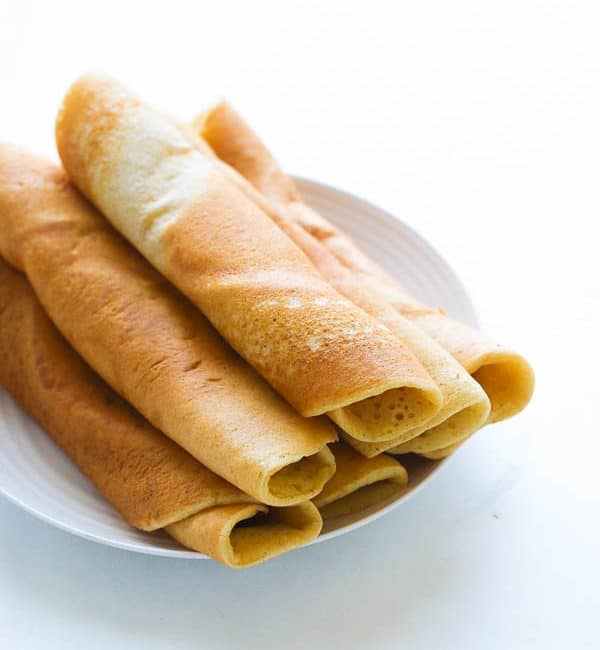
Injera
Ingredients
Starter
- 1 cup (120g) corn flour or a fine cornmeal (not cornstarch)
- ½ cup (70g) sorghum or whole wheat flour
- 1 tablespoon (12g) sugar
- 1 tablespoon (9g) dry yeast
- 1¼ cups (295g) warm water
Injera
- 4 cups (480g) all-purpose flour
- 2 tablespoons (24g) baking powder
- 2 teaspoons (12g) salt
- ¼ cup (50g) sugar (optional)
- 4 cups (944g) warm water
Instructions
Easy Yeast Method
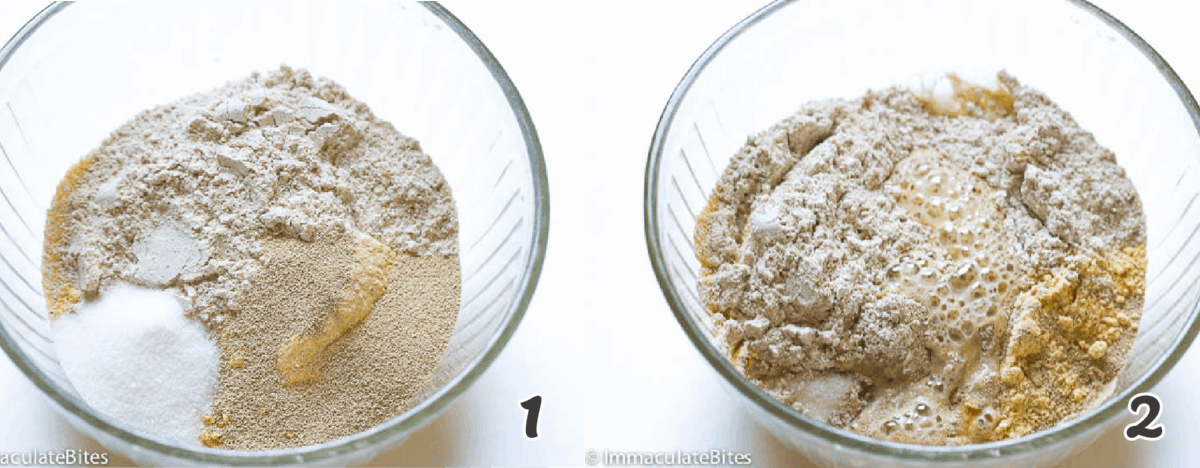
- Make the starter by combining corn flour, sorghum or whole wheat flour, sugar, yeast, and water, mixing, and letting it rise for about an hour.
- Mix the all-purpose flour, baking powder, salt, and sugar. Then add the starter mixture, and start adding water a cup at a time, stirring constantly, until all the water has been used up. Thoroughly mix to eliminate any lumps. You can do this in a blender, then pour it into a large bowl.
- Let it rise for about 2 hours or until bubbles form.
Quick Method
- In a large bowl, combine the flour, baking powder, salt, and sugar. Then start adding water, a cup at a time, stirring constantly to prevent lumps.
- Continue adding water, one cup at a time water until the water is completely used up.
Cooking
- Heat a skillet, crepe pan, or non-stick fry pan with a lid on medium-high heat.
- Pour a ladleful (¾ cup or more) of the injera batter onto the pan, spreading from the center in a circular motion until it’s about the size of a dinner plate. Cover with the lid, and let it cook until all the batter forms little brown spots coming through. No need to flip it.
- Transfer to a plate with a spatula or plate, set aside, and continue cooking until the batter is finished.
Tips & Notes:
- Start adding water, a cup at a time, stirring well between additions to make sure you get a smooth batter.
- Traditionally, injera is made with teff or sorghum flour. However, whole wheat and barley flour work as well.
- Keep in mind that humidity, flour, and water play a role. Injera should be thicker than a crepe, but not as thick as a traditional American pancake.
- For the quick version, feel free to replace the flour, baking powder, and salt with the same amount of self-rising flour.
Love the soft texture. Yes, it’s not injera, more like a thin, velvety soft English crumpet. Very nice for soaking up sauces and curries. Delicious.
Thank you so much, Diane. Stay tuned and enjoy more recipes:)
I made this and they were tasty but my husband didn’t like them as Injera replacement. But, this is listed as non-traditional so I get that. The batter will make tasty pancakes for sure or you can use the “injera” as a pancake/base for other stuff (like strawberry jam!).
Can you give this recipe using baking soda instead of baking powder and yeast. Baking powder has aluminum in it. It is not good for the body. Also your body can not get rid of it.
I made the bread using the quick method. I divided the recipie in thirds.
There are two of us. I made the bread once with Teff flour and the fermentation that makes it sour. We did not like it. We liked your bread and, even though not authentic, prefer it. Goes well with my Moroccan
Food as well. Great website. Thank you.
Yayy! Nice! Glad you liked it!
Hi there, could i skip out on the corn flour and just use all wheat flour?
Hi Sarah! You may use wheat flour as a substitute just keep in mind that you would need around double of wheat flour vs corn flour and that it may also affect the taste. 🙂 Let me know how it turns out!
I appreciate that you were trying to make a quick version of injera, but this is not authentic by any means. You skipped out on the most important ingredient that makes injera what it really is, teff flour. This is a crepe. This is not injera and should not be called injera.
Hi! As mentioned, this is not authentic and just my own take also based on another recipe 🙂 Thank you for your comment, I appreciate it.
I am in love with this bread! Thanks for linking to the Xawaash website as well, as that is awesome and provided visibility into Somali cuisine which you don’t see or hear much about. I’ve made this bread twice already, but I only used 1.5 tsp salt and 1 heaped tsp of baking powder. Great with saucy savory dishes, and equally delicious with a little butter and sugar or sweetened condensed coconut milk. So glad I found this- thanks!!
Thank you, Asha!
I have made this several times using the long method and sorghum flour. It works perfectly and I am making it again tonight.
Any suggestions how to make it gluten free?
Sorry Jim, don’t have any expertise in that . Make someone can chime in.
Sorghum and corn flour are often gluten free.
In Somalia traditionally is made with Sorghum only and we use starter from previous mix instead of instant yeast. If you have sourdough use that. Ferment it overnight and you have Somali Anjero/Lahoh. That is the authentic traditional way.
Thanks for sharing that information 🙂
Hello loved the recipe, it simplifies it so much. But quick question, is the salt and/or sugar a necessary step(specifically the salt)?
I personally feel salt does add flavor to it . You may out the sugar. Enjoy!
Looks delicious and easy to make. I can’t wait to try it.
Thank you so much for sharing this recipe! I’ve struggled for years and years to re-create the injera bread I’ve eaten at restaurants and this is the closest I’ve ever come to getting it right. Your recipe is delicious! Soft, pliable, spongy and perfect to soak up all the tasty gravy. I also opted to mix with my hands like you did and I think that made a HUGE difference. Thank you!
Hi Anna. I am so glad this worked out for you! And yes, getting in there with your hands does make all the difference :). Thanks for sharing!
Hello,
I love infgera .
Wanted to know if you have recipe for keto diet . Can I use almond flour or Chickpea flour instead of white flour and corn?
Hello Fatimah. Sorry, I have never used almond flour or chickpea flour to make injera. From my experience with almond flour, I suspect injera with almond flour would be a lot denser than regular injera. Do let me know how it works out for you!
Hi Imma,
Thank you for the recipe. It’s a great alternative for injera. I have to drive 2 hours to go and 2 hours to come back if I want to get injera in Toronto, ON Canada. My husband is Ethiopian and he loved it and he said not bad for a French Canadian. My daughter who is half Ethiopian doesn’t like injera and your recipe she was mmmmm mommy more. So again thank you.
Valerie
Could Almond Flour be a susubstitute for sorghum flour? Thanks for the information!
I am an Ethiopian. I am really sorry for addressing it like this. This is not at all enjer or doro wet. We do not add sugar or/and salt to the recipe. Please request authentic people before you post it online to the public. If you are interested you can contact me.
Fana, as a suggested variation to the recipe, would you personally omit the sugar and salt but keep the remainder as it is written? Thanks!
Fana, it’s the way it’s done in her country. In my country, we even add yogurt and let the batter stands overnight.
So the recipe will vary from tribes. In Chad, we call it Kissar.
Looks a lot like moroccan baghrir, will definitely going to try. Wonder if this sanjeelo would also go well with honey and butter like baghrir…
Yes it does.
Hi, thanks for this recipe. It looks like a regional dish from a small place in England. These are made with oats ground up and mixed with wheat flour then fermented in the same way. We call them oatcakes and in they are unique to Staffordshire. They were eaten instead of bread. What is interesting is they are prepared in the same way. They can be eaten with anything but are usually eaten at breakfast.
Very nice recipe. Spongy and tasty. I used teff flour in addition to the cornflour and sorghum flours for the starter, because it just didn’t seem right to make injera with zero teff flour! And I let the starter ferment overnight. Results were fabulous
Awesome! Thanks for the feedback!
Hello! I see the instructions call for barley flour however the list of ingredients do not mention barley flour….?
Please clarifyThank you
Hi Tamara, it’s sorghum or whole wheat flour . Barley works as well recipe has been updated . Thanks for bringing this to my attention.
What is the water quantity for the first part of the recipe? It says 1 1/4 water. What measurement?
It 1 1/4 cup water.
But how much is a 1.25 cups of water – how many mls – or fl.oz? Also, what would a cup of flour weigh (in oz or grams), or a cup of sugar?
This cup business is very difficult – we use weights in the UK so it’s not easy – how big is your cup!
LOL. I think google can help you with your questions. A cup is a standard unit of measure. There are conversion charts out there.
I’m no traditionalist but this isn’t Injera. I can’t imagine what Injera tastes like made in this way. Teff gives Injera a unique taste and because it is such a central and important staple of Ethiopian cuisine, I feel this recipe doesn’t give it any justice in my opinion. Sorry to sound harsh! Although I appreciate that it is very difficult even for the seasoned cooks, this should be renamed Canjeero.
Absolutely this is Somalian canjeelo not injeera
It helps to read the details/blog before jumping to the recipe…..
Thanks for the recipe. What I like best is that it’s a very easy recipe to experiment with. I followed your suggestion, using whole wheat flour in place of the barley flour. I ended up with three variations of the batter.
Version one: recipe as written. The result was something much like a pancake. Tasty, but it was thicker than I expected and none of the sour notes of injera, which I personally like. My friend, who doesn’t care for the sour taste of injera, said she much preferred this recipe.
Version two: I added one cup of water, and a I let the batter sit in the fridge for an additional 24 hours. The made for something still like a pancake, but more flexible. Also, it had more of the sour notes.
Version three: I added an addition 1.5 cups of water to the batter and let it sit in the fridge for 48 hours. This provided a thinner pancake with the sour notes. This was my personal favorite, as I like something thinner and sour, but it wouldn’t be to everyone’s taste.
Thanks again for the recipe!
Thanks for taking the time to write such detailed feedback! Glad to see it worked out well for you.
The reason you got no sour notes is that you place it in the refrigerator. Injeera should be fermented at room temperature. Refrigeration slows fermentation to a slow crawl.