
Injera
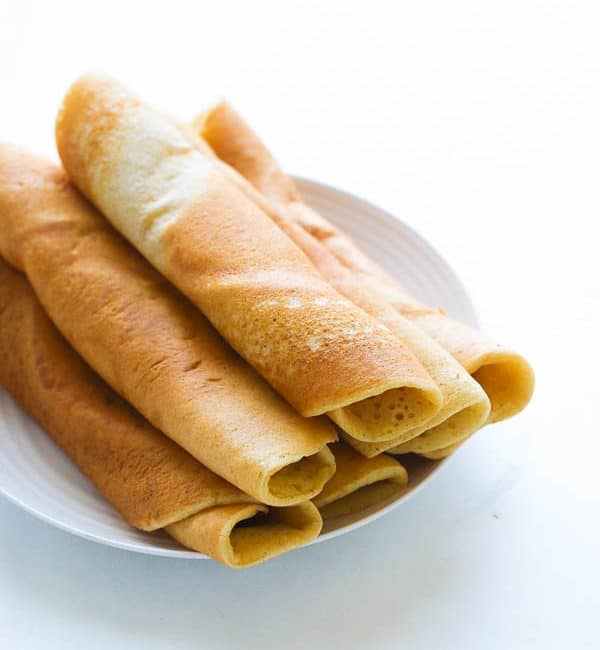
Quick, easy, tender, crepe-like injera is pleasantly sour, slightly sweet, and utterly addictive. Wrap it, dip it, or enjoy it as is for African comfort food.
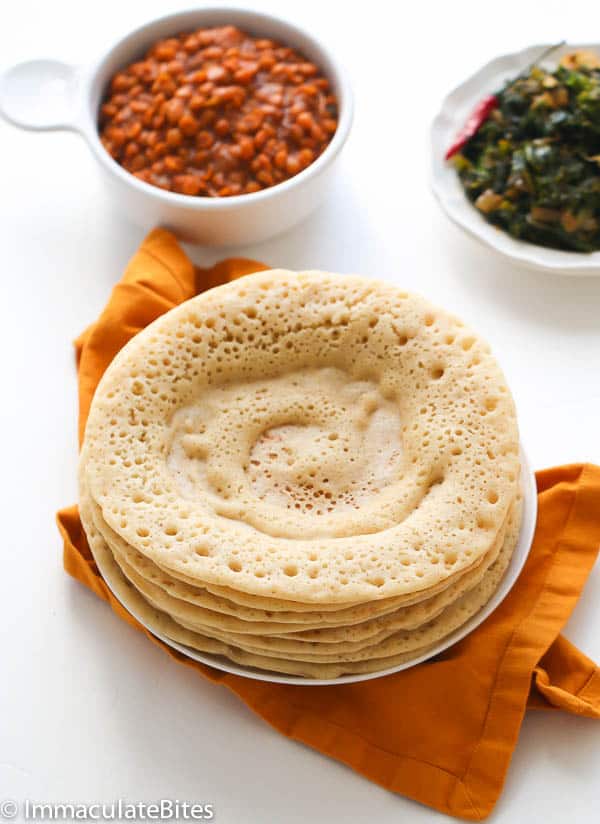
I remember a time (my broke and ignorant college days) when I begrudgingly ate injera at least once a week. You see, my roommate was from Ethiopia and couldn’t have a meal without it. Why would anyone pick sour, spongy bread over a fresh baguette? Sadly, at that time, I didn’t get it.
And to rub salt in the wound, 9 times out of 10, she would pick an Ethiopian restaurant when it was her turn to pick out a place to eat. I just couldn’t bring myself to say no because she was really sweet. It kept her going because she was really homesick.
But then something amazing happened. After eating it so many times, it started growing on me. To this day, I take time out to go to my favorite Ethiopian restaurant to pick up a plate of food with injera. Unfortunately, my family doesn’t get it, so I’ve never attempted to make it at home until now.
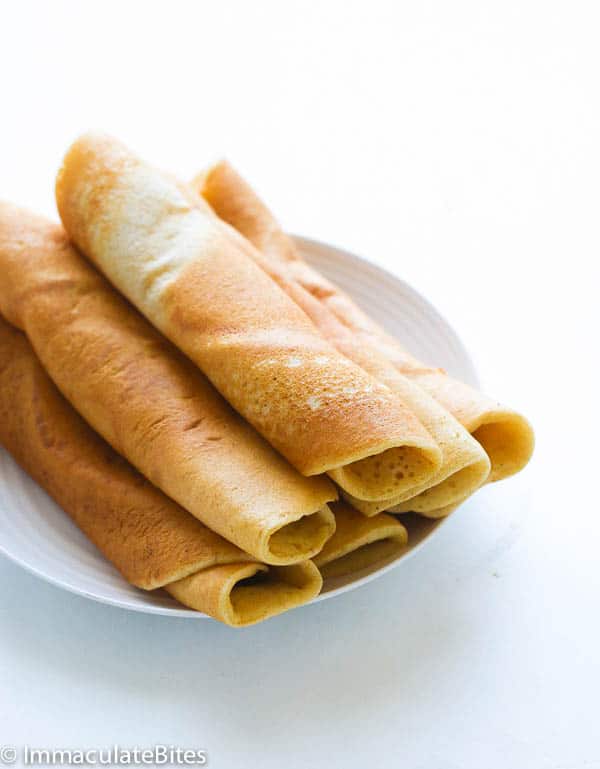
What Is It?
Injera is a crepe-like flatbread with a unique, slightly spongy texture thanks to natural fermentation (also known as sourdough). It’s never missing at mealtime in Ethiopia, Eritrea, Somalia, Yemen, Djibouti, and Sudan, with each country having its own variation. The Ethiopian version is usually made with teff flour, but barley, sorghum, and wheat flour also work.
I’m not going to lie, making authentic injera with teff flour is not for the faint of heart. I tried several variations and compared them to restaurant-quality injera. However, it was just too tedious and involved, even for a seasoned cook. So I’m presenting the Somalian version, which is usually called canjeero or lahooh, and using regular yeast. Sometimes, good enough is better than authentic, and it even got a thumbs up from hubby.
How to Make Injera
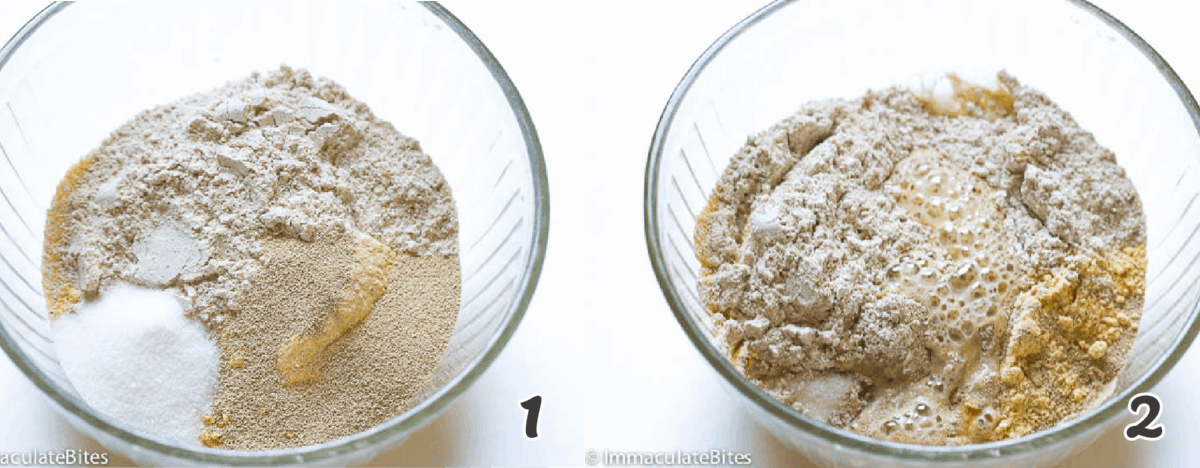
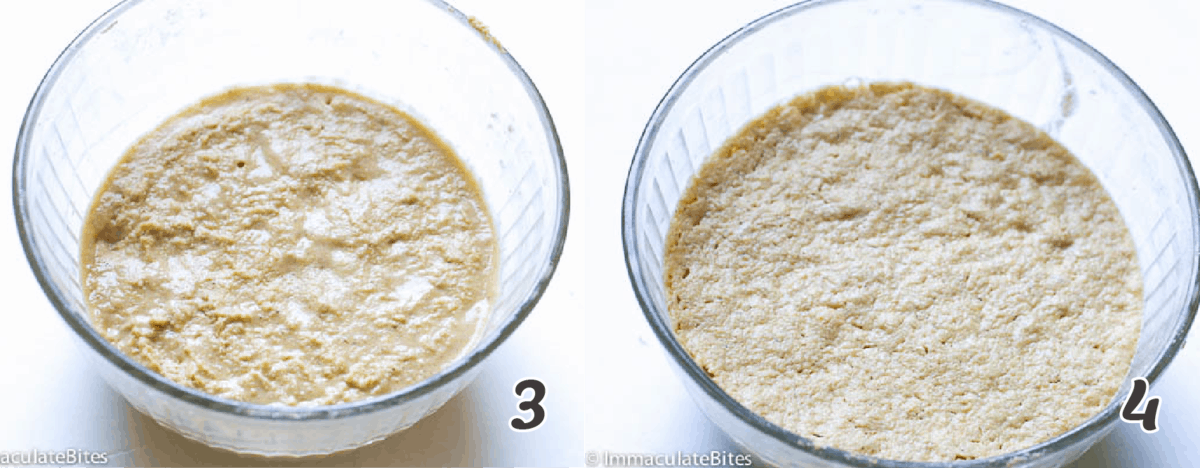
- Make the starter and let it ferment.
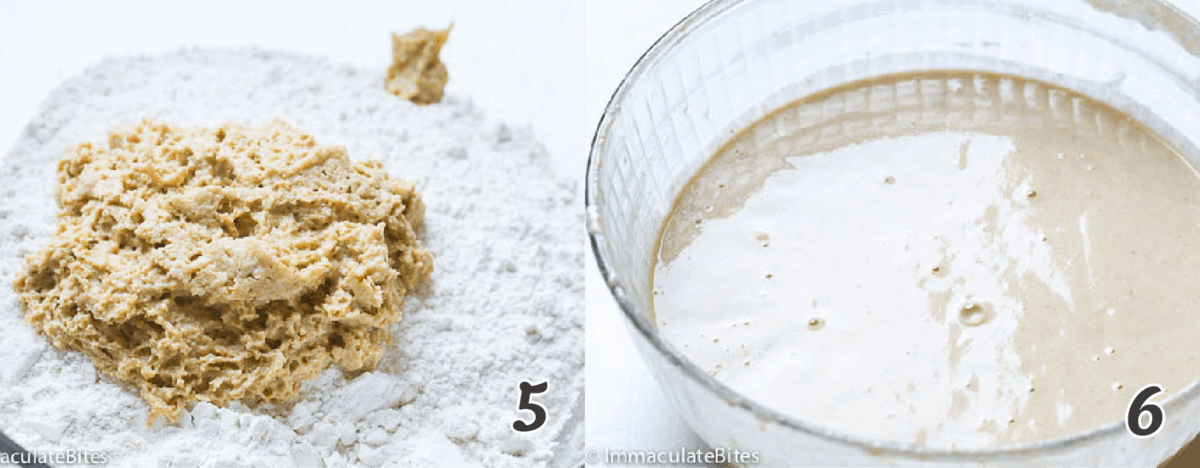
- Mix the dry ingredients, add the starter mixture, then add water a cup at a time, stirring constantly, until you have a thick crepe-like batter or thin pancake batter.
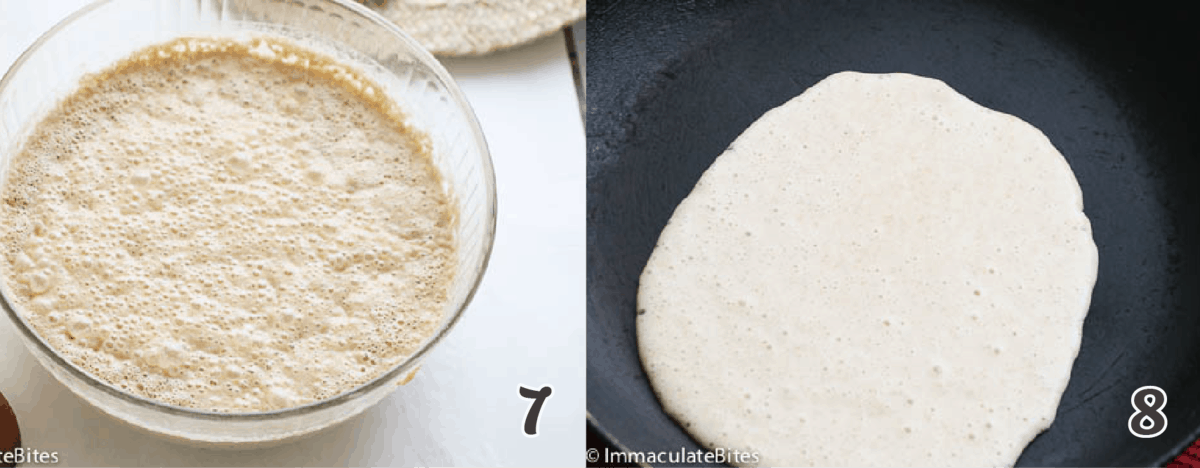
- Let it rise for about 2 hours, heat a crepe pan, and pour in a portion of batter.
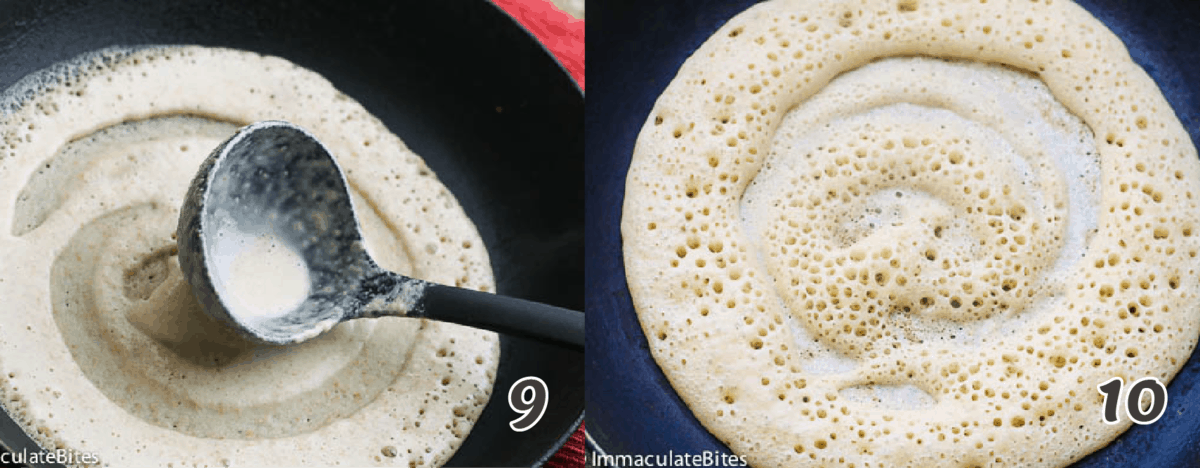
- Spread the batter, cover with the lid, and let it cook until all the batter forms little brown spots coming through.
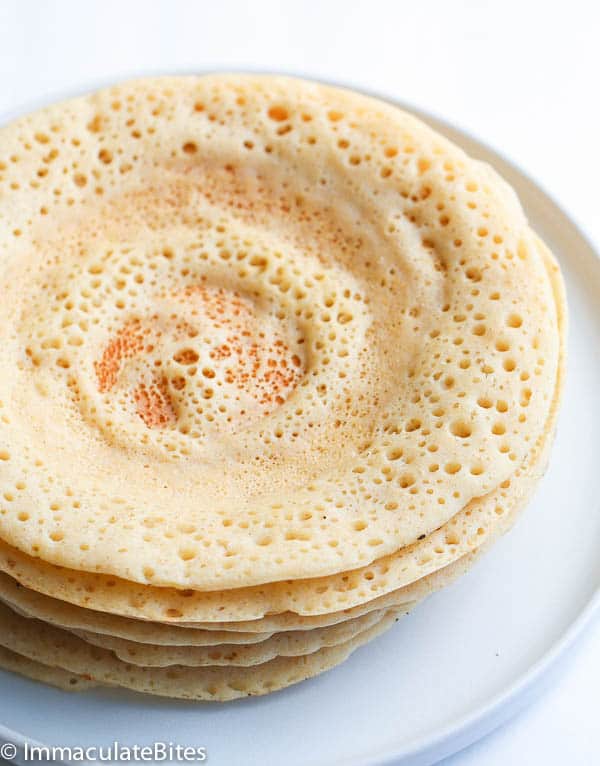
I adapted my recipe from the one that the lovely couple at Vegan Magic shared. Do check them out if you want to learn how to make more delicious Somali recipes.
Gluten-Free Injera
For authentic Ethiopian injera, mix 2 cups of teff flour (or 1 cup each of teff and barley flour) with 3 cups of water, cover it with a kitchen towel, and let it ferment for 3-5 days. The batter should be bubbly and smell slightly sour, but no mold. Mix it well, then boil ½ cup of batter with a cup of water until it thickens. Then mix that back into the batter and cook it the usual way.
Recipe Notes
- This is a great introduction into the world of sourdough, and anyone can make it-scout’s honor. And you don’t need a special pan, just make sure it’s non-stick.
- For those who enjoy the sour taste, you can let it ferment longer, then keep it in the fridge until the next day.
- A friend of mine prefers getting whole grain teff, mixing all the ingredients in the blender, letting it ferment for a day or two, then cooking as usual. You can also add a sourdough starter and let it ferment until the next day.
Make Ahead Instructions
Injera can be kept at room temperature for up to 5 days or in the fridge for up to 2 weeks. I keep mine in a ziplock bag to keep it from drying out.
How to Eat Injera
An added bonus is that you can sweeten things up with cinnamon sugar, honey, and spiced butter. Then enjoy it for breakfast, a snack, or dessert. Believe me, you are not going to want to stop.
A great flatbread to have on hand when making doro wat. BOY! The two together are DIVINE! Injera is also fantastic for sopping up the juices in lentil stew, collard greens, and cabbage.
More Fabulous East African Recipes
Enjoy these recipes for a traditional East African dinner.
By Imma
This blog post was originally published in October 2015 and has been updated with additional tips and tempting photos.
Injera
Ingredients
Starter
- 1 cup (120g) corn flour or a fine cornmeal (not cornstarch)
- ½ cup (70g) sorghum or whole wheat flour
- 1 tablespoon (12g) sugar
- 1 tablespoon (9g) dry yeast
- 1¼ cups (295g) warm water
Injera
- 4 cups (480g) all-purpose flour
- 2 tablespoons (24g) baking powder
- 2 teaspoons (12g) salt
- ¼ cup (50g) sugar (optional)
- 4 cups (944g) warm water
Instructions
Easy Yeast Method
- Make the starter by combining corn flour, sorghum or whole wheat flour, sugar, yeast, and water, mixing, and letting it rise for about an hour.
- Mix the all-purpose flour, baking powder, salt, and sugar. Then add the starter mixture, and start adding water a cup at a time, stirring constantly, until all the water has been used up. Thoroughly mix to eliminate any lumps. You can do this in a blender, then pour it into a large bowl.
- Let it rise for about 2 hours or until bubbles form.
Quick Method
- In a large bowl, combine the flour, baking powder, salt, and sugar. Then start adding water, a cup at a time, stirring constantly to prevent lumps.
- Continue adding water, one cup at a time water until the water is completely used up.
Cooking
- Heat a skillet, crepe pan, or non-stick fry pan with a lid on medium-high heat.
- Pour a ladleful (¾ cup or more) of the injera batter onto the pan, spreading from the center in a circular motion until it’s about the size of a dinner plate. Cover with the lid, and let it cook until all the batter forms little brown spots coming through. No need to flip it.
- Transfer to a plate with a spatula or plate, set aside, and continue cooking until the batter is finished.
Tips & Notes:
- Start adding water, a cup at a time, stirring well between additions to make sure you get a smooth batter.
- Traditionally, injera is made with teff or sorghum flour. However, whole wheat and barley flour work as well.
- Keep in mind that humidity, flour, and water play a role. Injera should be thicker than a crepe, but not as thick as a traditional American pancake.
- For the quick version, feel free to replace the flour, baking powder, and salt with the same amount of self-rising flour.

Thanks so much for this recipe! I love injera, but we don’t get teff flour here in soith Africa, and anyway, the process of making the real mccoy is just too time-consuming. This recipe looks very do-able and I’m definitely going to try it out ehen making my bozena shiro or doro wat.
Awesome! Do let me know how it works out for you.Thanks!
I fell in love with Ethiopian food when travelling and I’m so grateful for your recipes. I was really craving ethiopian food and now I make it myself thanks to you! It’s always my go to for dinner parties and my guests are always so impressed. Thank you ❤️
That’s wonderful to hear Catherine! Thank you for taking the time to share this with me.
I was a little confused by your instructions for making it extra sour. Are you saying after it’s all mixed up to let it sit for two additional hours and then refrigerate over night? Thanks!
Yes, to get it extra sour you do have to let it sit over-night. The first two hours is to get it to rise.
Hi, I’m looking online for sorghum wheat flour & only seeing white “sweet” sorghum flour or sorghum “grain.” Would either of these work? Thanks for the recipe!
Hi Amy! Yes it would! Do let me know how it works out for you! Thanks
Hi from down under tried your injera today, I used 1 cup teff flour instead of corn flour and 1/2 cup corn flour in stead of sorghum whole wheat , then followed your recipe exactly. Fantastic turned out just delicious, kids had some as pancakes , and we will have some for dinner with beef curry and dhall. Great instructions. Just wished I had a large injera pan , ended up making 28 just bigger than side plate size.
Thank you so much for the detailed feedback Jean! Glad to hear it worked out well for you.
also, this looks gorgeous but the serving size makes it very difficult for me to try this for myself
You can divide in half or thirds reduce the quantity.
typically corn flour means corn starch
Corn flour is mainly used for baking and fritters and it’s often used in combination with other flours While .Cornstarch is mostly used as a thickener
Can I substitute teff for the barley flour?
You sure can.
Just made these! The batter turned out a little thicker then yours but I kept myself from adding more water and just continued with and they turned out sooo good! They have such a nice bread flavour that I remember from being a kid. Thank you sooo much!
Awesome! Glad to hear it worked out well for you.
Great recipe! I’ve never had injera before, but I made the blender version of your recipe, and it looked just like your pictures. Tasted great with the doro wat and lentils. Feeling proud of myself haha! Can’t wait to try more of your recipes. Pictures are beautiful!
Thank you so much!!! Glad it you enjoyed both recipes. Happy Holidays!!!
As an Ethiopian American who goes home every year, I try to make injera and I would say its an impossible bread to make consistently well. Anything from the flour to the temperature or the starts can wreak havoc on a well followed recipe. In fact most Ethiopians living in the US or elsewhere buy their injera. They either buy it from Ethiopian/specialty stores or have it delivered. There are some good injera delivery sites you can use, like injeraforyou.com. mesob.come and I think also teffcompany.com delivers. Anyway, I commend anyone (Ethiopians and esp non Ethiopians) who try to make injera at home. bravo!
Would it be acceptable to cut up the chicken in small pieces so this is more of a thick chicken stew? I really enjoy how the restaurants just place mounds of different dishes on the big piece of injera and you pick up what you want with the little pieces of injera. No utensils needed!
Of course! you can even make it with boneless chicken .
I just realized I put this question on the wrong page. This is in reference to doro wat, just in case anyone gets confused. Thank you for your reply!
What is the Irish equivalent of corn flour and all purpose flour??
All purpose is regular flour . And corn flour is flour made out of corn.
Cornmeal. Corn flour is cornstarch in Ireland.
it was only last week that my dad (who had travelled through east africa some years ago) told me about a “weird bread” called injera which he had eaten in ethiopia. scrolling through foodgawker, i stumbled upon your recipe – i definitely have to try it!
greetings from austria
jana
Thanks for stopping Jana!Do let me know how it works for you, when you give it a try. Happy cooking!!!
I’m sure this is tasty, but traditionally, injera is made with teff flour.
This isn’t quite authentic 😉
It is clearly stated in the notes. Thanks for stopping by!
Perfect!! I love Ethiopian food and am so sad we don’t have an Ethiopian restaurant in Charleston. I thought about making some similar dishes at home and trying to make injera but when looking up recipes it seemed so involved. I will definitely be making this in the future and checking out some of your other recipes!! Thanks for sharing.
Totally agree Caroline! It is too involved this is a great recipe for a quick fix. Do let me know how it works out for you. Thanks
These look and sound so inviting, and if your a sourdough fan like myself I need to make this soon. Thanks Imma!
You are Welcome Kevin. Hope it works out for you.
What can I substitute the corn flour with?
Use whole wheat and all purpose flour. Or use corn meal and blend in a food processor or blender
Would you recommend to use 1 cup wholemeal + 1.2 cup rye flour for the starter dough? Or maybe 1 cup white all purpose flour + 1/2 cup wholemeal? There are many options I presume, I will try with 1 cup mixture of wholemeal/white + 1/2 rye, let’s see if it will work. But it would be nice to know what would you recommend as a specialist, if having to use only wholemeal,rye and white flour?
Thanks!
They would both do just fine. It all depends on your taste buds. And there’s no denying rye adds a healthy, flavorful kick to most baked goods.
I make my Indian version of injera by using black lentils (urad dal)to help ferment the teff flour. 1/2 cup of soaked ground lentils mixed with 2 cups flour and required water and left overnight to rise. Makes a pretty good batter!
Thanks for sharing your recipe, Savi! That sounds soo good! Might have to try your version some other time.
Looks like all the effort is worth it! Would love to try making this. What is it about using teff flour and making the traditional Ethiopian injera that is more complex than this version?
Traditional Ethiopian Injera takes about 3-5 days to make . This version takes about 2-hours to rise and about 10-15 mins prep, if using the blender.
Thank you so much for sharing this recipe! I’ve struggled for years and years to re-create the injera bread I’ve eaten at restaurants and this is the closest I’ve ever come to getting it right. Your recipe is delicious! Soft, pliable, spongy and perfect to soak up all the tasty gravy. I also opted to mix with my hands like you did and I think that made a HUGE difference. Thank you!
Am loving all your ethiopian recipes you have going on here. This is my kind of flatbread! So definitely going to give it a try
Thanks Sara! Please let me know how it worked out for you. Thanks for taking the time to share your thoughts.