Mbongo Tchobi (African Spicy Black Stew)
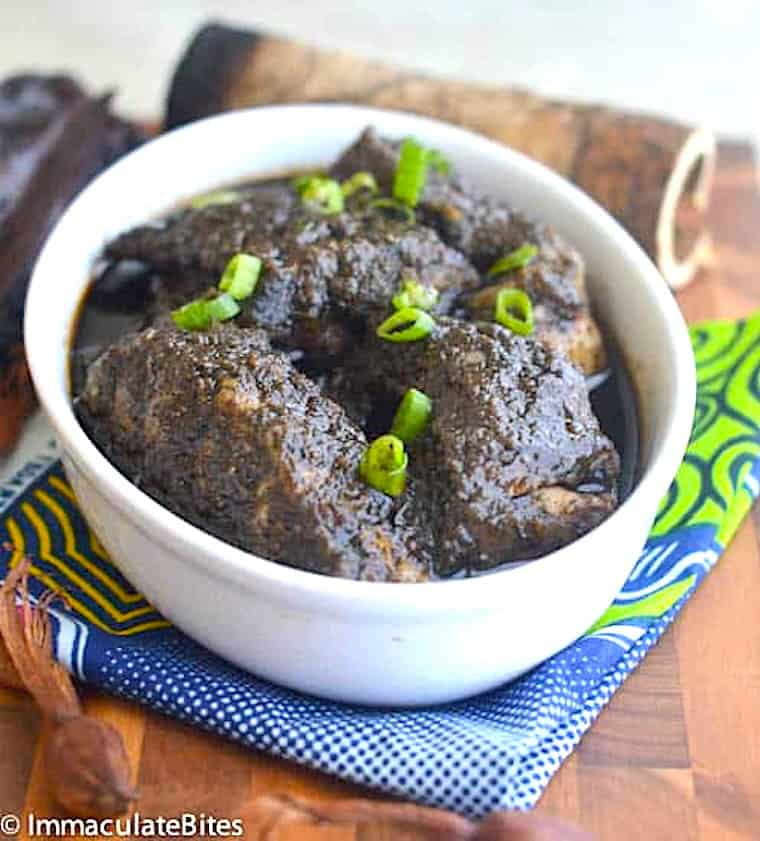
First encounters with African spicy black stew, known to most people as mbongo tchobi, can be disconcerting for Westerners. Also known as bongo, it’s an earthy, spicy, black, tomato-based sauce with a smooth, thick, and velvety texture. The distinctive taste and color are achieved by burning hiomi (Mbongo stick or garlic tree bark) over a hot open flame. Then it is blended and incorporated into the tomato stew with other spices.
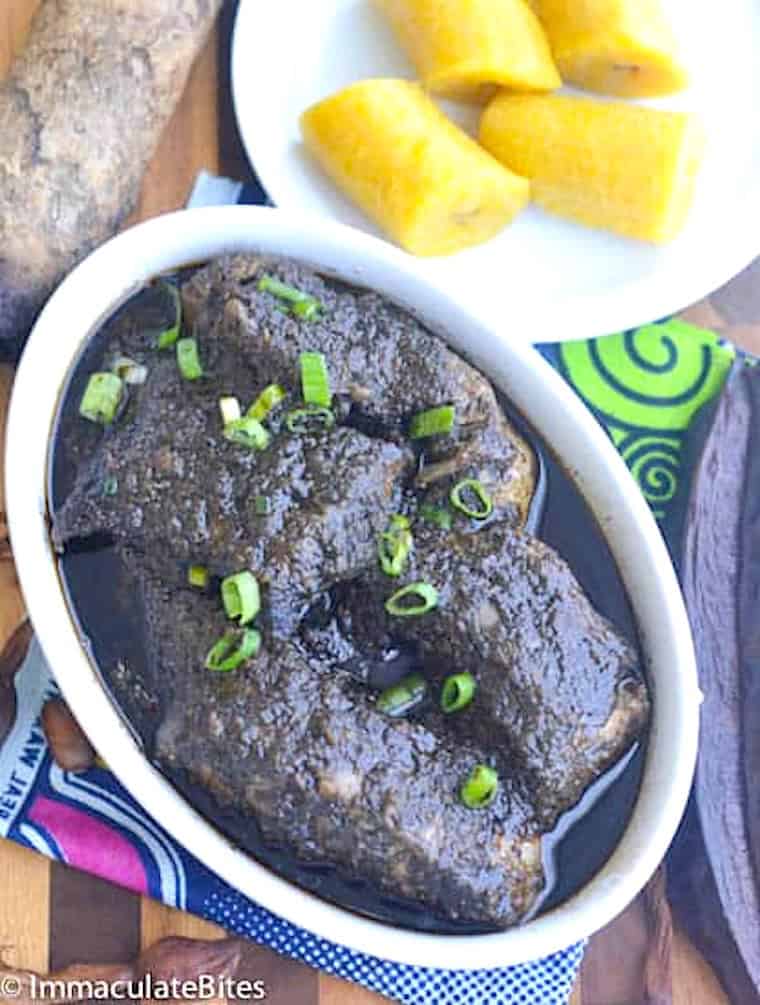
I admit I was taken aback by its gray black color the first time my Auntie offered me a plate of this stew. But now, I’m a big fan, and most people brave enough to try it find it quite appetizing. The ingredients aren’t always easy to locate, but it’s definitely worth the effort.
I intensify the flavor by lightly toasting the njansa and then adding garlic, basil, and parsley. This spicy stew is frequently cooked in both homes and restaurants in Cameroon. The Bassa tribe, specifically in the Littoral Region, calls it theirs. You can serve it with boiled sweet plantains or any starchy side.
What Makes African Black Stew Unique
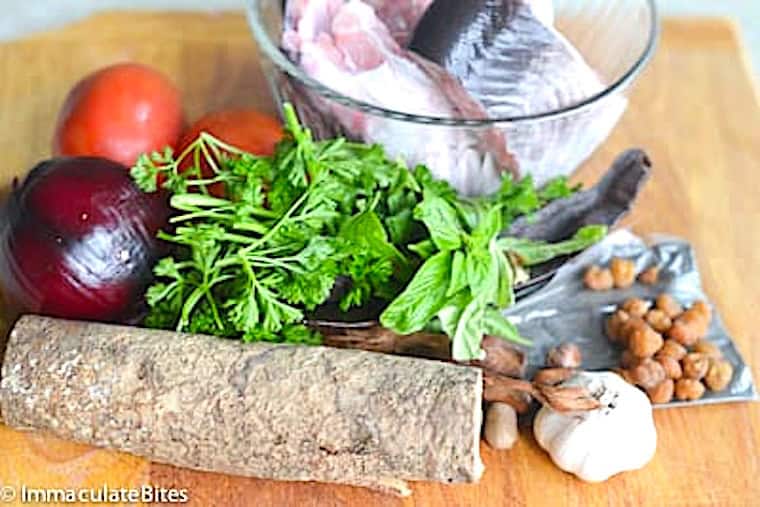
Mbongo tchobi’s star ingredient is hiomi (produced by burning the bark of the mbongo or garlic tree). That is what gives the stew its iconic color. To top it off, you have njansa (a nutty West African spice similar in taste to groundnuts), alligator pepper, which is related to black cardamom (also known as grains of paradise), and African nutmeg (or ehuru).
These beloved spices are widely grown in West Africa and some Caribbean countries. They can get expensive, but you can buy them in sachets specifically for the mbongo tchobi stew at a West African store or online (I’ve seen them on Etsy and Amazon).
Note: Just so you know, garlic trees are NOT the same as garlic. Afrostyrax lepidophyllus is a tree native to West Africa with a unique garlic-like flavor in the bark.
How to Make Mbongo Tchobi
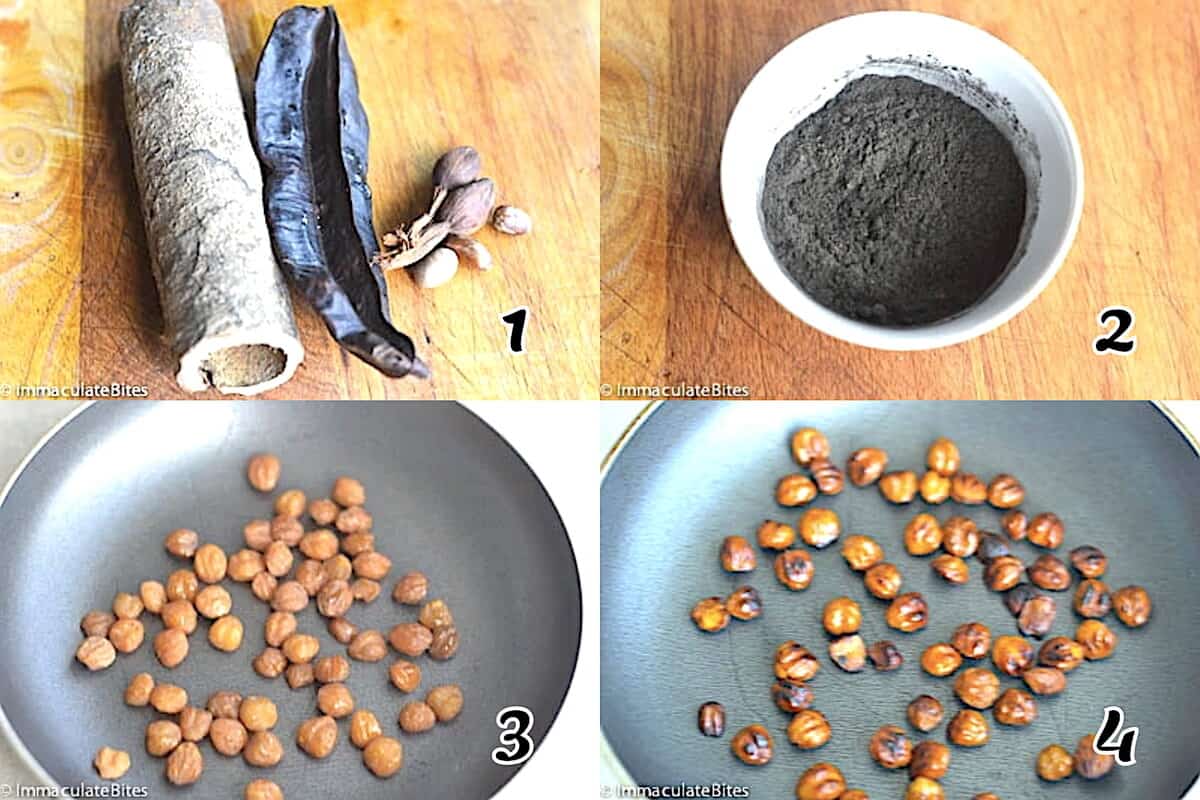
- Grind your spices or use pre-ground, premixed spices. (Photos 1-2)
- Pour hot water over the catfish in the sink, let it sit for a minute, then rinse and clean the fish (this removes the sliminess). Skip this if using a different white fish. Set aside.
- Toast the njansa lightly for about 5 minutes. Set aside. (Photos 3-4)
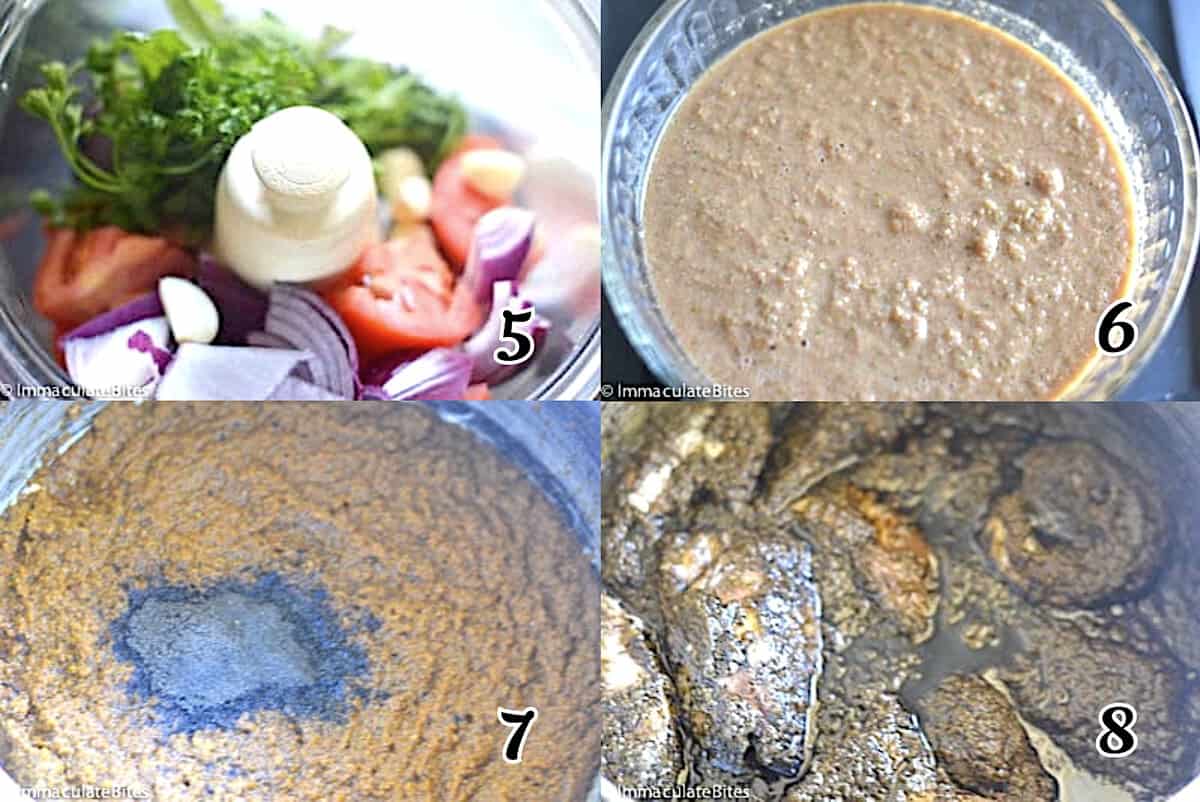
- Chop the tomatoes, onions, and green onions, and put them in a food processor or blender. Add njansa, garlic, basil, and parsley. A little water makes blending easier if desired. Blend until puree. (Photo 5)
- Heat a saucepan with oil, then add the tomato mixture with very little water, bring to a boil, and simmer for about 10 minutes, stirring occasionally. (Photo 6)
- Assembly – Add mbongo spice, fish, bouillon powder, and salt to the mixture; simmer for another 10 minutes or more until the fish is cooked through. Add water as necessary to prevent burning. (Photos 7-8)
- Adjust for seasonings with salt or Maggi. Serve warm with boiled plantains.
Tips and Notes
- If you’re on a non-African continent, you may be able to find mbongo spices in an ethnic grocery store. And if you don’t want to go all out, you can purchase smaller amounts of the premixed spices in little sachets with the work already done for you. You can find it online as well.
- While catfish is the traditional choice, any firm-fleshed white fish will work.
- I clean my catfish with hot water before proceeding for a better taste and texture.
Make-Ahead and Storage Instructions
Yes, you can make this a day ahead and reheat it, but I do think fish is best fresh. It also freezes well for 3-4 months.
What Pairs With African Spicy Black Stew
Steamed or boiled plantains are traditional, but feel free to concentrate the flavor with baked plantains. If you’d like stewed greens and ugali or fufu, feel free.
More Flavorful African Stews to Try
Watch How to Make It
[adthrive-in-post-video-player video-id=”PstTAAEE” upload-date=”2020-09-06T05:15:16.000Z” name=”Mbongo Tchobi (African Spicy Black Stew)” description=”Mbongo Tchobi, also known, as bongo is an earthy spicy black tomato-based sauce with a smooth, thick, and velvety texture.” player-type=”collapse” override-embed=”false”]
Mbongo Tchobi (Spicy Black Stew)
Ingredients
- 3 pounds (1.5kg) white fish cut into steaks
- 10 njansa
- ½ large onion
- 4 large tomatoes
- ¼ cup (15-16g) parsley
- ½ cup (12-15g) basil
- 4 cloves garlic
- 2 green onions
- ¼-½ cup (60-118ml) vegetable oil
- 4-6 tablespoons (48-72g) mbongo spice (about half a 4-ounce jar of the ready-made spice mix)
- 1 tablespoon (10-12g) bouillon powder or 2 Maggi cubes
- salt to taste
Instructions
- If using catfish, pour hot water over it in the sink, let it sit for a minute, then rinse and clean it to remove the sliminess. Skip this step if you're using a different fish. Set aside.
- Lightly toast the njansa in a hot skillet for about 5 minutes, and set aside.
- Chop the tomatoes, onions, and green onions, and put them in a food processor or blender. Add njansa, garlic, basil, and parsley. A little water makes blending easier if desired. Blend until pureed.
- Heat a saucepan with oil, then add the tomato mixture with very little water, bring to a boil, and simmer for about 10 minutes, stirring occasionally.
- Add mbongo spice, fish, bouillon powder, and salt to the mixture; simmer for another 10 minutes or more until the fish is cooked through. Add water as necessary to prevent burning.
- Adjust for seasonings with salt or Maggi. Serve warm with boiled plantains.
Tips & Notes:
- We use more oil in our cooking than Americans usually do. Feel free to reduce the oil or omit it entirely if your diet requires it.
- Please remember that the nutritional information is a rough estimate and can vary greatly based on the ingredients used in the recipe.