
Taro Chips
Taro chips make an excellent replacement for the same old potato chips. Crunchy and addictive, they go great with almost any dip. So transport yourself to the tropics with these taro chips and excite your taste buds.
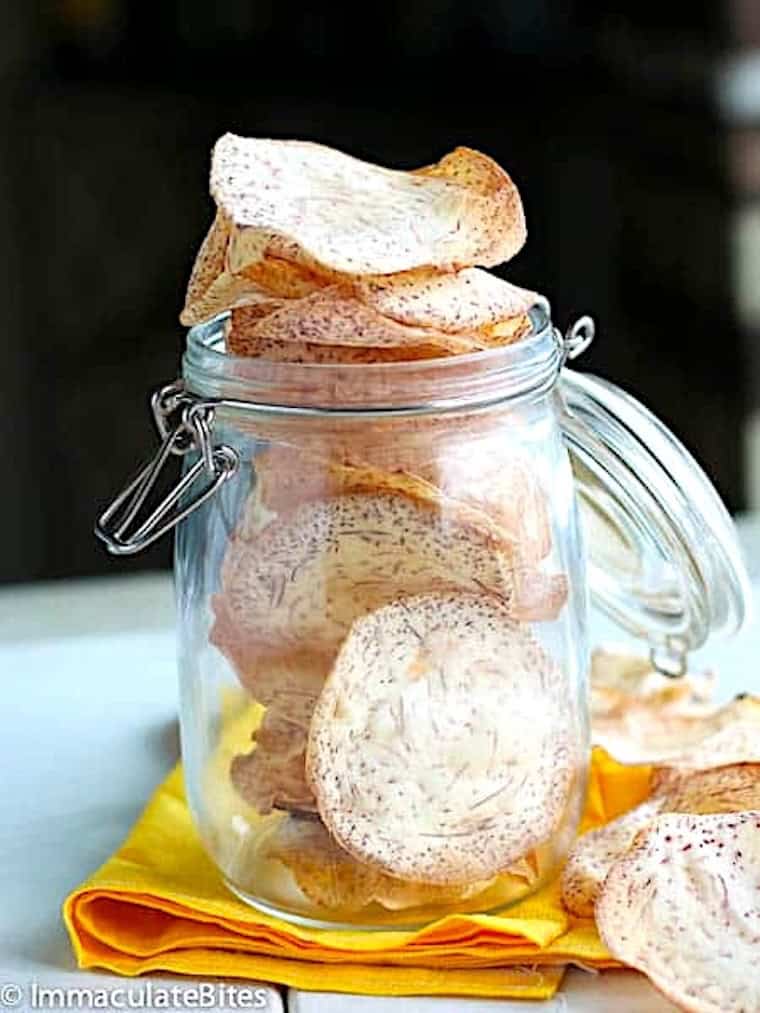
Taro has a special place in my heart because I grew up enjoying it. I had never thought of making chips out of them until people started making chips out of more than potatoes.
Of course, I had to experiment with different ways to make them. This easy malanga or taro chip recipe was what resulted.
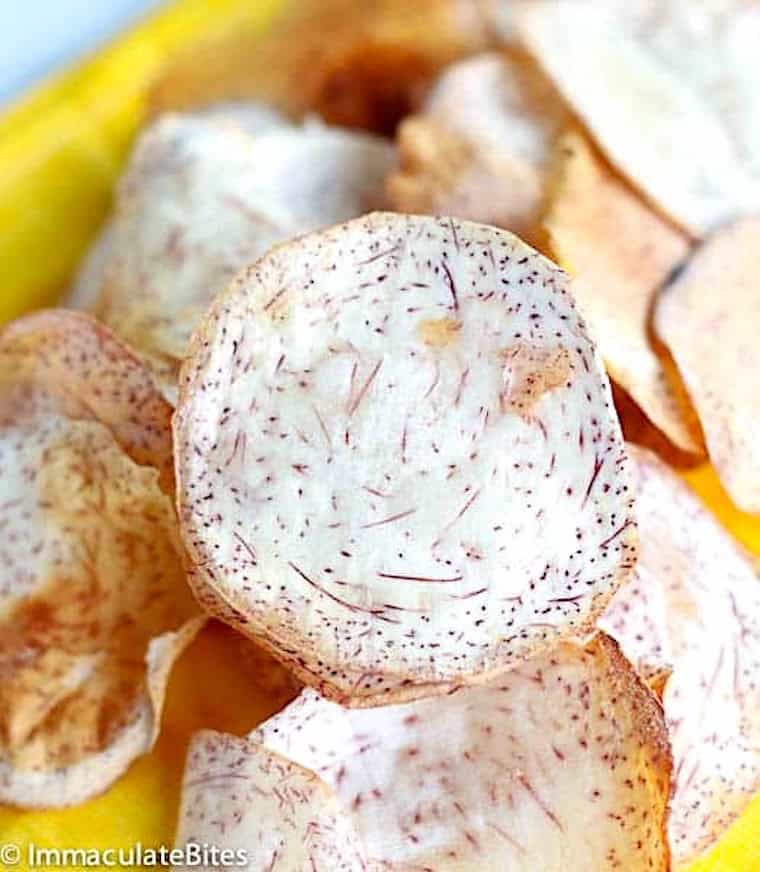
What Is Taro?
So what is taro, anyway? Let me do the honor of explaining. Depending on your country, this starchy root vegetable is also called eddo, kalo, macabo, dasheen, malanga, otoy, otoe, and cocoyam.
The paleo diet has made them popular because they’re supposed to be healthier than potatoes. You’ve probably seen them in supermarkets and ethnic stores. It enjoys high dietary fiber and significant levels of vitamins and minerals.
In West Africa, we boil or roast taro root and sometimes mash it. We serve it with vegetables, but rarely fry it. That’s because it can make the back of your throat itch if not cooked properly. So make sure you’re not allergic to it before trying it out.
Why Taro Chips Work
In Hawaii, the Caribbean, and Polynesian islands, taro chips are often enjoyed as a flavorful snack. Rumor has it that the Hawaiians are the first to turn taro into chips. So, if you need something sturdy to scoop dip, this is it.
How to Make Taro Chips
Prep Taro
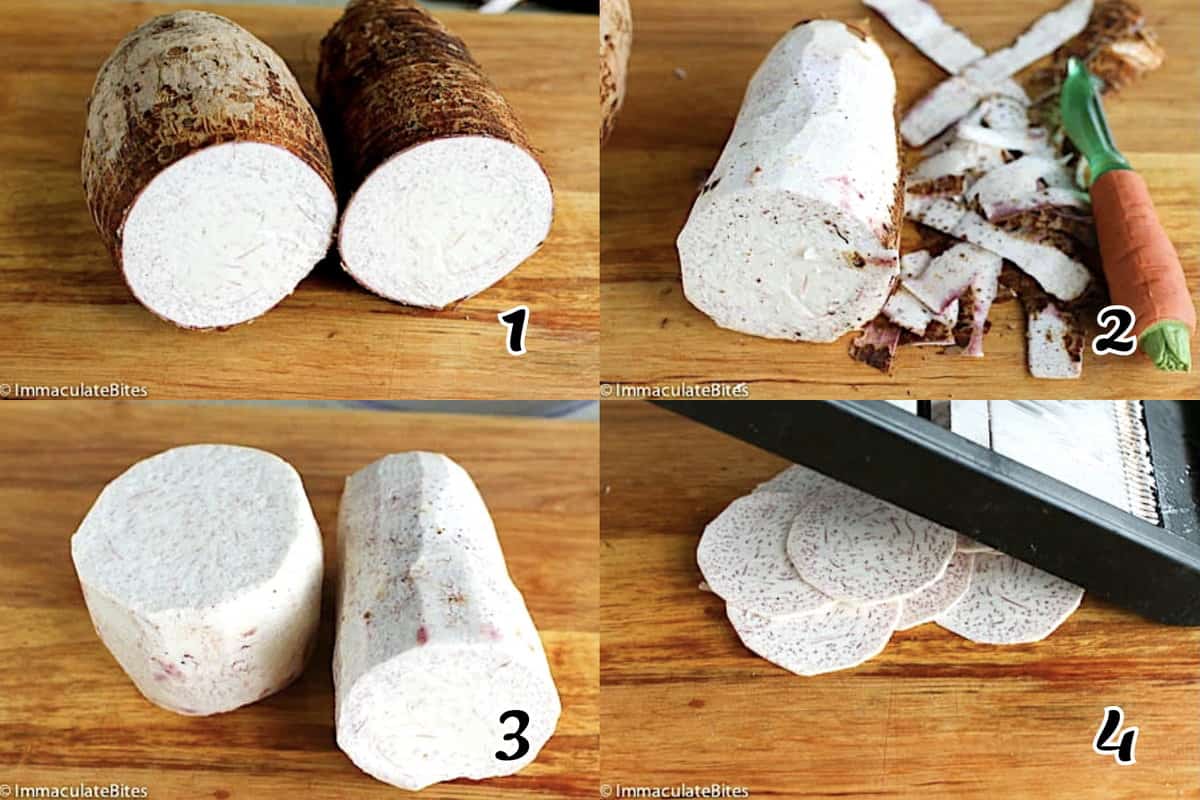
- Cut taro into 2-4 chunks for easier peeling. (Photo 1)
- Peel the taro with a sharp knife away from your body, carefully drawing the knife along the taro. Please be careful not to remove too much of the flesh. A potato peeler works for small taro roots. (Photos 2-3)
- Look for bad spots, such as bruising and discoloration, as you peel. Remove them with the tip of the knife.
- Wash immediately to prevent them from turning brown. Soak them in cool water until ready to cook, or refrigerate them in the water for up to 24 hours.
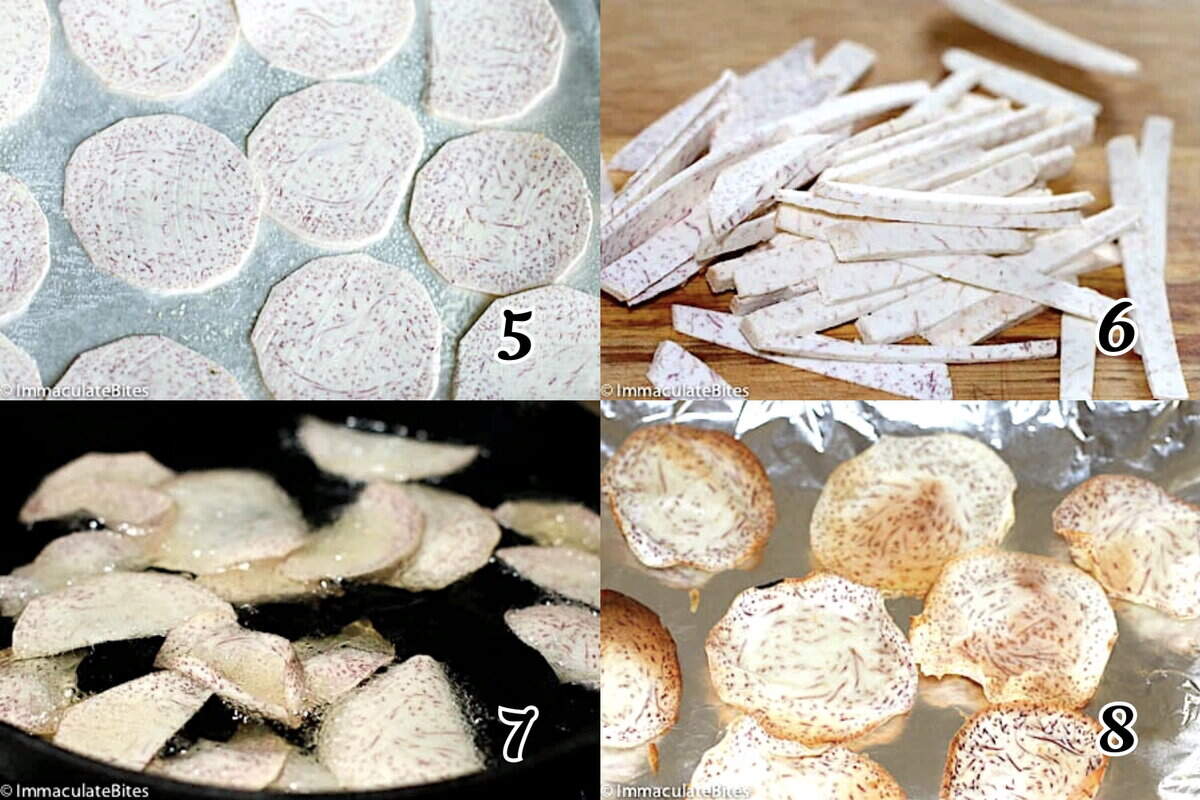
- Slice the taro thinly with a mandolin for consistent results—a peeler can also work. Season with garlic salt, Cajun seasoning, or salt. Or cut them for taro fries. Then, choose your cooking method. (Photos 4-6)
Baked Taro Chips
- Preheat the oven to 350°F (180℃). Line the baking sheet with foil and spray it with cooking spray.
- Bake – Arrange the seasoned taro slices in a single layer on your prepared baking sheet. Spray them lightly with oil, and bake for about 20 minutes or until golden brown and crunchy. Flip the slices after 10 minutes. (Photo 8)
- Serve warm or at room temperature. Store in a sealed container.
Fried Taro Chips
- Heat a large cast-iron skillet with ½ inch of oil over medium-high heat. You want it hot but not smoking. Heat the oil to 350℉ (180℃) if using a deep fryer.
- Fry the taro slices in batches, turning once, until golden brown, for about 5 minutes. Don’t overcrowd the pan, or the taro may absorb excess oil and become greasy. (Photo 7)
- Serve – Transfer the taro chips to a paper-towel-lined plate with a slotted spoon to drain. Sprinkle with salt and enjoy.
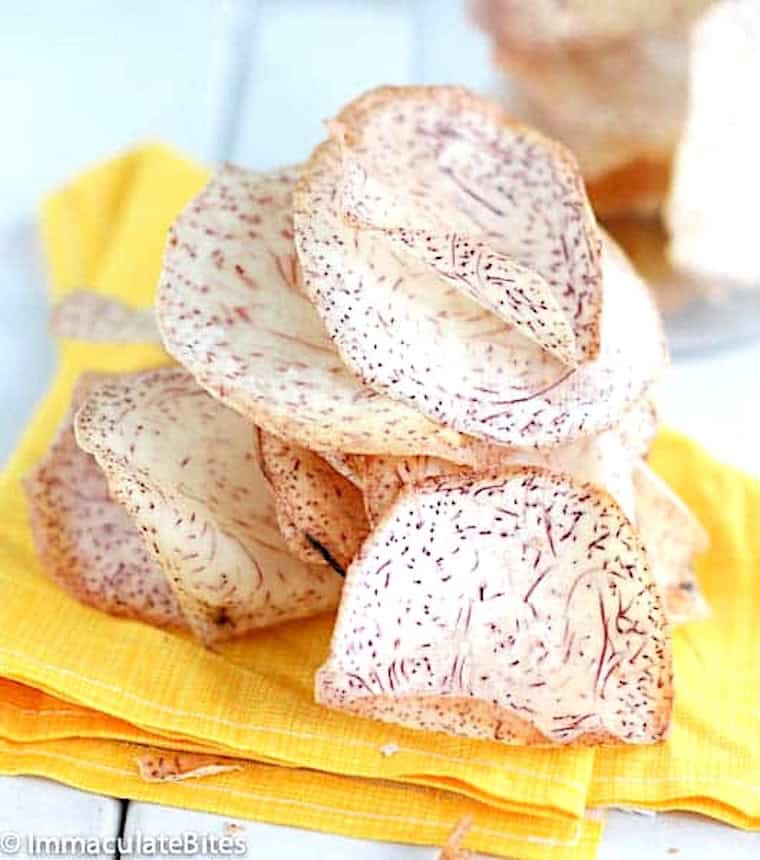
Tips and Notes
- Soak taro in vinegar before peeling to prevent your hands from itching.
- Different types of taro are available, but they all work. So use whatever you have.
- Taro root oxidizes quickly, so put your peeled taro in water immediately.
- Slice the taro uniformly in thickness to ensure even cooking.
- Asian, Latin, and African markets usually have taro if you can’t find it in your local supermarket.
- You can slice taro with a mandolin, peeler, or sharp knife. Just make sure to cut them thin enough to cook through and become crispy instead of hard. You may have to divide the taro into four pieces so you can hold it.
- Soaking the taro in water for at least 4 hours or overnight will eliminate some of the throat itch if it affects you.
- Store leftover taro chips in an airtight container for a day or two.
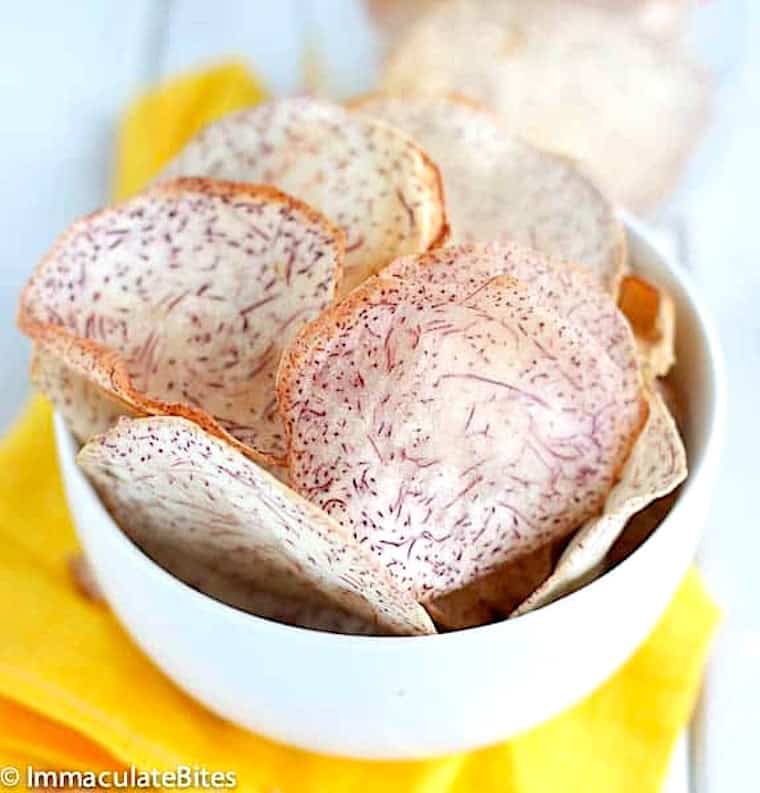
What to Dip Taro Chips Into
More Addictive Snack Recipes
This blog post was originally published in July 2014 and has been updated with additional tips and gorgeous photos.
Taro Chips
Ingredients
- 1 large taro (2-3 pounds)
- salt, garlic salt, or Cajun spice
- oil for deep frying or baking
Instructions
- Cut the taro into 2-4 large chunks for easier peeling and cutting.
- Peel the taro with a sharp knife, peeling away from your body. Carefully draw the paring knife down the body of the taro, being careful not to remove too much of the taro during the process. A potato peeler works great for this process if you have smaller taro.
- Look for any bad spots, such as bruising or discoloration, in the taro as you peel. Remove the spots with the tip of the knife.
- Wash immediately to prevent discoloration and leave them in cool water until ready to use or refrigerate for up to 24 hours submerged in water.
- Slice the taro thinly with a mandolin for consistent results. However, a peeler or sharp knife will work if that's what you have.
- Season with garlic salt, Cajun seasoning, or just salt.
Baked Taro Chips
- Preheat the oven to 350℉ (178℃). Line a baking sheet with foil and coat it with cooking spray. (You may need more than one baking sheet.
- Place the seasoned taro slices on the baking sheet in a single layer, and spray lightly over the taro bake for about 20 minutes. Turn the slices over after 10 minutes and bake until golden brown and crispy.
- Serve warm or cool. Store in a sealed container.
Fried Taro Chips
- Heat a large pan or cast-iron skillet with ½ inch of oil over medium-high heat until hot but not smoking. If using a deep fryer, fry at 350℉ (178℃).
- Fry the taro slices in batches, turning once, until golden brown (about 5 minutes). Do not overcrowd the pan because the taro will absorb too much oil and become soggy.
- Using a slotted spoon, transfer the taro chips to drain on paper towels.
- Serve warm or cool, and store in a sealed container. They're great with corn dip or on their own.
Tips & Notes:
- Check the taro for bad spots before buying. Some stores don’t sell them as quickly, and you want fresh taro.
- Soak it in water after peeling for 4 hours up to overnight for a more pleasant eating experience.
- Ethnic stores (Asian, Latin American, and African) are most likely to carry taro, but I see it at my local Walmart as well.
- Please remember that the nutritional information is a rough estimate and can vary significantly based on the ingredients used in the recipe.





Nice article! And it looks delicious. I tried this myself but was wondering how to remove excess oil. Mine seems to look oily.
Hi Lex! Try not to overcrowd the pan. That is usually the culprit. And also, drain the chips on paper towels with you take them out of the oil.
Hi Imma, these look great!! I love taro chips.
Just wondering…could I dry them in a dehydrator uncooked?
Hi, Gerit! No, I would not dehydrate taro, cassava, or malanga unless it’s to preserve them and cook them later. They should never never be eaten raw. Hope that helps.
Hi, I know this comment is old, but just in case anyone is wondering, don’t eat uncooked taro, it contains calcium oxalate which is extremely irritating and can even be fatal in some cases!
Thank you that was very helpful
Thanks! I have calcium oxalate kidney stones. I wonder if taro will worsen them?
I was just going to write what Saskia wrote, never, never never eat malanga and taro uncooked! It makes you extremely sick, even fatal in some cases!
On another note, excellent recipe! I love Malanga chips, they are delicious and so healthy you!
Great! Thanks for the tips.
Hi,
Thanks for sharing this amazingly beneficial and healthy recipe, It has been a great help. Keep sharing and caring. It’s awesome.
Thanks!
Excellent recipe! I fell in love with taro chips after finding them in a bag of mixed veggie chips but was never able to find them by themselves in California, so I took matters into my own hands.
I like to buy the giant taro available at my local Asian market and slice them on a mandoline before soaking, which dramatically cuts down how long they need to soak. I still leave them in for an hour to be safe, but at 1/16″ thick they would probably be fine in as little as 15 minutes. Fry them up in canola oil, add a little salt, and enjoy.
Great. Thanks for the tips.
Definitely trying these tomorrow. Always had store bought ones and never thought of making them. You have inspired me to, Imma. Have some taro lying around at home.
Imma for how long do they stay crispy?
Hi Navya. They should stay crispy for a week or two if stored in a dry, airtight container. You can also crisp them back up in the oven for a few minutes if they get a little wimpy.
This looks so delicious! Although I’ve never had taro, I would love to try it!
Thanks Mira.
Hi Immaculate
I want to make them in large quantities for business is there a machine for slicing them
Akinyi, I have only used a mandolin, there should is none that I know of. But on second thought, maybe a commercial meat slicer would work. Just make sure to clean it well after using because the raw juices can cause irritation.
I’d recommend an electric mandoline. For larger taro, you could use a deli slicer, but that would probably be excessive.
I love taro chips. I live in Hawaii and there are a few places that make taro chips. I first had fresh made taro chips when my husband brought some home with salsa from some restaurant/grill. They were mixed with sweet potato chips too and so delicious. Your chips look great.
Oh thanks, Joybee.
I dont think Ive ever had taro chips! Will have to try these one day.
Jehan, contrary to what people think they do taste great. I finished a 3 pound taro all by myself. No judging please
This is fantastic and not a lot of people know about Taro but I am thrilled you have discovered it!